Smart Card Manufacturing Process: From PVC Sheet to Finished Card
Smart cards power banking, SIM, ID, transit, and access systems worldwide. Behind every card is a tightly controlled smart card manufacturing process that turns raw plastic sheets and silicon chips into a secure, durable, personalized product. This guide walks through each production stage, the equipment involved, and how to choose the right line configuration for your volume and application.
What Is a Smart Card Made Of?
A typical contact or dual-interface smart card is a sandwich of materials engineered for strength, electrical performance, and print quality:
| Layer | Material | Function |
|---|---|---|
| Core | PVC, PET, PETG, or PC | Mechanical strength and dimensional stability |
| Overlay / Lamination film | Transparent PVC / PC | Protects print and chip, gloss or matte finish |
| Inlay | Antenna + chip module | Stores and transmits data (RFID / NFC) |
| Module | Encapsulated IC | Secure element for contact or dual-interface cards |
Material choice drives cost, temperature resistance, and eco-profile. See our Smart Card Material Selection Guide for a full comparison of PVC, PET, PC, and eco-friendly alternatives.
The 7 Stages of Smart Card Production
1. Sheet Printing
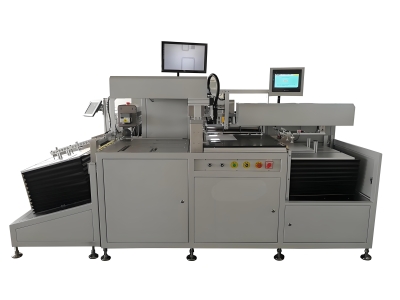
Graphic layers are printed onto core sheets using offset, screen, or digital printing. Security features such as UV ink, microtext, and holograms are often applied here. High-volume lines use sheet-fed printing and lamination systems integrated into the production flow.
2. Lamination
Printed core, inlay, and overlay films are bonded under heat and pressure into a solid card sheet. Proper lamination prevents delamination and protects the embedded antenna. Our Card Lamination and Sheet Shearing guide explains temperature, pressure, and cooling profiles.
3. Sheet Shearing & Cutting
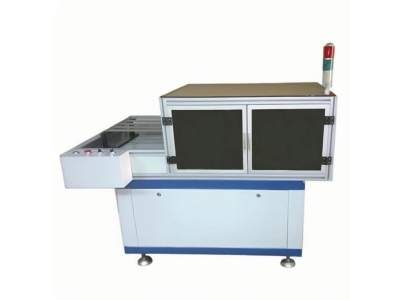
The laminated mother sheet is cut into individual card blanks. Precision sheet trimming and cutting equipment keeps dimensions within ISO/IEC 7810 tolerances (85.6 × 54.0 × 0.76 mm).
4. Cavity Milling (Dual-Interface Only)
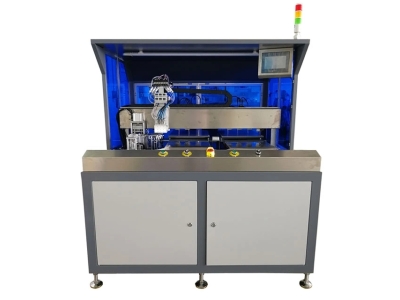
Dual-interface and contact cards require a milled cavity to house the chip module. A Smart Card Cavity Milling Machine cuts a precise pocket without damaging the antenna loop. Our Dual-Interface Card Milling & Embedding guide covers depths, tolerances, and defect prevention.
5. Module Implanting
The IC module is placed into the milled cavity and bonded with conductive glue or hot-bar welding. An Automatic IC Module Implanting Machine performs this at thousands of cards per hour. See the IC Module Implanting Machine guide for selection criteria.
6. Antenna / Wire Embedding (RFID & NFC)
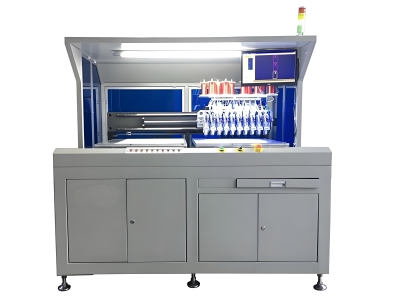
Contactless cards embed the antenna by embedding copper wire or bonding a pre-made inlay. Our Antenna Embedding Machine and Wire Embedding Machine handle this stage. The full RFID Inlay Manufacturing Process is covered in depth elsewhere.
7. Personalization & Testing
Each card receives its unique data: magnetic stripe encoding, embossing, laser engraving, or chip personalization. A Card Personalization Machine handles SIM, banking, and ID profiles. Finally, electrical and visual tests verify functionality before packing.
Typical Throughput by Line Type
| Line scale | Output | Best for |
|---|---|---|
| Pilot / R&D | 500–2,000 cards/day | Prototyping, small batches |
| Mid-volume | 10,000–50,000 cards/day | Regional issuers, factories |
| High-volume | 100,000+ cards/day | Banking, telecom SIM, national ID |
How to Choose the Right Production Line
Matching equipment to your application prevents over- or under-investment:
- Banking / SIM: prioritize module implanting, embossing, and chip personalization speed.
- Transit / Access: focus on RFID inlay embedding and contactless testing.
- Dual-interface: require both cavity milling and module implanting in one balanced line.
- ID / Government: add laser engraving and high-security lamination.
For a full equipment checklist and factory layout, read our Envelope and Card Sorting Systems and Card Sorter Buyer's Guide.
Frequently Asked Questions
How long does it take to manufacture a smart card?
A standard card moves through printing to finished, tested card in roughly 24–72 hours of cumulative process time across batches, depending on lamination cure and personalization steps.
Can one machine make both contact and contactless cards?
Not a single machine, but a combined milling and implanting system handles dual-interface cards, while RFID embedding is a separate station.
What standards must smart cards meet?
ISO/IEC 7810 (dimensions), ISO/IEC 7816 (contact), and ISO/IEC 14443 (contactless) are the core standards for most markets.
Which material is most durable?
PC and PETG outperform PVC in heat and chemical resistance; eco-PET and rPET offer lower environmental impact with good durability.
Conclusion: Build the Line Around Your Card
The smart card manufacturing process is a sequence of precise, interdependent steps. Start from your card type and volume, then select printing, lamination, milling, implanting, embedding, and personalization equipment that balance throughput with quality. Explore ZOWINDA smart card production equipment or contact our engineering team for a tailored line proposal.
Related Reading
- Card Lamination and Sheet Shearing Equipment
- Dual-Interface Card Milling & Embedding
- RFID Inlay Manufacturing Process
- IC Module Implanting Machine
- Card Personalization Machine
- How to Set Up a Smart Card Production Line: Equipment List & Factory Layout
ZOWINDA — Smart card and RFID production equipment manufacturer. Email: [email protected] · WhatsApp: +86 186 2085 0485