
Smart Card Material Selection Guide: PVC, PET, PC and Eco-Friendly Alternatives
Smart Card Material Selection Guide: PVC, PET, PC, and Eco-Friendly Alternatives
Choosing the right card material is one of the most important decisions in smart card manufacturing. The substrate affects lamination temperature, print quality, card durability, cost, and environmental credentials. Whether you are producing payment cards, access cards, ID credentials, or RFID tags, the wrong material choice can lead to delamination, print defects, or premature card failure. This guide compares the most common smart card substrates, explains how material selection interacts with lamination and cutting equipment, and helps you choose the best option for your application.
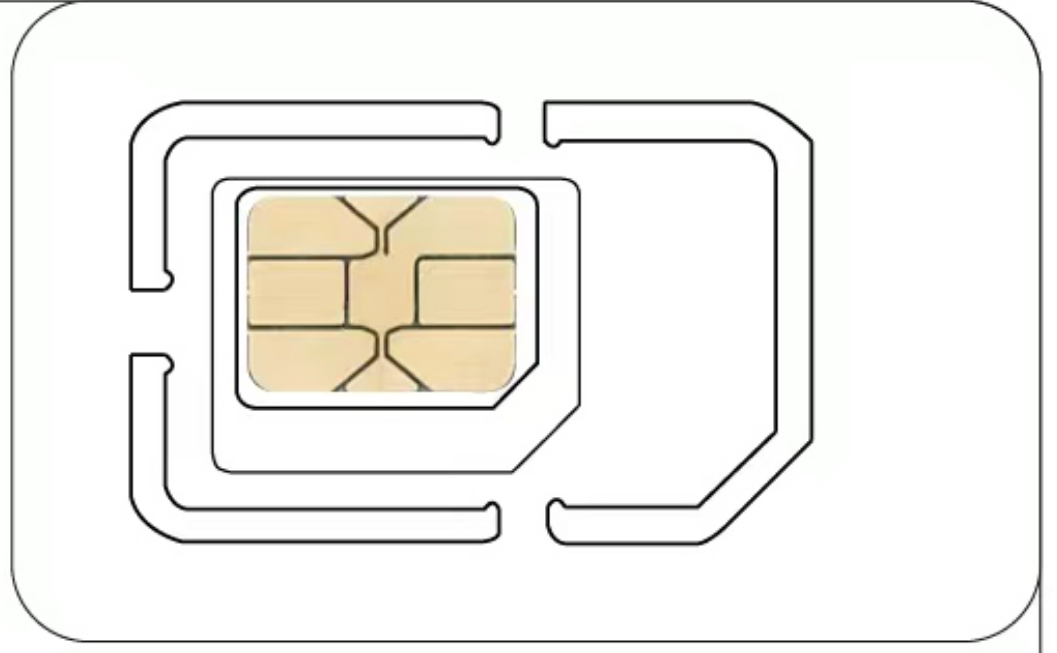
1. PVC: The Industry Standard
Polyvinyl chloride (PVC) has been the dominant card material for decades. It is cost-effective, easy to print, and bonds well with standard overlay films. PVC card bodies are typically produced by laminating multiple layers: a printed core, overlay films, and sometimes an embedded inlay or magnetic stripe.
- Pros: Low cost, excellent print surface, wide availability, proven lamination profile.
- Cons: Brittle at low temperatures, less durable than PC or PET, environmental concerns due to chlorine content.
- Best for: Standard ID cards, gift cards, loyalty cards, and short- to medium-lifecycle products.
Most RFID Label Automatic Lamination Machines and Auto Glue Tape Lamination Machines are optimized for PVC processing, so setup and tooling are straightforward.
2. PET: The Durability Upgrade
Polyethylene terephthalate (PET) offers higher impact resistance and temperature tolerance than PVC. PET cards are less likely to crack or deform under stress, making them a popular choice for cards that must survive harsh environments or long-term daily use.
- Pros: Higher durability, better chemical resistance, less brittle than PVC, good dimensional stability.
- Cons: Higher cost than PVC, requires adjusted lamination temperature and pressure, can be harder to print without surface treatment.
- Best for: Government IDs, transportation cards, access-control credentials, and any card exposed to wear.
Because PET requires precise temperature control, lamination equipment must allow fine adjustment of heat and pressure. A well-calibrated lamination line prevents warping and delamination.
3. PC: Maximum Strength and Heat Resistance
Polycarbonate (PC) is the premium choice for high-security credentials such as passports, national IDs, and banking cards. PC layers fuse together under heat and pressure, creating a monolithic card body that is extremely difficult to separate or tamper with.
- Pros: Highest durability, excellent heat resistance, laser-engravable, tamper-evident.
- Cons: Highest material cost, requires higher lamination temperature and pressure, needs specialized laser engraving equipment.
- Best for: High-security IDs, long-life banking cards, e-passport data pages, government credentials.
PC lamination demands equipment with robust heating platens and accurate pressure distribution. For large-format sheet processing, the right Card Lamination and Sheet Shearing Equipment setup is essential.
4. Teslin and Composite Substrates
Teslin is a synthetic paper that absorbs inks and adhesives, making it suitable for durable labels and short-run cards. Composite cards combine a PVC or PET core with a overlay layers to balance cost and durability. These materials are often used when print quality and flexibility matter more than rigid card body strength.
- Pros: Excellent ink adhesion, flexible, good for non-standard shapes, lower tooling cost for small runs.
- Cons: Lower rigidity than PVC, not ideal for high-abuse applications, can vary in thickness.
- Best for: Event badges, loyalty tags, short-run membership cards, and specialty labels.
5. Eco-Friendly and Recycled Alternatives
As issuers face pressure to reduce plastic waste, environmentally friendly card materials are gaining traction. Common options include:
- Recycled PVC (rPVC) — uses post-industrial PVC waste while retaining process compatibility.
- PLA — biodegradable polymer derived from corn starch, but has lower heat tolerance.
- Wood fiber and paper-based cores — reduce plastic content but require moisture control during lamination.
- Recycled PET — offers durability with lower environmental impact than virgin PVC.
Switching to eco-friendly materials requires re-qualifying your lamination profile, because melt behavior and adhesion differ from standard PVC. The Sustainable Smart Card Manufacturing article covers broader green practices.
6. Matching Material to Cutting and Trimming Equipment
Material hardness and thickness affect cutting tool wear, die pressure, and edge quality. Harder materials like PC require more frequent blade maintenance and higher cutting force. Softer or fiber-based materials can compress or fray if the tool is dull.
For precise sheet cutting, use dedicated equipment such as an Auto Sheet Shearing Machine or an Auto Sheet Trimming Machine. These machines maintain tight tolerances across different materials when the cutting parameters are set correctly.
7. Material Selection Checklist for Buyers
| Factor | Consideration |
|---|---|
| Lifecycle | Short-term PVC; long-term PET or PC |
| Environment | High heat or chemicals favor PET/PC |
| Security | PC is best for tamper resistance |
| Print method | Offset and UV work on most; laser engraving needs PC |
| Sustainability | Consider rPVC, recycled PET, or bio-based options |
| Budget | PVC is lowest; PC is highest; PET sits in the middle |
| Equipment compatibility | Verify lamination and cutting settings support the material |
8. Common Mistakes When Switching Materials
- Using the same lamination profile for PET and PVC — PET needs lower pressure and adjusted temperature to avoid warping.
- Ignoring thickness tolerance — material thickness variation can cause misalignment in multi-layer lamination.
- Skipping print adhesion tests — some eco-friendly materials require corona treatment or special inks.
- Overlooking cutting tool wear — harder materials accelerate blade wear, increasing maintenance cost.
Conclusion: Choose the Substrate Before You Choose the Machine
Material selection is not a secondary decision. It drives lamination temperature, cutting parameters, print quality, and card life. The best production line is one where the material, equipment, and process are matched from the start. If you are unsure which substrate and machine configuration is right for your product, ZOWINDA can help you evaluate the trade-offs.
Reach out to ZOWINDA at [email protected] or via WhatsApp +86 186 2085 0485 for material and equipment recommendations tailored to your card program.
Frequently Asked Questions
Which material is best for RFID cards?
PVC and PET are the most common choices for RFID cards. PVC is cost-effective for standard cards; PET offers better durability for cards used in demanding environments.
Can I switch from PVC to PET without changing equipment?
You can use the same machines, but you must adjust lamination temperature, pressure, and cutting parameters. PET processes differently than PVC.
Is PC overkill for standard access cards?
PC is usually more expensive than necessary for standard access cards. PET is a better balance of durability and cost for most mid-range applications.
Are eco-friendly card materials as durable as PVC?
Recycled PET and some bio-based composites can match PVC durability, but PLA and paper-based materials are generally less durable and more sensitive to heat and moisture.
How does material thickness affect lamination?
Thickness variation causes uneven pressure during lamination, which can lead to bubbles, delamination, or poor edge bonding. Use consistent material lots and calibrate pressure accordingly.
 Auto COB Pick and Placer Machi
 Auto Hole Punching Machine – P
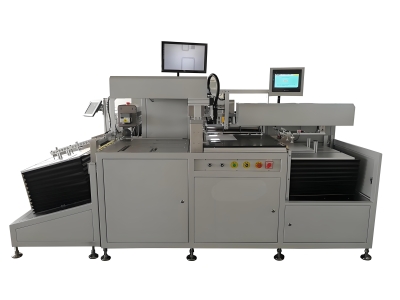 Auto Sheet Shearing Machine -
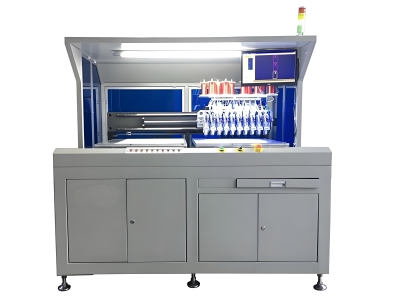 Auto Antenna Embedding Machine
Please contact us with your request
We are ready to answer your questions.