
Card Lamination and Sheet Shearing Equipment: A Practical Buyer's Guide
Card Lamination and Sheet Shearing Equipment: A Practical Buyer’s Guide
Building a smart card or RFID inlay production line means choosing the right lamination and cutting equipment. Lamination bonds the printed sheet, overlay, and inlay into a durable card body; shearing (sheet cutting) divides the laminated master sheet into individual cards with clean edges. This guide breaks down the equipment types, the specifications that actually matter on the factory floor, and how to match machines to your volume and substrate.
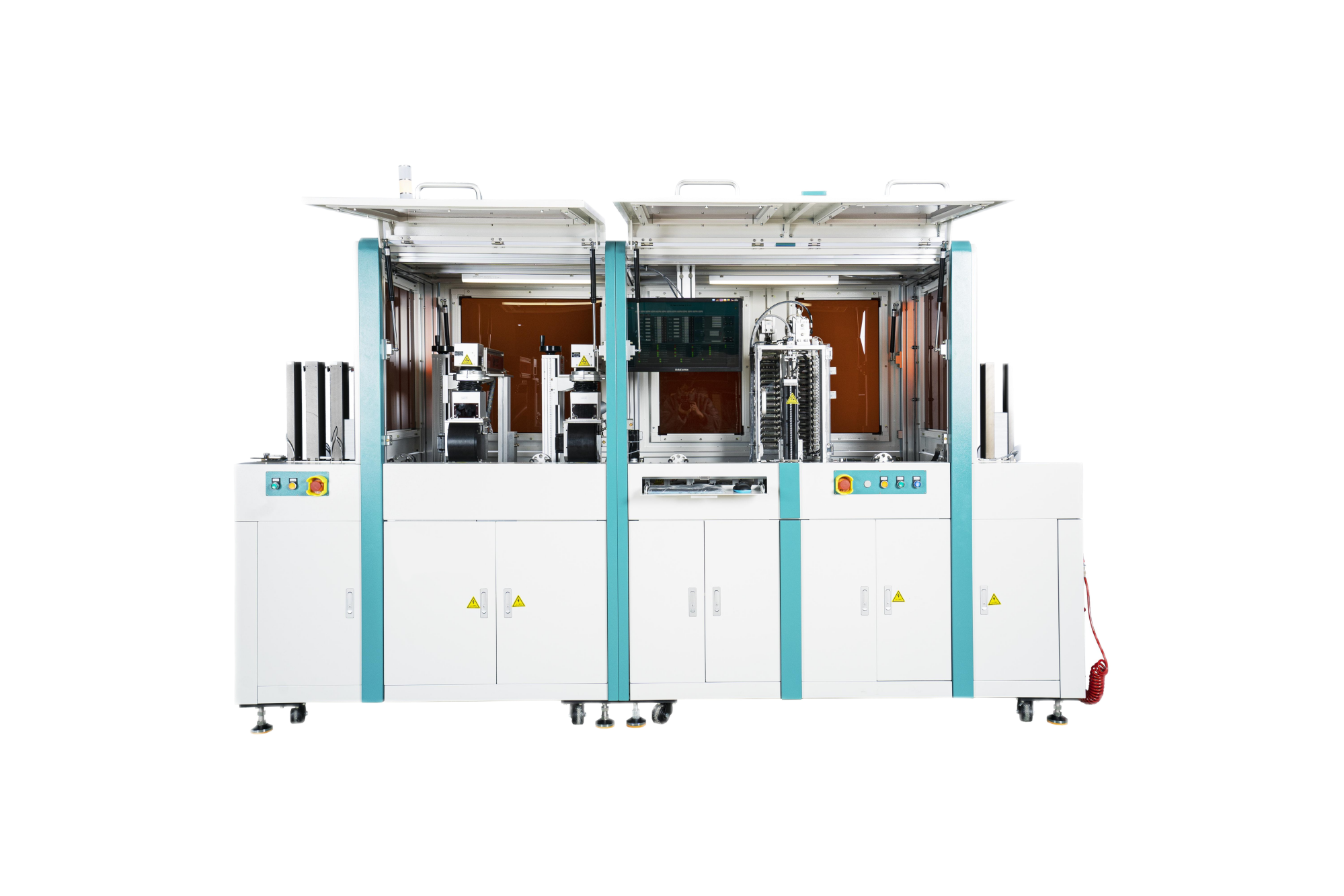
Why Lamination Quality Determines Card Lifespan
A poorly laminated card delaminates, traps air bubbles, or shows uneven gloss — all of which hurt durability and read performance. Industrial lamination applies controlled heat and pressure across the full sheet so the PVC/PETG layers fuse into a single, warp-free body. For RFID products, uniform lamination also protects the embedded inlay from mechanical stress.
Key Lamination Equipment Types
RFID Label Automatic Lamination Machine
Designed for label and inlay lamination, this machine automates the layup of release liner, adhesive, and RFID inlay, then laminates and rewinds the finished roll. It is the bridge between inlay production and finished label converting.
Auto Glue Tape Lamination Machine
Used where a protective or functional film is bonded to a card sheet with precision glue-tape application. Ideal for adding a scratch layer, signature panel, or decorative film without solvent-based adhesives.
Sheet Shearing: Turning Masters into Cards
After lamination, the master sheet must be cut into ISO 7810 cards. Two approaches dominate:
| Method | Best For | Edge Quality | Throughput |
|---|---|---|---|
| Manual / semi-auto shear | Prototyping, low volume | Good | Low |
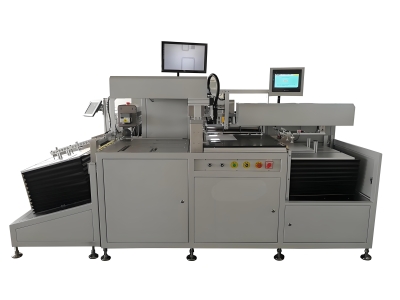
| Auto Sheet Shearing Machine (mechanical) | Standard card batches | Excellent | High |
| Sheet Shearing Machine with Laser | Complex contours, NFC shapes | Clean, no burr | Medium |
The Sheet Shearing Machine with Laser is the right choice when you cut non-rectangular shapes or need burr-free edges on thin inlay substrates, while the standard Auto Sheet Shearing Machine maximizes throughput for rectangular ISO cards.
Specification Checklist Before You Buy
- Substrate compatibility — PVC, PETG, PC, and composite inlay sheets
- Lamination temperature & pressure range — must match your overlay film
- Cutting accuracy — ±0.1 mm or better for reliable card geometry
- Changeover time — fast format switching for mixed orders
- Automation level — feeder, stacking, and reject handling
- Integration — inline compatibility with embedding and sorting stages
Building a Connected Line
Lamination and shearing do not run in isolation. In a complete line they sit between inlay embedding and final sorting — and linking each stage with consistent sheet handling avoids manual bottlenecks. Explore ZOWINDA’s equipment for every stage:
- RFID Label Automatic Lamination Machine — roll-to-roll inlay lamination
- Auto Glue Tape Lamination Machine — functional film bonding
- Sheet Shearing Machine with Laser — contour and NFC cutting
- Auto Sheet Shearing Machine — high-volume ISO card cutting
- Custom Auto Antenna Embedding Machine — inlay embedding upstream
Frequently Asked Questions
Do I need laser shearing or is a mechanical shear enough?
For standard rectangular ISO 7810 cards at volume, a mechanical auto shearing machine is faster and more economical. Choose laser shearing when you cut non-rectangular shapes, thin NFC inlays, or need completely burr-free edges.
Can lamination and shearing be inline with embedding?
Yes. With consistent sheet formats and downstream handling, lamination, shearing, and sorting can form a continuous line. ZOWINDA equipment is designed for this staged integration.
What lamination temperature should I use?
It depends on your overlay film (PVC vs PETG vs PC). Always follow the film supplier’s spec; industrial laminators allow you to program and store recipes per material.
Need a lamination and shearing configuration matched to your substrate and volume? Explore ZOWINDA lamination equipment or contact our engineering team for a line recommendation.
 Auto COB Pick and Placer Machi
 Auto Hole Punching Machine – P
 Auto Sheet Shearing Machine -
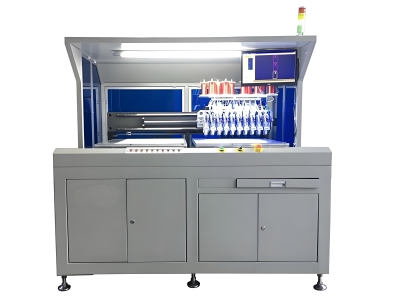 Auto Antenna Embedding Machine
Please contact us with your request
We are ready to answer your questions.