
RFID Inlay Manufacturing Process: From Antenna Design to Lamination
RFID Inlay Manufacturing Process: From Antenna Design to Lamination
RFID inlays are the invisible engine inside contactless cards, tags, and wearable devices. They combine a microchip and an antenna on a substrate, then bond everything together so the finished product can communicate with a reader. For manufacturers and procurement teams evaluating equipment, understanding the full inlay production flow is essential before choosing machines. This guide walks through each stage of the RFID inlay manufacturing process, from antenna design to final lamination, and links each step to the ZOWINDA equipment that automates it.
1. Antenna Design and Material Selection
Every inlay starts with the antenna. The antenna shape determines read range, frequency tuning, and whether the inlay fits standard card bodies or custom wearable shapes. Common materials include etched aluminum, copper wire, and printed conductive ink. Designers must balance:
- Frequency target — 13.56 MHz for NFC, UHF for logistics, 125 kHz for low-frequency access.
- Form factor — flat inlay for cards, curved or flexible antenna for wearables.
- Material cost — copper wire offers high conductivity; aluminum etching suits high-volume cards; printed antennas are cost-effective for paper labels.
Getting the antenna right reduces rework later. A well-designed antenna means fewer rejects during frequency testing and a stronger finished product. For complex geometries, an Automatic 3D Curved Antenna Embedding Machine can form antennas directly on non-flat substrates.
2. Antenna Embedding and Wire Bonding
Once the antenna pattern is defined, the next step is to place it on the substrate. There are two main approaches:
- Wire embedding — Ultrasonic or thermal embedding presses copper wire into a PVC or PET sheet following the antenna path. This method is precise and widely used for HF and NFC inlays.
- Etched or printed antenna — A pre-formed antenna is laminated onto the substrate. This is common for UHF labels and large-volume orders.
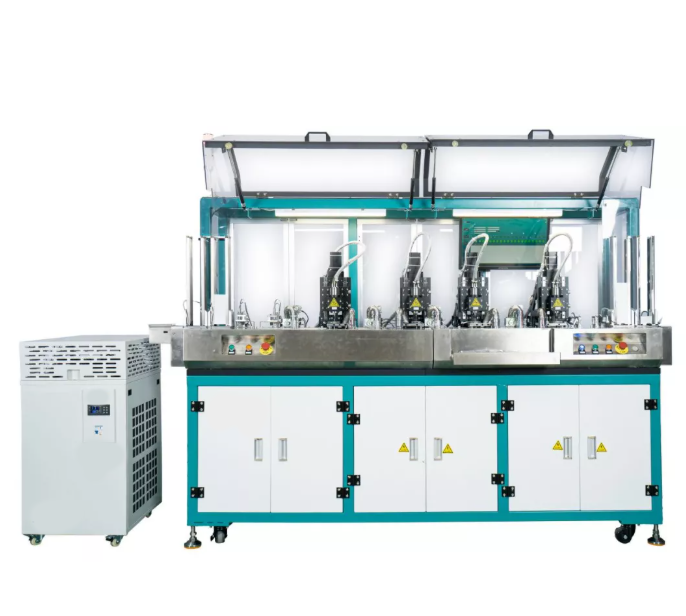
Wire embedding requires accurate tension control, temperature management, and placement repeatability. A Auto Wire Embedding Machine (2-in-1 System) combines wire laying and embedding in one pass, reducing handling and alignment errors. For higher throughput, the Integrated Inlay Manufacturing System integrates multiple processes into one line.
3. Chip Mounting and Flip-Chip Bonding
After the antenna is on the substrate, the RFID chip must be attached and electrically connected. The most common method is flip-chip bonding, where the chip is flipped so its bumps contact the antenna pads. Key parameters include:
- Bonding force — too much cracks the die; too little creates an open circuit.
- Alignment accuracy — chip pads must sit exactly on antenna contacts.
- Conductive adhesive — anisotropic conductive paste (ACP) or non-conductive adhesive (NCP) is used depending on the substrate.
High-speed production lines automate this step with pick-and-place heads and vision systems. This is where throughput is won or lost. A misaligned chip means the whole inlay is scrapped, so machine precision directly affects yield.
4. Lamination and Sheet Consolidation
With the chip bonded, the inlay is still a fragile assembly. Lamination presses the inlay between overlay films or into a card sheet, bonding everything under heat and pressure. The choice of overlay material and lamination profile affects:
- Card durability and flex life
- Chip and antenna protection from moisture and mechanical stress
- Surface finish for printing and personalization
Lamination is also the stage where multiple inlays are arranged in a sheet for efficient cutting. For a detailed look at lamination equipment and sheet cutting, see our Card Lamination and Sheet Shearing Equipment Buyer's Guide.
5. Testing, Quality Control, and Packing
Before an inlay leaves the factory, it must be tested for:
- Frequency and resonance — verifying the antenna is tuned to the intended band.
- Communication range — ensuring reliable read/write performance.
- Electrical continuity — confirming the chip-to-antenna connection is solid.
Testing is usually done inline with the production line to catch defects early. The tested inlays are then stacked, packed, or fed into card finishing/personalization lines. For a full overview of sorting systems used at the end of the line, read our Envelope and Card Sorting Systems Comparison.
6. Selecting the Right Production Line Configuration
There is no single best inlay line. The right configuration depends on volume, inlay type, and target market:
| Scenario | Recommended Equipment |
|---|---|
| High-volume NFC card inlays | Integrated Inlay Manufacturing System + wire embedding |
| Wearable or curved devices | 3D Curved Antenna Embedding Machine |
| Small-batch prototyping | Auto Wire Embedding Machine (2-in-1) |
| Standard contactless cards | Auto Contactless Card Inlay Line |
For manufacturers who want to keep the process in-house, ZOWINDA offers machines for each step of this workflow, from antenna embedding to testing and lamination.
7. Common Defects and How to Avoid Them
- Antenna breaks — caused by excessive wire tension or substrate warping. Use machines with closed-loop tension control.
- Chip misalignment — solved by high-resolution vision alignment and gentle pick-and-place heads.
- Delamination — avoid mismatched overlay and core materials; use temperature profiling that matches the substrate.
- Off-frequency antennas — design for the actual dielectric properties of the substrate, not just nominal values.
Conclusion: Plan the Line Before You Buy the Machine
RFID inlay manufacturing is a multi-step discipline where each stage affects the next. Buyers who understand the full process make better equipment choices, negotiate better line configurations, and avoid expensive rework. If you are planning a new inlay line or upgrading an existing one, ZOWINDA can help you match the right machine to each step.
Contact ZOWINDA at [email protected] or via WhatsApp +86 186 2085 0485 to discuss your inlay production requirements.
Frequently Asked Questions
What is an RFID inlay?
An RFID inlay is a combination of an RFID chip and antenna mounted on a substrate. It is the functional core that is later laminated into a card, tag, or label.
Can one machine make a complete RFID inlay?
Some all-in-one systems integrate multiple steps, but most production lines use separate machines for antenna embedding, chip bonding, and lamination. The Integrated Inlay Manufacturing System from ZOWINDA covers the largest portion of the workflow.
Which is better: wire-embedded or etched antennas?
Wire-embedded antennas offer high performance and flexibility for HF/NFC cards. Etched antennas are cost-effective for high-volume UHF labels. The choice depends on frequency, volume, and substrate.
How do I ensure consistent inlay quality?
Invest in machines with vision alignment, tension control, and inline testing. Also standardize your substrate material and lamination profile to reduce variation.
What throughput can I expect from an inlay production line?
Throughput ranges from several thousand to over ten thousand units per hour depending on the machine configuration, inlay complexity, and number of process steps.
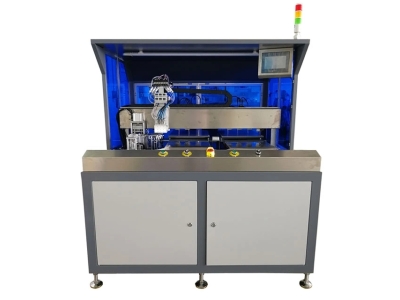 Auto COB Pick and Placer Machi
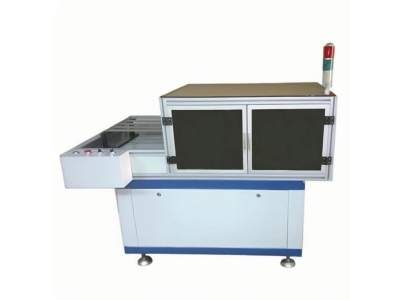 Auto Hole Punching Machine – P
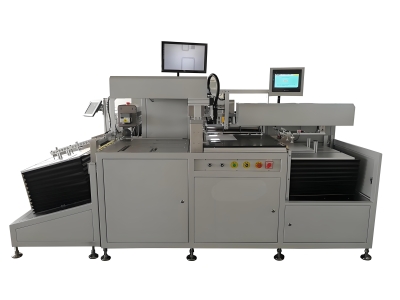 Auto Sheet Shearing Machine -
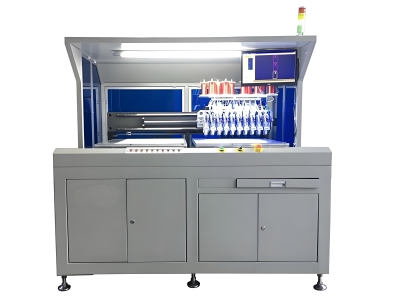 Auto Antenna Embedding Machine
Please contact us with your request
We are ready to answer your questions.