
UV Cure Shrinkage: The Hidden Driver of Print Registration Error
Smart Card Manufacturing Notes
UV Cure Shrinkage: The Hidden Driver of Print Registration Error
Published: November 28, 2026 | ZOWINDA Application Engineering
Registration drift is usually blamed on the press or the plate, but a printed sheet can move after it leaves the print head. UV inks shrink during polymerisation, and on a thin card sheet that shrinkage translates into dimensional change and curl. The error appears only after cure, so press-side checks look correct while the finished cards are off. Treating cure as a dimensional process step, not just a drying step, closes a common and confusing source of reject.
How Cure Shrinkage Moves a Printed Sheet
UV curing converts a liquid ink film into a solid polymer in seconds. As monomers link into a network, the film contracts. On a rigid substrate the ink simply develops internal stress, but a card sheet is thin and somewhat flexible, so part of that shrinkage is relieved by moving the sheet itself. The result is a small change in dimensions and a tendency to curl toward the printed side. A pattern that was registered at the print station can be a fraction of a millimetre out by the time it reaches the next station.
The size of the shift depends on several interacting variables. Higher cure energy generally increases conversion and therefore total shrinkage, but under-curing leaves a soft film that continues to change later. Ink film thickness matters because a heavier deposit shrinks more in absolute terms. Sheet temperature during cure changes the polymer's mobility, so a sheet that runs hot behaves differently from a cool one. Operators who compensate registration by adjusting the plate are correcting a symptom while the real variable sits in the cure unit.
Multi-colour work amplifies the effect. If each colour is printed and cured before the next, the sheet changes size between stations and later colours land slightly off the first. The drift is often directional, following the web or sheet travel, and shows up as a consistent offset at one edge. Designs with fine line work, small text or tight overlay windows are the first to fail, while large solid areas hide the error. That is why the same process can look acceptable on one job and produce rejects on the next.
The downstream consequences extend beyond appearance. A card whose print has shifted can place a printable marking off-centre relative to the embedded antenna or contact module, which matters on products where print and RF features must align. Curl from shrinkage also affects how the sheet feeds through lamination and punching, so a registration problem at print can become a feeding or cutting problem later. Measuring the sheet after cure, not only at the press, is the only way to see the full chain.
Five Ways to Hold Registration Through Cure
- Measure dimensions after cure. Check a registration target on the sheet after the full cure cycle, not only at the print station. Compare it with the pre-cure position to quantify the shift.
- Set cure energy by measured result. Tune lamp power and belt speed so the film is fully converted without excess energy. Verify cure by the chemistry-appropriate method rather than by line speed alone.
- Control ink film thickness. Hold deposit weight within a set band, since a heavier film shrinks more. Track it by coating weight or a densitometric measure tied to your ink system.
- Manage sheet temperature. Keep sheet temperature consistent through cure and record it. A hot sheet has different shrinkage behaviour and can change registration as the line warms up.
- Constrain or compensate the sheet. Use restraint where the process allows, or apply a measured compensation to the plate based on post-cure data. Re-measure whenever ink, lamp or substrate changes.
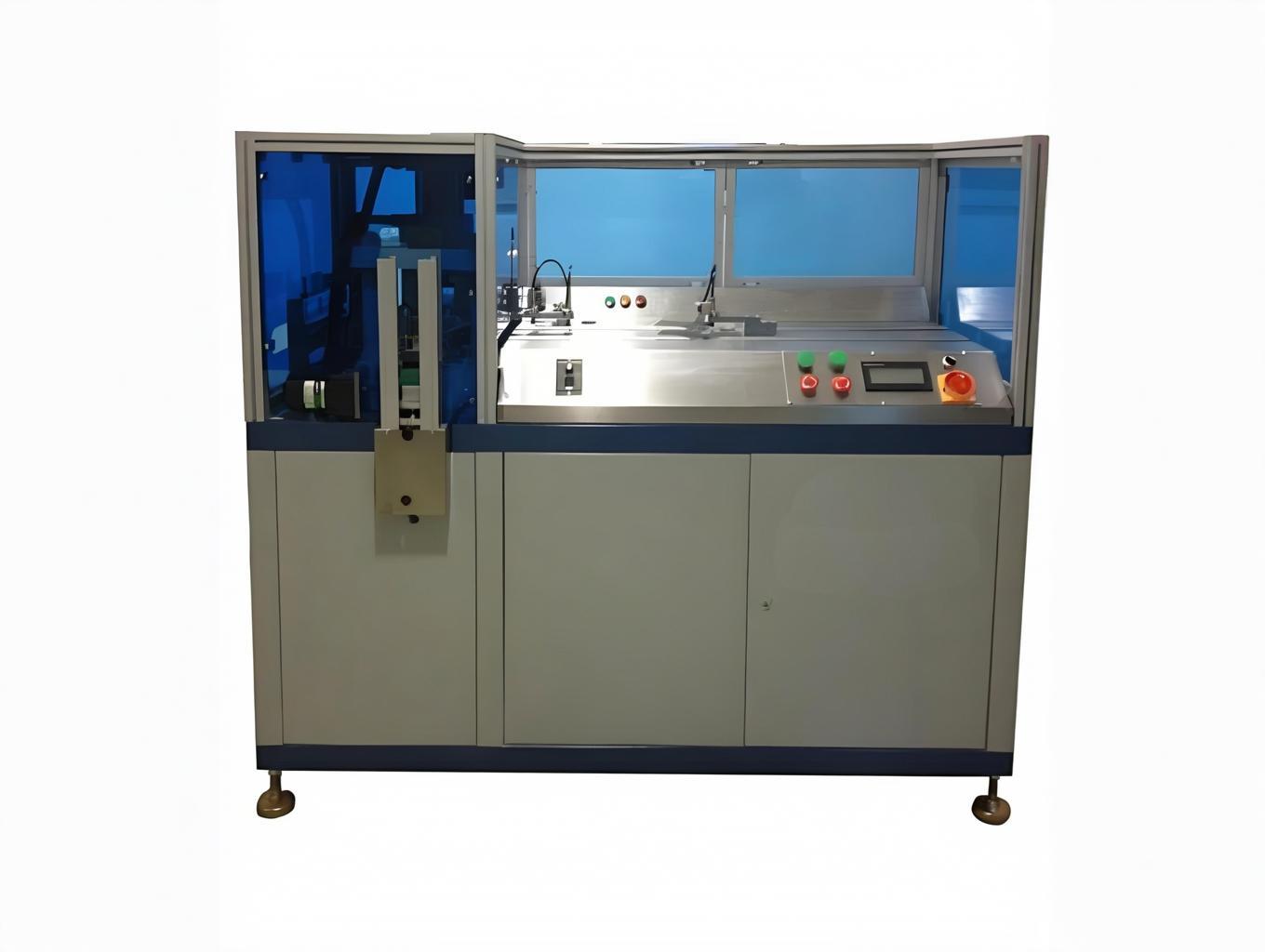
Downstream cutting and punching inherit any dimensional change introduced during print cure. Equipment: Semi-Automatic Card Punching Machine.
Where Cure-Driven Registration Shows Up
✓ Later colours drift from the first
The sheet changes size between cure stations, so subsequent colours land off register. The offset is usually consistent and directional.
✓ The press checks pass but the cards fail
Registration was verified before cure. The dimensional change happens after that check, so the measurement never saw the defect.
✓ Rejects change with line speed
A different belt speed changes cure energy and therefore shrinkage. The process looks stable until speed is adjusted for throughput.
✓ Curl appears after printing
Shrinkage of the ink film bends the sheet toward the printed side, which then feeds poorly through lamination and punching.
Reference Checks for Cure-Stable Registration
These checks describe a dimensional-control approach for UV-cured card printing rather than a universal tolerance. Ink chemistry, lamp type, sheet material and artwork all influence the numbers, so derive every limit from measurements on your own line.
Where Cure Control Pays Back
A print process that measures after cure catches the drift before it becomes a reject. The fix is usually a cure or deposit adjustment, not a press rebuild, once the dimensional change is understood.
- Multi-colour card printing with tight overlay or artwork registration windows.
- Lines where rejects change with belt speed or after a lamp service.
- Products where printed marks must align with an embedded antenna or module.
- Print shops seeing curl or feed problems that start after the cure section.
- Programmes changing ink supplier or substrate without a registration re-qualification.
Frequently Asked Questions
Does more UV energy always mean more shrinkage?
Higher conversion generally increases total shrinkage, while under-cure leaves a film that keeps changing later. The aim is complete cure at controlled energy, not maximum energy.
Why do the press registration checks pass?
They are taken before cure. The sheet changes size during polymerisation, so only a post-cure measurement reveals the true registered position.
Can the plate simply be offset to compensate?
It can, but only after the shift is measured and stable. Because shrinkage varies with ink deposit, temperature and speed, a fixed offset drifts as those variables change.
Next Step
More equipment in this range is listed on the ZOWINDA CardMachine product page, and related application notes appear in our Industry News section.
Related reading:
- Reader Enclosure Materials: How the Housing Retunes the Antenna
- Recycled Content in Card Bodies: The Print Adhesion Penalty
- Inlay-to-Body Registration: The Tolerance Chain Behind a Working Card
- Card Face Printing and Read Range: Where Ink and Overlay Sit in the Stack
- Card Warpage After Lamination: Cooling, CTE and the Flatness Spec
- Laser Marking on Card Faces: Contrast, Depth and Surface Integrity
- Lamination Pads and Pressure Uniformity: The Quiet Yield Lever
- Print Adhesion on PVC and PET-G: Why the Same Ink Fails
Ready to boost your production efficiency?
Contact us for a tailored solution and quotation on inlay production, card testing and personalisation equipment.
Email: info@zowinda.com
WhatsApp: +86 186 2085 0485
 UV Cure Shrinkage: The Hidden
 Recycled Content in Card Bodie
 Reader Enclosure Materials: Ho
 ePassport Cover Bond Ageing: W
Please contact us with your request
We are ready to answer your questions.