
Print Adhesion on PVC and PET-G: Why the Same Ink Fails
Smart Card Manufacturing Notes
Print Adhesion on PVC and PET-G: Why the Same Ink Fails
Published: November 27, 2026 | ZOWINDA Application Engineering
An ink that passes on PVC can lift from PET-G in the same press run. Operators usually blame the ink, but the difference is more often in the surface the ink is asked to hold: additive package, surface energy, treatment decay and the heat history of the sheet. Adhesion failures are also easy to confuse with abrasion failures, because both show ink missing after handling. They need different fixes, and telling them apart at the bench saves a lot of expensive reformulation.
Why the Substrate Decides Adhesion
PVC and PET-G are both used for card bodies, but they are not interchangeable printing surfaces. PVC contains plasticiser and processing additives that can migrate slowly to the surface, leaving a weak boundary layer that ink adheres to rather than to the polymer itself. PET-G is harder and lower in extractables, which sounds easier, but its surface energy and its response to corona or plasma treatment differ. An ink designed around the wetting behaviour of one substrate can bead, crater or simply sit on the other without forming a durable bond.
Surface treatment buys time, not permanence. Corona and plasma raise surface energy by oxidising the top molecular layers, but the effect decays with storage time, humidity and temperature. A sheet treated at the extruder and printed three weeks later may be back near its untreated state. This is one reason adhesion can drift between the beginning and the end of a roll: the material at the core has a different treatment history from the outer layers, and the press operator sees a substrate problem that looks like an ink problem.
The laminating step changes the surface again. Heat and pressure can drive additives toward the face, soften a printed layer, or partially embed it into the overlay. Inks that are fully cured before lamination usually survive; inks that are merely dry to touch can be re-softened and then stick to the press or to the overlay instead of the card. A print that looked perfect after the press and peels after lamination is telling you about cure, not about initial wetting.
Adhesion and abrasion are different failure modes. Abrasion removes ink progressively through rubbing and is driven by surface hardness and film toughness. Adhesion failure lifts intact islands of ink, often starting at an edge or a scratch, and is driven by the interface. Cross-hatch taping tests the interface; a rub tester tests the film. Running only one of them can send the investigation in the wrong direction, especially when a customer complaint mentions ink coming off without saying how it started.
Five Controls for Repeatable Print Adhesion
- Qualify ink on each substrate separately. Run the same ink recipe on PVC and PET-G sheets with the same treatment and cure, then compare adhesion. Do not carry an approval from one substrate to the other without a test.
- Measure surface energy at the press. Use dyne or contact-angle checks on incoming sheets and record the result. Treatment that has decayed in storage can often be recovered with an in-line treatment step, but only if you know it has decayed.
- Control the treatment-to-print interval. Set a maximum storage time between treatment and printing where possible, and store treated sheets away from heat and humidity. If the supplier treats at extrusion, agree the shelf life as part of the purchase specification.
- Verify cure before lamination. Confirm that the ink film is fully cured, not just dry, using the method appropriate to the ink chemistry. A film that softens in the laminator will fail at the interface even if it passed a fresh-print adhesion test.
- Test both adhesion and abrasion after final processing. Run cross-hatch and tape tests plus a rub check on cards that have gone through lamination and any overlay. The finished stack is the only sample that represents the customer.

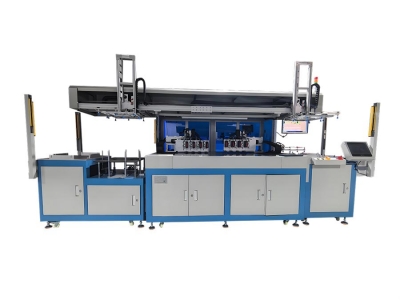
Substrate handling and sheet history set the surface that printing has to bond to. Equipment: High-Speed Inlay Sheet Manufacturing Line.
How Adhesion Problems Reach the Customer
✓ Ink lifts from one edge after a few weeks
A weak boundary layer from additive migration lets the film release slowly. The card looks fine at dispatch and the complaint arrives after the batch is in the field.
✓ Printing changes between roll positions
Treatment decay or uneven treatment across the sheet produces adhesion that depends on where the card sat. The pattern follows the roll rather than the print head.
✓ Ink transfers onto the laminating film
The print was dry but not fully cured. Laminator heat reactivates the film and pulls it away from the substrate, leaving a patchy face.
✓ A rub test passes while customers complain
The film is tough but the interface is weak. Rubbing does not remove it, while bending or a fingernail at an edge lifts it in one piece.
Reference Checks for Print Adhesion
These checks are a starting framework, not an acceptance standard. Ink chemistry, substrate grade, printer type, treatment method and overlay system all change the values, so set limits from data on your own line and agree them with the ink supplier.
Where Adhesion Control Pays Back
Adhesion work is cheap compared with a batch recall, and it usually improves print consistency at the same time. The key is to treat the substrate and its history as part of the process rather than as a fixed input.
- Lines printing both PVC and PET-G cards with a shared ink set.
- Cards that receive an overlay or a second heat cycle after printing.
- Programmes using treated sheet stock with a long storage or shipping interval.
- Products with metallic or heavily pigmented inks where film thickness changes cure behaviour.
- Quality teams investigating complaints described simply as ink peeling off.
Frequently Asked Questions
Can a stronger surface treatment fix every adhesion failure?
No. Treatment helps when wetting is the problem. It does not fix additive migration, incomplete cure or an ink chemistry that is incompatible with the substrate.
Why does the same ink behave differently on PET-G?
Surface energy, additive package and treatment response differ. PET-G is harder and lower in extractables, but an ink tuned to the wetting and cure behaviour of PVC is not automatically qualified on it.
Should adhesion be tested before or after lamination?
After, as well as before. A print can pass at the press and fail once the heat and pressure of lamination have changed the interface or re-softened the film.
Next Step
More equipment in this range is listed on the ZOWINDA CardMachine product page, and related application notes appear in our Industry News section.
Related reading:
- Metallic Ink on Card Faces: The Read-Range Penalty Behind Finishes
- ePassport Cover Bond Ageing: When the Data Page Loosens
- Card Face Ink Abrasion: Why Rub Counts Decide Field Life
- Card Body Thermal Budget: PVC, PET-G and Polycarbonate Lamination Windows
- Card Body Chemical Resistance: Disinfectants, Sweat and Cleaning Agents
- Lamination Pads and Pressure Uniformity: The Quiet Yield Lever
- Dust, Static and Debris: Cleanliness Between Milling and Embedding
- Laser Marking on Card Faces: Contrast, Depth and Surface Integrity
Ready to boost your production efficiency?
Contact us for a tailored solution and quotation on inlay production, card testing and personalisation equipment.
Email: info@zowinda.com
WhatsApp: +86 186 2085 0485
 ePassport Cover Bond Ageing: W
 Print Adhesion on PVC and PET-
 Metallic Ink on Card Faces: Th
 Lamination Bubble Detection: V
Please contact us with your request
We are ready to answer your questions.