
Recycled Content in Card Bodies: The Print Adhesion Penalty
Smart Card Manufacturing Notes
Recycled Content in Card Bodies: The Print Adhesion Penalty
Published: November 28, 2026 | ZOWINDA Application Engineering
Sustainability targets are pushing recycled resin into card bodies, and the change is usually qualified on mechanical strength alone. The surface tells a different story. Melt history, additives and contaminants from the recycled fraction alter surface energy and drive additive migration, which is exactly where printed ink has to bond. A card can pass thickness, strength and colour checks and still lose ink in the field. The remedy is not to abandon recycled content but to qualify it as a new printing substrate.
What Recycled Resin Changes at the Surface
A card body is a layered structure of PVC or PET-G with plasticiser, stabiliser and processing aids. Introducing post-consumer recycled material changes the balance. The recycled fraction has already been through at least one melt cycle, so its molecular weight and additive package differ from virgin resin. It may carry traces of inks, adhesives or labels from its previous life. Those differences do not necessarily weaken the sheet, but they concentrate at the surface, which is the only part the printing process ever sees.
Additive migration is the main adhesion mechanism. Lower-molecular-weight components and residual processing aids move slowly toward the face of the sheet, forming a weak boundary layer. Ink printed onto that layer adheres to the additive rather than to the polymer, and peels away intact after a few weeks of handling. The failure is delayed, which is why it escapes a same-day cross-hatch test. Two sheets with the same recycled percentage can behave differently if one was stored warm or printed soon after extrusion.
Surface energy responds as well. Recycled content changes how the sheet takes a corona or plasma treatment and how quickly that treatment decays. A grade that held dyne level for weeks in virgin form may fall back within days when recycled. Roll position then matters: the outer wraps have a different treatment and thermal history from the core, so adhesion drifts across a production run. Operators see a print problem that actually follows the material supply chain.
Heat history compounds all of this. Recycled resin is often processed hotter or with more shear, and the card body then sees lamination heat on top. A surface that looked acceptable after extrusion can bloom or soften during lamination, pulling ink away with the overlay. Recycled content also varies lot to lot unless the supplier controls the input stream, so a qualification on one lot is not a qualification of the grade. The variation, not the average, is what causes intermittent returns.
Five Controls for Printing on Recycled-Content Bodies
- Qualify each recycled grade as its own substrate. Test adhesion on sheets made with the recycled grade, not on a virgin control. Carry no approval across a change in supplier or recycled percentage.
- Measure surface energy at the press. Check dyne or contact angle on incoming lots and record the value. Treatment that has decayed can be restored in-line, but only if the decay is measured.
- Delay the adhesion judgement. Test cross-hatch and tape on samples after a defined ageing interval as well as immediately. A weak boundary layer often shows up only after storage.
- Lock the treatment-to-print window. Set a maximum time between surface treatment and printing and control storage temperature. Treat recycled sheet as more sensitive to that window than virgin stock.
- Verify adhesion after lamination. Re-test on the finished card including overlay, since lamination heat can reactivate additives and undo a print that passed at the press.

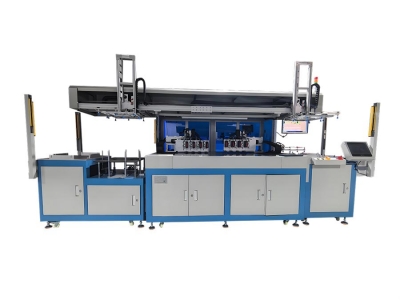
Sheet production history sets the surface condition that any recycled-content card must be printed on. Equipment: High-Speed RFID Card Production Inlay Sheet Manufacturing Line.
How the Penalty Appears in the Field
✓ Ink lifts after weeks in a wallet
A weak boundary layer from additive migration releases slowly. The card looked perfect at dispatch and the complaint arrives after the batch is in service.
✓ Adhesion differs across one sheet
Treatment decay and uneven thermal history follow the roll. The pattern tracks the material, not the print head.
✓ A virgin qualification fails on recycled stock
The ink was approved on a substrate that no longer exists in the product. Surface energy and extractables are different, so the approval does not transfer.
✓ Print transfers onto the laminating film
The surface softened under lamination heat and the ink was not fully cured. The failure is at the interface, not in the ink colour.
Reference Checks for Recycled-Content Print Quality
These checks describe a qualification programme for recycled-content card bodies rather than a fixed specification. Resin chemistry, recycled source, ink system and lamination stack all move the results, so agree acceptance limits from trials on your own material.
Where Recycled-Body Qualification Pays Back
Recycled content and reliable printing can coexist if the sheet is treated as a new substrate. The discipline is to qualify the surface, not only the mechanical body, and to recheck after ageing and lamination.
- Sustainable card programmes specifying a minimum recycled resin percentage.
- Manufacturers seeing adhesion drift only on certain recycled lots.
- Suppliers changing recycled source or percentage after an initial approval.
- Lines where ink lifts after the cards reach the customer rather than at the press.
- Quality teams wanting a defensible qualification for a recycled-body product.
Frequently Asked Questions
Does recycled content always hurt print adhesion?
Not always, but it changes the surface enough that an approval on virgin sheet cannot be assumed. Melt history, additives and contaminants move surface energy and drive migration.
Why does the ink fail weeks later?
A weak boundary layer of migrated additives releases slowly. Fresh-print tests pass because the layer has not had time to form; aged tests expose it.
Can stronger surface treatment fix it?
It can restore wettability, but treatment decays faster on many recycled grades. Control the treatment-to-print window and retest after lamination rather than relying on treatment alone.
Next Step
More equipment in this range is listed on the ZOWINDA CardMachine product page, and related application notes appear in our Industry News section.
Related reading:
- Reader Enclosure Materials: How the Housing Retunes the Antenna
- UV Cure Shrinkage: The Hidden Driver of Print Registration Error
- Print Adhesion on PVC and PET-G: Why the Same Ink Fails
- Card Body Chemical Resistance: Disinfectants, Sweat and Cleaning Agents
- Card Body Thermal Budget: PVC, PET-G and Polycarbonate Lamination Windows
- Card Face Ink Abrasion: Why Rub Counts Decide Field Life
- Inlay Storage and Shelf Life: Moisture Moves the Lamination Window
- Card Batch Traceability: Serialisation and the Audit Trail
Ready to boost your production efficiency?
Contact us for a tailored solution and quotation on inlay production, card testing and personalisation equipment.
Email: info@zowinda.com
WhatsApp: +86 186 2085 0485
 UV Cure Shrinkage: The Hidden
 Recycled Content in Card Bodie
 Reader Enclosure Materials: Ho
 ePassport Cover Bond Ageing: W
Please contact us with your request
We are ready to answer your questions.