
Card Body Chemical Resistance: Disinfectants, Sweat and Cleaning Agents
Smart Card Manufacturing Notes
Card Body Chemical Resistance: Disinfectants, Sweat and Cleaning Agents
Published: November 24, 2026 | ZOWINDA Application Engineering
A card spends its working life being touched, wiped, pocketed and cleaned. That is a chemical environment, even though no one calls it one. The concentrations are low, the contact is intermittent, and the temperature is close to body heat, which is exactly why immersion data on a raw polymer coupon rarely predicts field behaviour. A hospital badge can see hundreds of disinfectant wipes; a transit card carries sweat and skin oil against a heated contact plate; a terminal cleans its card slot with a fluid chosen for the machine, not for the card. The first symptom is usually cosmetic, and the functional failure arrives weeks later.
Three Chemical Environments That Matter
Disinfectants are the most visible group. Isopropyl alcohol at around 70 percent is common in clinics and offices, and quaternary ammonium compounds dominate many surface wipes. Chlorine bleach and peroxide appear less often but are harsher when they do. On PVC, repeated alcohol exposure can extract plasticiser and leave a surface that feels tacky, which then attracts dust and changes how the card feeds. On PET-G, alcohol alone is usually manageable, but alcohol plus tensile stress at a milled cavity or a tight corner can produce crazing. Polycarbonate is prized for heat and impact resistance and is the most sensitive of the three to stress cracking in the presence of alcohols and some cleaners.
Sweat is a quieter environment because it is never reported as a cleaning event. Artificial sweat tests usually run at pH values near 4.5 and 6.5 and at body temperature, with lactic acid, salts, urea and sebum in the mix. On the card face, that film combines with friction from a wallet or a reader slot. At the contact plate, chloride and organic acids sit under a thin electrolyte while a bias is present, which is the same ingredients that drive electrochemical migration at module edges. A contact that passed a dry resistance measurement can drift after a summer of handling without any mechanical wear visible under the microscope.
Cleaning agents inside equipment are the third group and the easiest to overlook. Terminal and access-control readers are wiped with glass cleaners, detergents and occasional silicone-based sprays chosen to keep the housing looking new. Surfactants and silicones transfer to the card, lower surface energy at the overlay, and interfere with printing or adhesion on the next pass. Ionic residues from detergents are worse: they are invisible, they survive a visual inspection, and they become conductive when the card is damp. A line can therefore produce cards that are chemically clean at goods-in and contaminated by the machine that tests them.
Chemistry rarely acts alone. A wipe at 40 degrees Celsius removes more plasticiser than the same wipe at 23, rubbing opens microcracks that soaking never would, and UV exposure after a solvent wipe changes the surface differently from either stress by itself. A useful test matrix therefore includes concentration, dwell time, temperature, rubbing force and a recovery period. Without those five variables, a pass result says only that the card survived one laboratory afternoon.
Five Rules for a Useful Exposure Test
- Start from the real service condition. Write down which fluid, concentration, wipe count, dwell time and temperature the card actually sees. A 500-cycle alcohol wipe test is more informative than a 24-hour soak in a solvent the customer never uses.
- Test the finished construction. Use cards with the final overlay, ink, module adhesive and personalisation. Core coupons miss the interfaces where chemical attack starts, especially the edge of a printed design and the module cavity.
- Add rubbing to the exposure. Wipe with a defined load and travel rather than soaking passively. Rubbing supplies the mechanical energy that turns a surface change into a crack or an adhesion loss.
- Measure function, not appearance only. Record contact resistance, read range, peel strength and bow after exposure and again after 24 hours at 23 degrees Celsius and 50 percent relative humidity. Appearance is a useful note, not an acceptance criterion.
- Separate reversible from permanent change. A card that softens during exposure and recovers overnight behaves differently from one that cracks. Log both states, because the reversible one can still be a handling problem while the permanent one is a reliability problem.
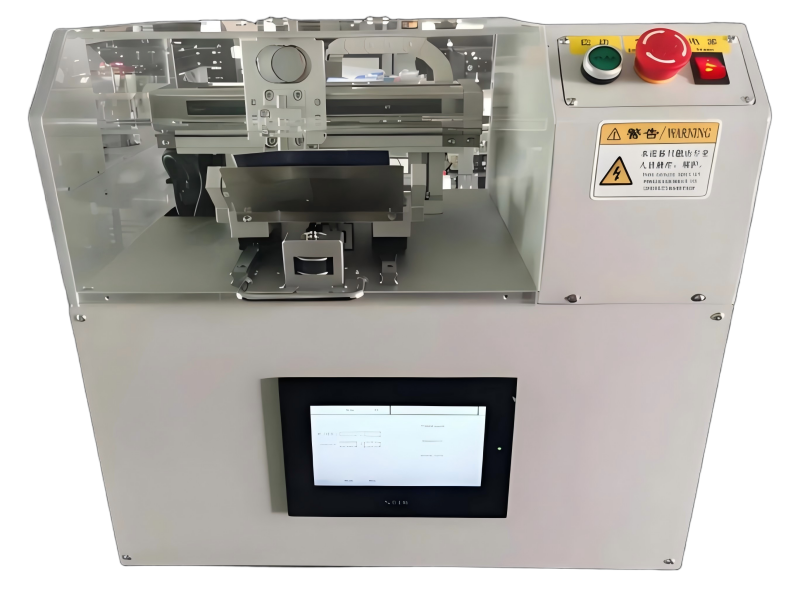
Chemical exposure is a mechanical test as much as a chemical one. Peel and adhesion measurements after wiping expose damage that a visual check misses. Equipment: PT093 Peel Strength Tester.
Failures Often Mistaken for Ordinary Wear
✓ Plasticiser loss and surface tack
Alcohol and strong cleaners can extract plasticiser from PVC. The surface becomes slightly sticky, picks up dust in the reader slot and feeds poorly, long before any dimension changes.
✓ Crazing at a stressed edge
Alcohols and surfactants lower the energy needed for a crack to grow in PC and some PET-G grades. Crazing appears at milled corners and tight radii where the material is already stressed.
✓ Contact corrosion under sweat
Salt and organic acids form a thin electrolyte under the contact plate. Bias and repeated rubbing turn a stable contact into one with intermittent resistance drift.
✓ Overlay lift at a cleaned edge
Surfactant residue from terminal cleaning reduces wetting at the overlay boundary. The card peels from one edge after damp heat, and the adhesive is blamed for a problem that arrived from the reader.
Reference Exposure and Acceptance Values
These are starting conditions and acceptance suggestions, not material guarantees. Formulation, ink system, overlay thickness and module adhesive all shift the result. Qualify the matrix against the fluids used in your customers sites and keep the exact wipe protocol with the report.
Where Chemical Control Pays
Chemical resistance is usually specified too late, after a field complaint has already been blamed on printing or plating. The applications below are the ones where a short exposure matrix saves the most rework.
- Hospital access badges cleaned several times a shift with alcohol or quaternary wipes.
- Transit and campus cards that combine sweat, pocket friction and ticket-machine cleaning fluids.
- Gym and locker systems where disinfectant spray and high humidity occur together.
- Cold-chain logistics cards that move between condensation and a warm reader slot.
- Hotel and casino cards where hand lotion and cleaning residue change surface energy.
Frequently Asked Questions
Does alcohol wipe testing predict disinfectant damage?
Only partially. Alcohol is one component of the exposure; surfactants, friction and temperature decide how much damage accumulates. Test the actual wipe used on site, and include a rubbing step, before drawing a conclusion about service life.
Why does the same card fail in one city and pass in another?
Because the chemical environment differs. Chlorine levels in cleaning water, humidity, indoor temperature and how often terminals are wiped vary by site. A card qualified in a dry office is not automatically qualified for a humid clinic.
Can an overlay solve chemical sensitivity?
It helps, but it moves the weak point to the overlay edge and to any cavity or printed break in the surface. Chemical resistance has to be designed as a construction property, not added as a final film.
Next Step
More equipment in this range is listed on the ZOWINDA CardMachine product page, and related application notes appear in our Industry News section.
Related reading:
- Inlay Die-Cutting Edge Quality: Burrs, Hairlines and Antenna Clearance
- Smart Card Retirement: Data Destruction and the Audit Boundary
- Card Body Thermal Budget: PVC, PET-G and PC Lamination
- RFID in Wet Environments: Dielectric Loading and Detuning
- Electrochemical Migration at Module Edges: Bias and Moisture
- Card Surface Ink Abrasion: Rub Counts vs Real Wear
Ready to boost your production efficiency?
Contact us for a tailored solution and quotation on inlay production, card testing and personalisation equipment.
Email: info@zowinda.com
WhatsApp: +86 186 2085 0485
 Smart Card Retirement: Data De
 Card Body Chemical Resistance:
 Inlay Die-Cutting Edge Quality
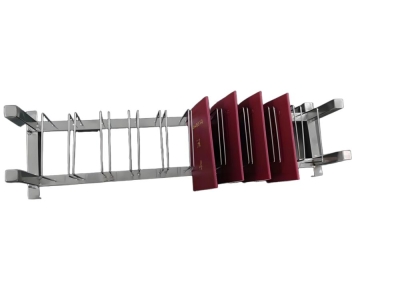 MRP Holder for Passport Testin
Please contact us with your request
We are ready to answer your questions.