
Smart Card Module Laser Cutting Machine 2026 | Zowinda
Smart Card Module Laser Cutting Machine: Precision IC Module Singulation in 2026
A smart card module laser cutting machine is the equipment that separates individual IC modules from a continuous module carrier or panel with a focused laser beam. In modern card plants this step, known as module singulation, sits right before the module is implanted into the milled cavity of a PVC, PET-G or PC card body. Choosing the right singulation method directly affects edge quality, dimensional accuracy, throughput and the long-term reliability of the finished smart card. This guide explains how a module laser cutting system works, why laser singulation is replacing mechanical punching for high-mix production, and what specifications to evaluate before purchase.
What Is a Smart Card Module Laser Cutting Machine?
An IC module is a small packaged chip, typically 8 x 8 mm or 10 x 12 mm, supplied on a reel or strip with a bonding surface and contact pads. The module singulation machine cuts each module free from the carrier without touching the active area. A laser module cutter uses a UV or fiber laser to ablate the narrow tie-bar or frame material, producing a clean, burr-free edge. Because the beam never contacts the part, there is no mechanical stress, no tool wear and no metal debris that could short the contact pads.
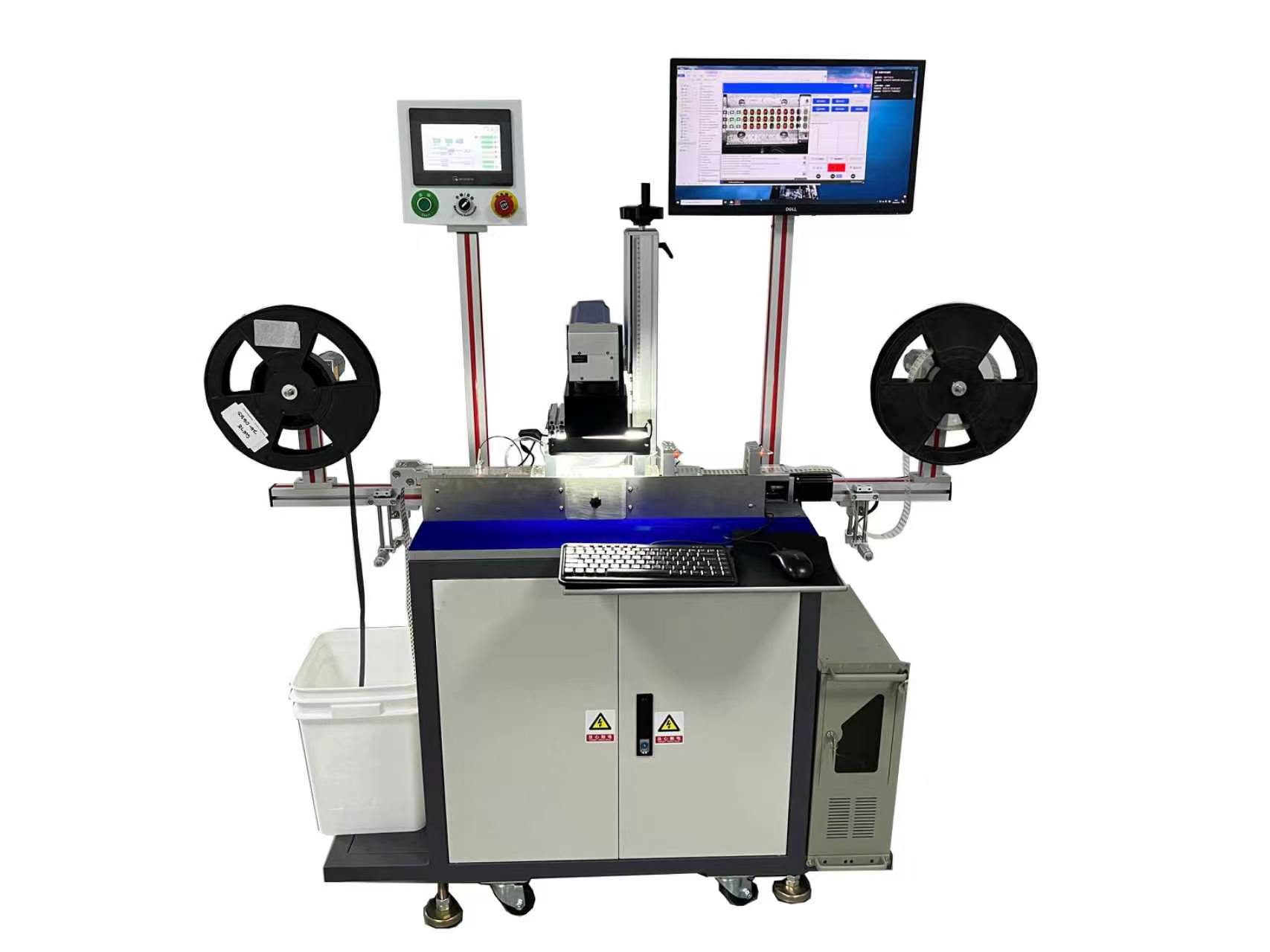
Modules arrive on a metallized or epoxy carrier with a thin connecting frame, and the laser must sever that frame while leaving the package untouched. Wavelength is chosen to be absorbed by the frame material but reflected by the module body, so the cut is self-limiting. ZOWINDA's Modules Laser Cutting Machine is built for high-volume converting lines where module geometry changes frequently. Operators switch between module sizes by loading a recipe instead of changing a die set, which is the single biggest advantage over mechanical punching for factories running many SKUs.
How Module Singulation Works Step by Step
The singulation process inside a typical smart card module laser cutting machine follows a predictable sequence:
1. Carrier feeding and registration. The module strip or reel is pulled into the work area and aligned by optical fiducials so the laser hits the exact tie-bar location on every pitch.
2. Beam focusing and cutting. A galvanometer-scanned laser follows the cutting contour. Cutting parameters (power, pulse width, scan speed) are tuned per module material to avoid thermal damage to the epoxy package.
3. Singulated module transfer. Released modules drop onto a collection tray or move directly to the embedding station. Because the edge is already clean, no secondary de-burring is required.
4. Vision inspection. A camera checks edge completeness, position and absence of recast, rejecting any module that falls outside tolerance before it reaches the card.
5. Reject handling and traceability. Modules that fail inspection are diverted to a separate bin and logged by lot, so the cause can be traced back to a laser recipe or carrier batch. This closed loop is why a module singulation machine can hold tight pitch accuracy even at several thousand modules per hour.
Laser Cutting vs Mechanical Punching for IC Modules
Mechanical punching was the traditional way to separate modules, but it has hard limits. A steel die must be custom-machined for each module size, it wears and sheds particles, and it induces shear stress that can micro-crack the package. A laser module cutter removes those constraints:
| Factor | Mechanical Punch | Laser Cutting |
|---|---|---|
| Tooling change | New die per size | Recipe only |
| Edge quality | Burr, shear stress | Clean, burr-free |
| Particle generation | Metal debris risk | Minimal, extractable |
| Mixed-use flexibility | Low | High |
For plants that also run an Automatic IC Module Implanting Machine, laser-singulated modules feed the embedder with consistently flat, contamination-free parts, which improves coplanarity at bonding. The difference is most visible on small footprints, where a punched burr can lift the module out of the cavity and cause a downstream bond void.
Quality Control: Avoiding Common Singulation Defects
Even with a laser, a few failure modes need monitoring. Recast is molten material that re-solidifies on the edge; it is controlled by pulse shaping and assist-gas pressure. Edge chipping appears when power is too high for the frame material and is corrected by lowering energy per pulse. A heat-affected zone that reaches the package can weaken the epoxy, so the process window is qualified on a sample before a production run. A disciplined module singulation machine records every cut parameter per lot, turning quality control into a data problem rather than a visual guess.
Key Specifications to Evaluate
When comparing a module singulation machine, review these parameters against your volume and module mix:
| Parameter | Typical Range | Why It Matters |
|---|---|---|
| Throughput | 2,000 - 8,000 modules/h | Matches line takt time |
| Position accuracy | plus or minus 0.02 mm | Edge placement on pad |
| Supported module | 6x8 to 12x12 mm | Cover your SKU range |
| Laser type | UV / fiber | Material compatibility |
| Carrier format | Reel / strip | Integration fit |
Throughput and accuracy must be read together: a high module rate is worthless if edge placement drifts at speed. The cavity that receives the module is produced upstream by a Smart Card Slot Milling Machine, so singulation accuracy must be specified together with milling tolerances to guarantee a flush, reliable bond.
Integrating the Laser Cutter Into Your Line
A smart card module laser cutting machine is rarely a standalone island. It is paired with module implanting and a RFID Automatic Flip Chip System when the line also places RFID inlays. In a typical flow, the laser cutter singulates modules, the embedder places them into milled cavities, and the flip-chip or bonding station secures the die. Linking the three stations under one line controller keeps pitch registration consistent and makes yield data traceable end to end.
Modern lines expose the cutter over a line bus so the milling, cutting and embedding stations share a single pitch reference and a common reject count. When a module is diverted at singulation, the downstream embedder is notified and skips that position, preventing a card with a missing or defective chip from ever reaching the personalization stage.
Maintenance and Yield Optimization
Laser systems are low-wear, but uptime depends on discipline. Keep the optical path clean, verify focal distance on a schedule, and calibrate the vision system after any recipe change. Track first-pass yield by module lot so a drift in edge quality is caught before it reaches the card body. Plants that move from punching to a laser module cutter typically report fewer embedded-module rejects and lower tooling inventory, which pays back the equipment within the first year of mixed-SKU production. A simple monthly check, logging beam power and edge measurement for one reference module, is enough to spot most degradation before it becomes scrap.
Frequently Asked Questions
What is module singulation in smart card manufacturing?
Module singulation is the process of separating individual IC modules from a continuous carrier or panel so each module can be implanted into a card. A module singulation machine performs this cut; laser cutting is the method that uses a focused beam instead of a mechanical die. It is the step that turns a module strip into discrete, placement-ready chips.
Why use laser cutting instead of mechanical punching for IC modules?
Laser cutting avoids tool changes between module sizes, produces burr-free edges, generates minimal particles, and adds no mechanical stress to the package. That improves yield and flexibility compared with a custom steel die for every module geometry, and it protects the contact pads from debris that could cause field failures.
What accuracy can a module laser cutting machine achieve?
A well-tuned smart card module laser cutting machine holds roughly plus or minus 0.02 mm edge placement and supports modules from 6x8 mm up to 12x12 mm by recipe, without changing hardware. Accuracy should always be validated at the production throughput, not just at a slow test speed.
How does module laser cutting integrate with embedding equipment?
The singulated, clean-edged modules feed directly to an Automatic IC Module Implanting Machine. Because they are flat and contamination-free, the embedder achieves better coplanarity and bond strength during placement, and a shared line controller lets the embedder skip any module rejected at the cutter.
What module types and materials are supported?
Standard epoxy-packaged contact modules on reel or strip are supported, across common footprints. The laser recipe is adjusted for module frame material, so a single laser module cutter can serve multiple product families on one line without mechanical retooling between jobs.
Get a Module Laser Cutting Machine Quote
ZOWINDA builds smart card module laser cutting machine systems for high-mix, high-yield card production lines. For pricing, a datasheet or a process demo, reach our team directly:
Email: info@zowinda.com
WhatsApp: +86 186 2085 0485
Product page: Modules Laser Cutting Machine | ZOWINDA
Our engineers help you match throughput, accuracy and carrier format to your existing milling and embedding stations so the whole line runs as one validated process.
 Smart Card Module Laser Cuttin
Smart Card Module Laser Cuttin
Smart Card Module Laser Cuttin
 NFC Operating Modes Explained:
Smart Card Data Encoding Forma
NFC Operating Modes Explained:
Smart Card Data Encoding Forma
Please contact us with your request
We are ready to answer your questions.