
Reel-to-Reel or Sheet-to-Sheet: Matching Inlay Architecture to Volume
Smart Card Manufacturing Notes
Reel-to-Reel or Sheet-to-Sheet: Matching Inlay Architecture to Volume
Published: November 14, 2026 | ZOWINDA Application Engineering
Before any inlay is bonded, tested or laminated, someone chose the transport architecture of the line: a web running continuously from reel to reel, or discrete sheets moving station to station. The choice is usually made with the machine quotation and then lived with for a decade, so it deserves more analysis than it usually gets.
What the Architecture Actually Decides
A reel-to-reel line treats the antenna substrate as a continuous web. Antennas are printed or etched in repeating columns, chips are placed and bonded while the web advances or stops on registration marks, and testing happens inline before the web is slit into strips. The economics are compelling at volume: registration is maintained mechanically once, handling between steps disappears, and every station shares the same transport reference. Speeds are limited by the slowest inline station, and by the reliability of that registration over long runs.
A sheet-to-sheet line keeps the standard sheet format from start to finish. Sheets are collated, printed, laminated and cut much as plain cards always have been, and inlay steps slot into existing infrastructure. The costs are different: every transfer between stations is a registration and handling event, and every handling event is a scratch, a misalignment or an edge chip. What the sheet buys is flexibility. Changeovers between products are sheet-level, short runs are economic, and a factory already built around sheets adds inlay capability without re-inventing its logistics.
The hidden variable is yield accounting. On a web, one registration fault can cost a hundred metres of product, so the line justifies inline vision and automatic rejection gates. On sheets, losses are bounded by the sheet, and operators see problems sheet by sheet. Neither is intrinsically better; they fail differently. A web punishes rare large mistakes, a sheet punishes constant small ones. Which is cheaper depends on how repeatable your upstream processes actually are, and that number should be measured before the machine is quoted, not after.
Downstream format finally settles it for many converters. Cards are finished as sheets for lamination and personalisation, so a web must be cut into sheets at some point, and that cut reintroduces the sheet world. A fully web line all the way to functional modules, followed by sheet conversion, is the classic high volume payment architecture. A sheet line from day one is the classic personalisation house and mid volume converter architecture. Most confusion arises when a business migrates between the two without re-deriving the economics.
A Selection Sequence That Ends the Debate
- Quantify the volume band, honestly. Below roughly one million inlays per year per product, sheet changeover economics usually dominate. Above roughly five million per year per product, web registration and handling economics dominate. Between the bands, the decision is made by changeover frequency and product mix, so measure both.
- Count handling events per unit for each route. Every transfer, flip and buffer is a defect opportunity. Tally them for a candidate web line and a candidate sheet line for the same product; the difference is a defensible yield argument, not a feeling.
- Decide where the web ends. If personalisation and lamination happen on sheets, the web must end in a slitter and sheet cut whose registration you also qualify. Choose the transition point deliberately and put it on the flow diagram.
- Budget registration over the whole web. Print-to-antenna, chip-to-antenna and slit registration stack multiplicatively. Ask the line supplier for the registration budget per station and verify it on registration test patterns, not on the sales brochure.
- Pilot the changeover, not the happy path. Run a planned product change on the proposed architecture as part of qualification. The changeover is where architectures reveal their true operating cost, and one afternoon of measurement beats a year of estimates.
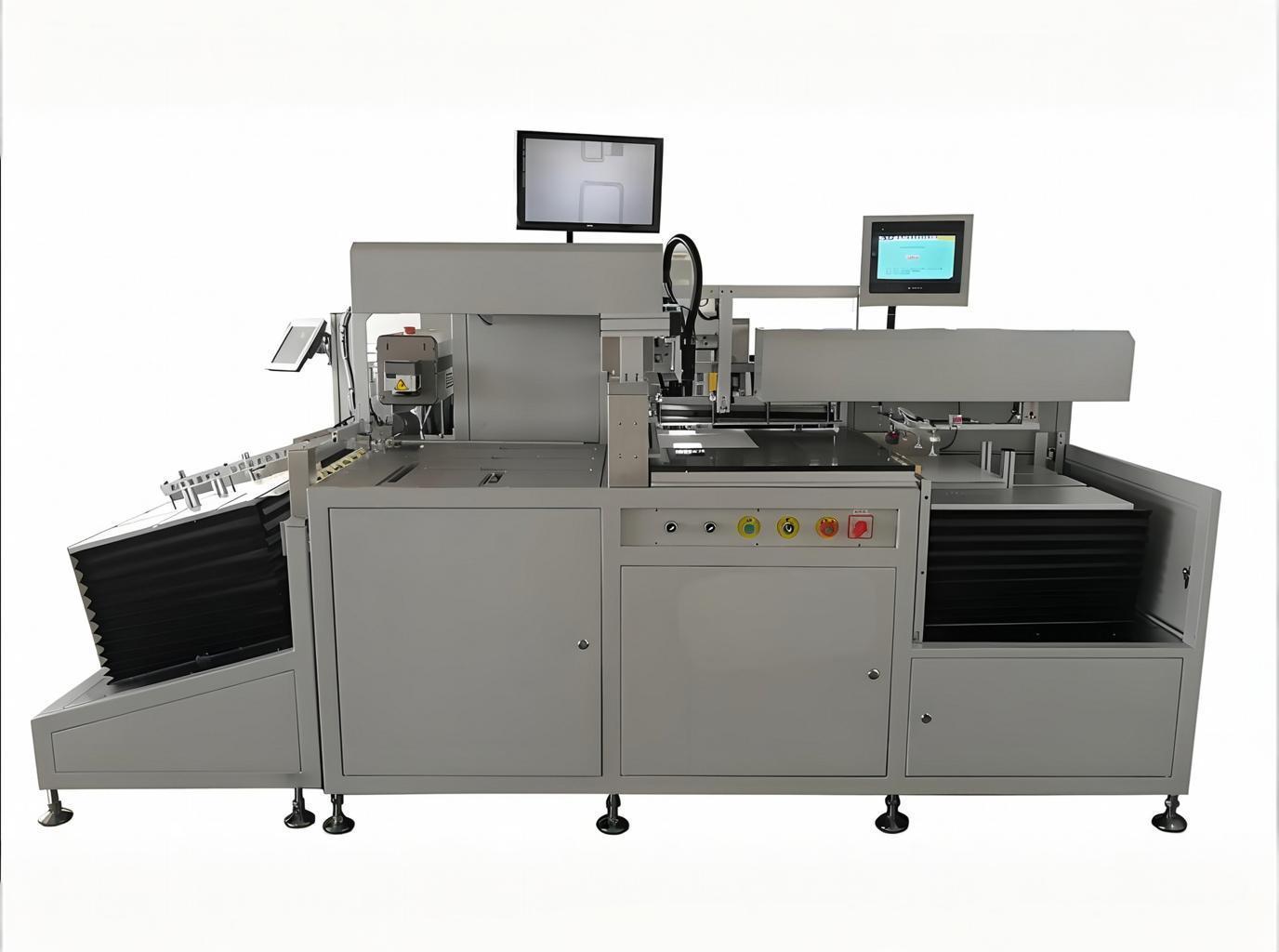
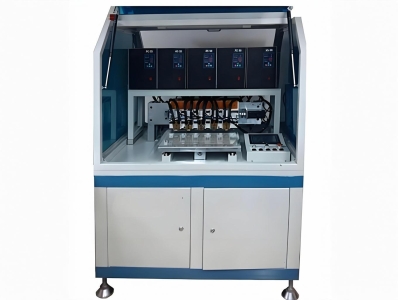
The transport choice sets registration, handling count and where yield losses appear. Equipment: Inlay Sheet Cutting Machine.
Rules That Keep Either Architecture Honest
✓ Measure repeatability before capacity
A fast line running an unstable upstream process converts scrap at higher speed. Buy architecture for the process you have demonstrated, not the process you intend to fix.
✓ Keep one registration reference per route
Webs live on a mechanical reference, sheets on fiducial marks per sheet. Mixing references mid-route is where double registration faults are born.
✓ Size buffers to the real failure rate
Inline stations only help if a stopped station does not stop the whole web. Buffer capacity is an architecture decision and belongs in the quotation, not as an upgrade discovered later.
✓ Audit yield loss shape yearly
A sheet line drifting towards many small losses may be ready for a web; a web suffering rare catastrophic losses may need better upstream vision. The architecture that was right at launch ages with the process.
Reference Values for Line Selection
Reference bands for a typical contactless inlay converting business. The volume crossover depends heavily on product mix, changeover frequency and upstream process repeatability, so derive your own bands from measured data.
Where the Architecture Question Appears
The same selection logic applies wherever repeating electronic units ride a transport medium into a finished product:
- High volume payment and transit inlay production for card laminators
- Mid volume converter lines adding contactless capability to sheet infrastructure
- RFID label and tag converting with roll fed antenna material
- ePassport booklet production where security requirements constrain formats
- Any factory migrating between architectures as volumes and product mix change
Frequently Asked Questions
Can a sheet line reach the yields of a web line?
In stable, well controlled processes, yes: sheet losses are bounded and visible, and disciplined handling keeps them low. The web advantage is structural, in fewer handling events and one shared registration reference, but a sheet line with excellent process control can match it at moderate volume. The web pays off as volume and speed rise past the sheet line changeover and handling costs.
Where should the web end in a hybrid factory?
Usually after functional test of the modules or inlays and before the first step that needs the sheet format, which is most often collation for lamination. Ending the web later means the slitter must hold card sheet registration, which is achievable but adds a qualification item; ending it earlier throws away the handling advantages the web was bought for.
Is reel-to-reel cheaper per unit at any volume?
No. At low volume the fixed costs of web tooling, registration setup and product-specific columns make web runs expensive per unit. The crossover comes from amortising those fixed costs across millions of identical units, which is why the architecture question is always a volume question first.
Next Step
More equipment in this range is listed on the ZOWINDA CardMachine product page, and related application notes appear in our Industry News section.
Related reading:
- Card Body Thermal Budget: PVC, PET-G and Polycarbonate Lamination Windows
- Gold Bump Flip-Chip or Wire Bonding: Choosing the Module Interconnect
- High-Speed RFID Card Production Inlay Sheet Manufacturing Line
- Printed Antenna Tolerance: Which Dimension Actually Moves Resonance
Ready to boost your production efficiency?
Contact us for a tailored solution and quotation on inlay production, card testing and personalisation equipment.
Email: info@zowinda.com
WhatsApp: +86 186 2085 0485
 Reel-to-Reel or Sheet-to-Sheet
 Gold Bump Flip-Chip or Wire Bo
 Card Body Thermal Budget: PVC,
 Isotropic Conductive Adhesive
Please contact us with your request
We are ready to answer your questions.