
Smart Card Retirement: Data Destruction and the Audit Boundary
Smart Card Manufacturing Notes
Smart Card Retirement: Data Destruction and the Audit Boundary
Published: November 24, 2026 | ZOWINDA Application Engineering
A retired card is usually treated as a piece of plastic with a small metal insert. From a security point of view it is a portable credential store, and it often remains one long after the holder has left the building. The printed number matters less than the EEPROM or flash inside the module, which may contain keys, counters, biometrics templates or personal data. Revoking a credential in a server does not remove it from the card, and a lost card can still be accepted by an offline reader. A retirement process has to answer two separate questions: is the data gone, and can anyone prove it later.
What Remains on a Retired Card
Start with the logic of the credential. Contact and contactless cards store data in non-volatile memory, and many products also keep authentication keys and transaction counters. A card that appears blank to a simple reader may still hold a key pair or a stale certificate. Some families support a formal kill or deactivation command, and some do not; assuming that a generic erase command works across a mixed fleet is one of the most common mistakes in a retirement programme. The first design question is therefore an inventory question: which card types are in circulation, and what does each one actually retain.
Backend revocation and card-side destruction solve different problems. A revocation list stops an online reader from accepting a credential, which is exactly what is needed when a card is lost. It does nothing for an offline terminal that has not received the update, and it does not remove personal data from the chip. Conversely, physically shredding a returned card does not help if the credential was never revoked and a duplicate exists. Good practice runs both paths: revoke at the system boundary first, then destroy the returned medium, and keep the two evidence trails separate.
Physical destruction has an awkward boundary. Shredding a card into large fragments can leave the die itself intact, and an intact die is the part that carries the data. Cutting a card in half through the module is better, but only if the cut actually fractures the silicon rather than the plastic around it. Module punching and laser cutting remove or split the insert with far more certainty, which is why card manufacturers already use similar equipment during production. The method should be selected by where the data lives, not by what looks dramatic on a video.
The audit boundary is about identity and custody. A pile of destroyed plastic proves that something was destroyed, not that the cards on the revocation list were destroyed. A defensible record links a batch or serial range to a witnessed destruction event, a count reconciliation against what was issued, and a waste handoff that makes resale of intact modules impossible. Retention periods depend on local law and internal policy, but the evidence has to exist at the moment an auditor asks, not be reconstructed from memory months later.
Five Steps in a Defensible Retirement Flow
- Classify cards before collecting them. Separate contact, contactless and dual-interface products, and mark which ones carry personal data or high-value credentials. A single destruction method for a mixed fleet usually protects the wrong thing.
- Revoke first, then collect. Push the revocation or expiry to every reader population, including offline devices with delayed update cycles. Record the timestamp, because a card that is physically destroyed before revocation can still leave a live duplicate in the field.
- Match the destruction method to the medium. Fracture the module die or remove it entirely; treat magnetic stripe and printed personal data separately. If a recycler receives the residue, specify that intact modules must not be recovered for resale.
- Witness, count and identity-check. Run the destruction under a two-person rule, reconcile returned counts against issued counts, and record serial ranges in the destruction log. Exceptions need a named reason, not a footnote.
- Hand off with a waste manifest. Use a named carrier, retain the transfer document and keep the destruction certificate with the revocation record. The chain ends only when both documents can be produced together.
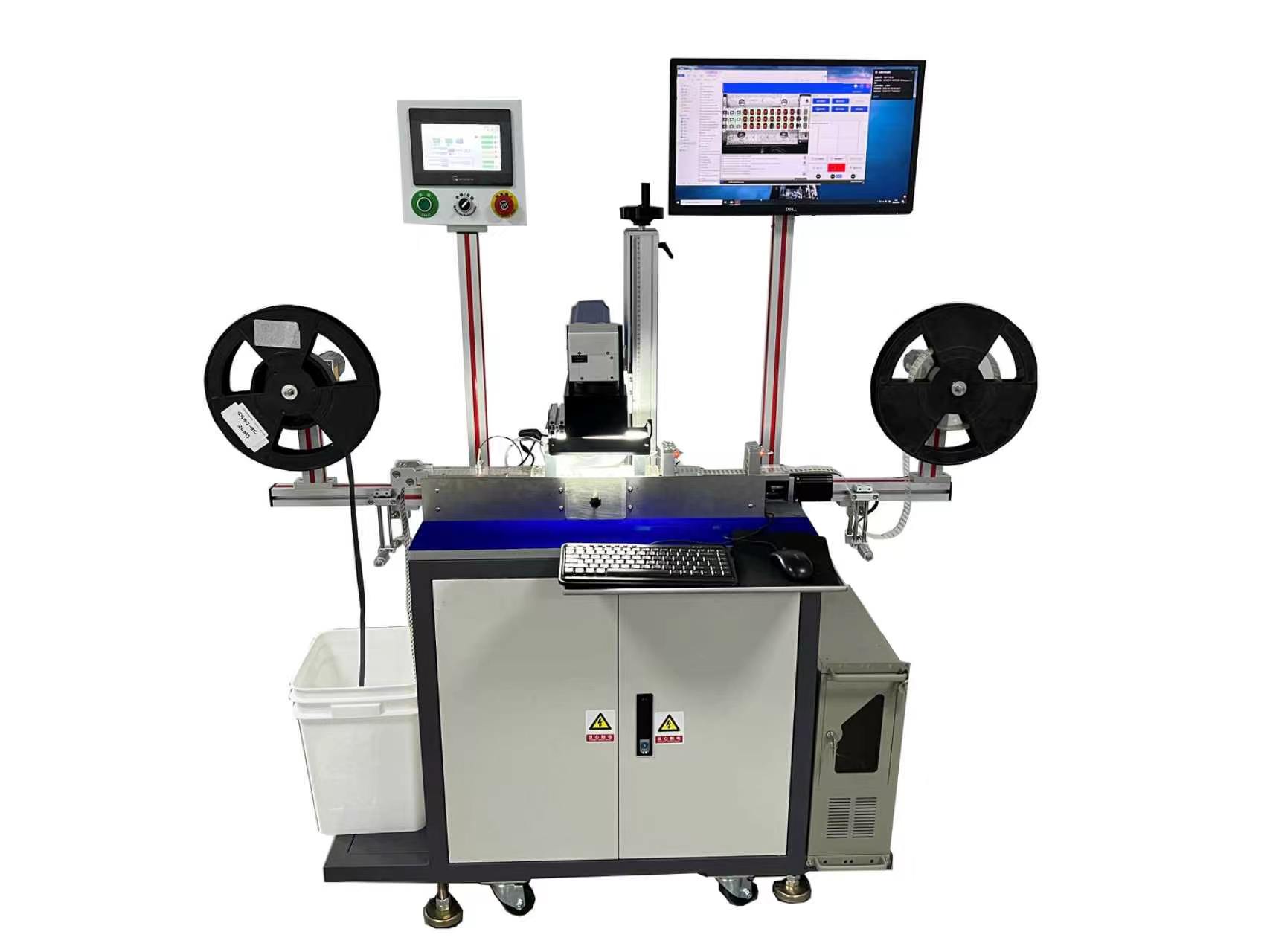
Module-level cutting can separate the data-bearing die from the card body. Destruction equipment should be chosen from the location of the data, not from the appearance of the scrap. Equipment: Modules Laser Cutting Machine.
Where Audits Usually Break
✓ Count without identity
A reconciled number is useful, but it cannot prove that the listed credential was destroyed. Serial ranges or controlled batch IDs close that gap.
✓ Destruction after handoff
Once a bag leaves the site, the evidence becomes a supplier claim. Witness the destruction before custody transfers, or audit the partner to the same standard.
✓ Chip intact inside large fragments
Shredded plastic can look thoroughly destroyed while the die remains readable. Sample the output and verify that the data-bearing part is fractured.
✓ Reissue without revocation
A new card with the same identity and an old credential still valid offline creates a window that no destruction certificate can close.
Evidence to Retain at Each Stage
These are practical control points rather than a universal legal standard. Card constructions, privacy rules and customer contracts differ, so align the evidence set with the applicable regulation and with the auditor before the first destruction run.
Where Retirement Design Pays
A retirement process is judged at the worst moment, usually during an audit or after a lost-card incident. These are the cases where the design of the flow matters most.
- Employee badges returned on exit, where the credential must stop working before the card is shredded.
- Campus and library cards reissued at scale, with old and new credentials active in the same reader fleet.
- Payment and loyalty cards with personal data on the chip as well as the printed face.
- Contract-manufactured cards where destruction happens at a supplier site rather than in-house.
- Programmes that recycle card plastic and need proof that no functional module left the facility.
Frequently Asked Questions
Is cutting a card in half enough?
Only if the cut destroys the data-bearing die and the policy accepts that method. Many halves leave the module intact. Sample the output and verify the silicon, then write the accepted method into the procedure.
Can a returned card be wiped and reissued?
Sometimes, but it has to be qualified per card family. Erase commands, key replacement and re-personalisation are not interchangeable, and a reused card carries the previous lifecycle into the new one if any secret remains.
Who should witness destruction?
Two people is a common minimum: an operator and an independent witness or auditor. For customer-owned credentials, invite the customer or provide time-stamped video linked to the batch record so the evidence can be reviewed later.
Next Step
More equipment in this range is listed on the ZOWINDA CardMachine product page, and related application notes appear in our Industry News section.
Related reading:
- Inlay Die-Cutting Edge Quality: Burrs, Hairlines and Antenna Clearance
- Card Body Chemical Resistance: Disinfectants, Sweat and Cleaning Agents
- Booklet Spine Adhesive: Flexibility Beats Peel Strength
- SIM Cards in Wearables: Micro-Motion Fretting in a Damp World
- Contact Plate Life: Wear, Fretting and Resistance Drift
Ready to boost your production efficiency?
Contact us for a tailored solution and quotation on inlay production, card testing and personalisation equipment.
Email: info@zowinda.com
WhatsApp: +86 186 2085 0485
 Smart Card Retirement: Data De
 Card Body Chemical Resistance:
 Inlay Die-Cutting Edge Quality
 MRP Holder for Passport Testin
Please contact us with your request
We are ready to answer your questions.