
SIM Cards in Wearables: Micro-Motion Fretting in a Damp World
Smart Card Manufacturing Notes
SIM Cards in Wearables: Micro-Motion Fretting in a Damp World
Published: November 21, 2026 | ZOWINDA Application Engineering
Put the same SIM card in a phone and in a fitness watch and you get two different reliability stories. The phone tray sits still in a dry pocket; the watch lives on a wrist that bends, sweats, swings and warms and cools with every shower. The card itself does not change, but its contact interface does: micrometre-scale relative motion between pad and connector, thousands of times a day, in an atmosphere laced with chloride. The failure that results is fretting, and it is invisible on the bench because it needs exactly the environment the bench does not reproduce. Field returns read as random SIM-not-detected events, but the mechanism is deterministic and designable against.
Why Small Motion Is Worse than Big Motion
Fretting is corrosion accelerated by micro-motion: relative displacements of a few micrometres to tens of micrometres between contact surfaces, far too small to see and far too repeated to ignore. Each tiny wipe exposes fresh metal, the exposed metal oxidises, the next wipe grinds the oxide into debris, and the debris accumulates in the contact zone as a resistive layer that grows with every cycle. Large slides actually clean contacts; fretting amplitudes are precisely the range where cleaning fails and burial wins. A contact that measures milliohms when new can drift through ohms within months of use, and the electronics above it, which were designed for a stable low resistance, start to see a contact that occasionally drops the connection for a millisecond or an hour.
The wearable supplies motion from every direction. Wrist flexing distorts the chassis and with it the SIM tray geometry; arm swing and footfall add vibration with a rich spectrum of small amplitudes; thermal cycling from body heat, sun and showers expands and contracts card and connector at different rates, sliding their contact points against each other. None of these displacements is large. Together they are a fretting bench running continuously, which is why a card and connector pair that passes a static insertion test in the lab can still fail in service.
Moisture turns the same motion into a faster and nastier mechanism. Sweat is salty, slightly acidic and usually present exactly where wearables are worn; it films the contact zone, converts benign oxidation into active corrosion and makes the debris conductive in the wrong way. The combination, fretting corrosion, is the mechanism behind contact pairs that look spotless under a magnifier and measure ten times their specified resistance. It also connects to the wider humidity story of electronics: ionic residues plus damp plus bias is the recipe for the electrochemical migration that produces intermittent failures far from the original contact, so a wearable SIM environment attacks from two directions at once.
Design has real levers here, and they are contact physics rather than exotic materials. Higher and stable normal force resists motion and keeps oxide from winning, within the wear budget of the plating. Gold thickness over the nickel barrier is the classic specification, because thin flash gold is porous and lets nickel oxide climb into the contact. Wipe geometry, a designed sliding path on insertion, cleans the contact where fretting cannot. Retention design decides whether wrist flex loads the contacts or is absorbed by the tray. And the qualification must include monitored dynamic exposure: vibration and thermal cycling with contact resistance logged live, because endpoint testing after the chamber misses the intermittent behaviour that is the whole symptom.
Qualifying a SIM Interface for Wearable Duty in Five Steps
- Define the motion and moisture budget of the product. Write down the actual environment: wrist flex amplitude, activity vibration, sweat exposure and thermal swings. A qualification without this budget certifies the device that does not exist.
- Specify the contact pair as a system. Normal force, gold thickness over nickel barrier, wipe length and tray retention belong in one specification, because they trade against each other. A connector quoted only by insertion force is not a contact specification.
- Test dynamically with contacts monitored live. Run vibration and thermal cycling with contact resistance logged continuously through the test. Intermittent events are the failure mode; an endpoint measurement after the chamber is blind to exactly the symptom that reaches the user.
- Age with realistic chemistry. Add artificial sweat exposure and damp heat to the dynamic programme, in sequences that match real use. Dry fretting numbers underestimate the wearable case by a wide margin.
- Accept on resistance drift and event rate. Set limits on resistance growth and on the rate of transient disconnections, not only on a final pass or fail. Drift curves from the test predict field behaviour; a single endpoint number does not.
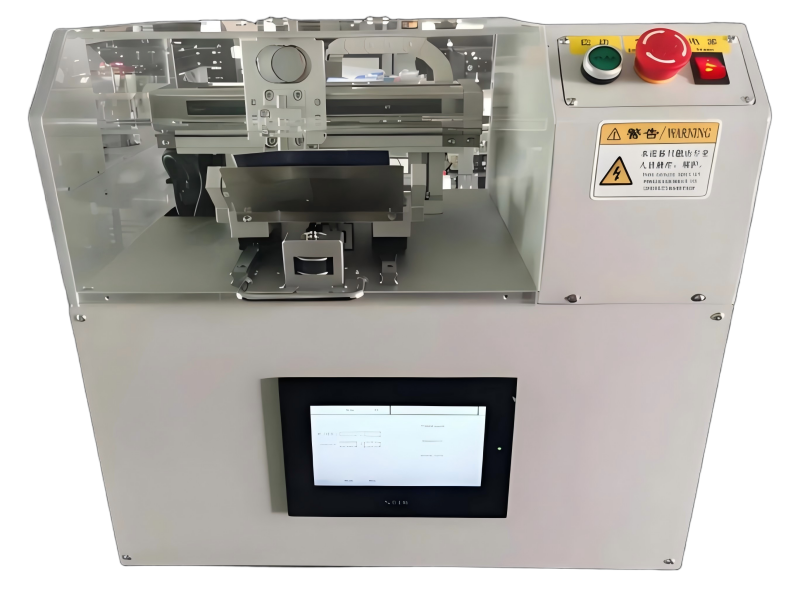
Peel and contact-force verification on the finished module is where fretting resistance is designed in, not discovered in returns. Equipment: PT093 Peel Strength Tester for Card and Module Testing.
What a Fretting-Resistant Design Gets Right
✓ Contact force treated as a spec, not a feel
Normal force and its stability across thermal cycles are specified and measured, because force is the first defence against micro-motion and the first casualty of a flexing chassis.
✓ Plating specified against porosity
Gold thickness over the nickel barrier is written into drawings with a minimum, so flash-gold contacts whose porosity invites nickel oxide never reach production.
✓ Retention absorbs the motion
Tray and holder geometry keep wrist flex from loading the contact interface directly; the contacts see clamping, not bending.
✓ Qualification watches the contacts live
Monitored dynamic testing catches the intermittent disconnection that endpoint checks miss, which is the only behaviour the user ever experiences.
Reference Values for Wearable SIM Contact Qualification
Reference notes for contact fretting qualification of removable SIM interfaces in wearable devices. Exact limits depend on connector design, plating system, activity profile and exposure chemistry, and must be set from your own monitored test data.
Where the Discipline Applies
Anywhere a removable contact interface lives on a moving, sweating body:
- Smartwatches and fitness bands with removable SIM or SAM trays
- Industrial wearables and badge terminals worn through full shifts
- Animal and asset tags with contact interfaces in outdoor service
- Vehicle-mounted devices exposed to vibration and thermal cycling
- Any connector pair whose returns read as intermittent, no-fault-found
Frequently Asked Questions
Why does the same SIM work fine in a phone and fail in a watch?
The phone tray is mechanically quiet and dry; the watch flexes the tray, vibrates it, sweats on it and thermally cycles it. The card does not fail; the contact interface does, through micro-motion fretting and fretting corrosion. Reseating the SIM sometimes restores contact temporarily, which is why these returns so often pass bench inspection.
Is eSIM the only real answer for wearables?
eSIM removes the mechanical contact entirely, which is why most wrist-worn devices use it. But removable SIM remains the right answer where devices must be field-swapped, provisioned by hand or used across ownership changes, and a properly specified contact pair, force, plating, retention and monitored qualification, is reliable in service. The failure is a design gap, not an inevitability.
Our contact resistance tests pass on new units. Is that enough?
New-unit resistance only proves the contact was assembled. Fretting is a wear process whose signature is drift and intermittent events over time. A monitored dynamic test that logs resistance through vibration and thermal cycling, with sweat exposure in the sequence, is what predicts the field; a spot measurement predicts the bench.
Next Step
More equipment in this range is listed on the ZOWINDA CardMachine product page, and related application notes appear in our Industry News section.
Related reading:
- Card Face Ink Abrasion: Why Rub Counts Decide Field Life
- Lamination Pads and Pressure Uniformity: The Quiet Yield Lever
- Contact Plate Life: Wear, Fretting and Resistance Drift
- RFID in Wet Environments: Dielectric Loading, Detuning and the Fixes That Hold
- Electrochemical Migration at the Module Edge: Bias, Moisture and Ionic Cleanliness
Ready to boost your production efficiency?
Contact us for a tailored solution and quotation on inlay production, card testing and personalisation equipment.
Email: info@zowinda.com
WhatsApp: +86 186 2085 0485
 SIM Cards in Wearables: Micro-
 Lamination Pads and Pressure U
 Card Face Ink Abrasion: Why Ru
 Read Range Test Uncertainty: W
Please contact us with your request
We are ready to answer your questions.