
Inlay Sheet Yield Maths: Where a Two Percent Layout Change Pays
Smart Card Manufacturing Notes
Inlay Sheet Yield Maths: Where a Two Percent Layout Change Pays
Published: November 12, 2026 | ZOWINDA Application Engineering
Every inlay quotation is really two numbers arguing with each other: how many inlays fit on a sheet, and how many of those survive the converting line. Teams usually optimise the first number, because it is visible in the CAD file, and then lose the gain to the second, because a tighter layout is also a layout with less edge to hold and less gap between antennas. The result is a line that runs faster on paper and costs more per good inlay in reality.
Four Numbers, One Cost
Gross inlays per sheet is the easy one: rows multiplied by columns, derived from antenna pitch in both directions. Net inlays per sheet subtracts the material you cannot use, the edge strip the registration system needs and the border the lamination plate will not press flat. Utilisation is net inlay area divided by usable sheet area, and it is the number that should appear in a quotation, because gross counts flatter every layout by construction.
Cost per good inlay is where the argument resolves. Take sheet cost, add converting cost, add the disposal cost of the material you scrap, and divide by the net inlays that reach the next station as good product. That last word carries the weight: a layout that gains four inlays per sheet but adds two percent to the registration reject rate can easily be a net loss, and the loss is invisible in any figure that counts inlays rather than passes.
There is a physical limit that stops the arithmetic from running away. Adjacent antennas couple. Place them too close and the mutual inductance pulls resonance, which is a quality problem you will only see at the frequency test station two processes later, and it looks like an antenna print defect rather than a layout decision. The gap between antennas is therefore a tuning parameter as much as a yield parameter, and it is the reason the tightest possible layout is rarely the best one.
How to Re-Lay a Sheet Without Losing the Gain
- Establish the usable area honestly. Subtract the registration edge, the plate border and any gripper margin before counting anything. A layout that ignores these produces a beautiful number and a line that cannot hold register.
- Set the minimum antenna gap from coupling, not from the knife. Decide the shortest gap at which adjacent antennas still measure inside their resonance window, then treat that as a hard constraint on the layout.
- Count gross, net and good separately. Three numbers, three different meanings. Reporting only the first hides the reject rate; reporting only the last hides where the loss is happening.
- Measure setup scrap apart from running scrap. Setup scrap is a fixed cost per job and disappears with longer runs. Running scrap is a rate problem and follows you. Mixing them makes every short run look like a bad layout.
- Re-qualify resonance after any layout change. A new pitch means new coupling. Re-run the frequency distribution before releasing the layout, or the saving shows up as a yield loss downstream.

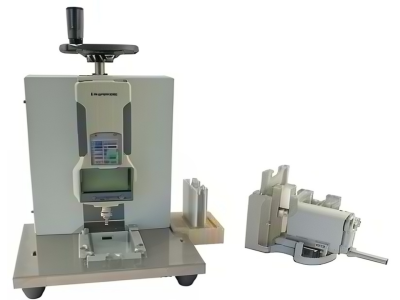
Figure: inlay sheet converting line, where layout, registration and edge trim together set the cost per good inlay. Equipment: Auto Contactless Card Inlay Line.
Where Yield Actually Leaks
✓ Edge Trim and Register
The strip you must leave for registration is a fixed percentage of sheet width. On narrow sheets that percentage is large, which is why sheet format choice can matter more than clever nesting.
✓ Antenna Cross-Coupling
A tight pitch detunes neighbours and shifts the resonance distribution. The symptom appears as sporadic frequency failures with no print defect visible under the microscope.
✓ Patch and Bridge Placement
Every patch adds a height step. A layout that puts patches in a dense row creates a pressure ridge in lamination, and the resulting thickness variation becomes a card-body reject later.
✓ Scrap Classification
If scrap is only counted as weight, nobody knows whether it was setup waste, registration loss or material defect. Weight tells you the cost; classification tells you what to change.
Layout Parameters Worth Fixing in Writing
The values themselves depend on your antenna design, converting line and lamination plate. What should be fixed is the discipline of stating each one, so a layout change can be evaluated on cost per good inlay rather than on gross count.
When the Arithmetic Changes the Decision
None of this requires a new machine. It requires the layout to be treated as a process parameter with a measured limit, and the yield to be reported in a way that separates the three losses. Once that is in place, the two percent layout change that looked like a saving either proves itself on cost per good inlay, or is quietly dropped for the right reason. The companion notes on antenna resonance and on test programmes explain why the coupling limit is a real physical constraint, and how to catch a layout mistake before it reaches a customer.
- Choosing between two sheet formats for a new inlay design
- Deciding whether a tighter nesting is worth re-qualifying resonance
- Explaining a cost per card that a customer says is uncompetitive
- Justifying a wider edge allowance after a registration-driven reject spike
Frequently Asked Questions
Is a higher gross inlay count per sheet always better?
No. Gross count ignores edge trim, plate border and the registration strip, and it ignores the coupling limit between adjacent antennas. Cost per good inlay is the only figure that survives comparison between two layouts.
How much does antenna cross-coupling actually shift resonance?
Enough to move a distribution out of its window when the gap is reduced aggressively, and it depends on coil geometry and on how the sheet is stacked. The only useful answer is the one you measure on your own design at the proposed pitch.
Should setup scrap be included in cost per card?
It has to be, but separately. Setup scrap is fixed per job, so it dominates short runs and vanishes on long ones. Folding it into a single rate makes a good layout look bad on a small order.
Next Step
More equipment in this range is listed on the ZOWINDA CardMachine product page, and related application notes appear in our Industry News section.
Related reading:
- Contactless Card Read Range: Diagnosing Antenna Resonance and Detuning
- Contactless Card Test Programme: One Matrix for Electrical, Mechanical and Functional
- High-Speed RFID Card Production Inlay Sheet Manufacturing Line
- Auto Sheet Trimming Machine for Inlay Edge Finishing
- Auto Patch Pick and Place Machine for Smart Card Production
Ready to boost your production efficiency?
Contact us for a tailored solution and quotation on inlay production, card testing and personalisation equipment.
Email: info@zowinda.com
WhatsApp: +86 186 2085 0485
 Contactless Card Test Programm
 Inlay Sheet Yield Maths: Where
 Contactless Card Read Range: D
 Automated Card Sealing, Labeli
Please contact us with your request
We are ready to answer your questions.