
PT074 MRP Holder for Passport | 10-Station Stationary Fixture for ePassport Testing
PT074 MRP Holder for Passport | 10-Station Stationary Fixture for ePassport Testing: Engineering Notes from the Test Floor
Published: November 09, 2026 | ZOWINDA Application Engineering
A durability test is only as good as the way the specimen is held. The same booklet, the same machine and the same recipe produce different results under a hand-adjusted clamp, because where and how the booklet is registered decides which part of the hinge line carries the load. The PT074 addresses both halves of that problem at once: it is a stationary, datum-registered fixture for the MRP 125 x 88 mm passport format, and it holds ten booklets at a time. One loading, one recipe run, one inspection session - ten qualified samples instead of one. For any laboratory that runs durability clauses on real production lots, the fixture is where the throughput actually lives.
Why Fixtures Decide Test Quality
Every mechanical durability test measures a system of three things: the machine, the fixture and the specimen. Only the specimen is supposed to vary. A fixture whose registration depends on the operator introduces a fourth variable, and its effect is not random - a booklet clamped a millimetre off the datum concentrates the bending load on one corner of the hinge, and the failure that results looks like a weak binding when it is really a loading artefact. Stationary, datum-registered stations remove that variable: every booklet sits at the same position relative to the load path, run after run, operator after operator.
The second function of the fixture is economic. A single-station test cadence is set by the operator: the machine cycles for seconds, then waits while the operator swaps the specimen. A ten-station stationary fixture decouples the two. The full batch is loaded once, the machine executes the recipe across all stations, and one inspection session covers the batch. The machine stops being the bottleneck, and the sampling plan written in the programme - ten samples per lot, statistically, not aspirationally - becomes affordable to actually run.
Loading and Running a Batch
- Condition the batch to the reference environment. Durability results depend on the humidity and temperature of the specimen at test time, so conditioning is part of the method and applies to the whole batch equally.
- Load ten booklets into the stations. Each booklet is registered on its station datum - spine against the stop, head at the reference edge. MRP format geometry means the registration is the same for every booklet without adjustment.
- Lock the fixture into the tester. The loaded fixture mounts to the tester as one unit. Station numbering is carried into the test record, so result N always refers to booklet N.
- Run the programmed recipe across all stations. Bend, flexion, torsion or sheet-turning recipes execute against the loaded batch. Stationary stations mean the recipe applies identically to every specimen.
- Inspect and record per station at the pull. At each inspection point the batch is examined station by station: whitening, cracking, loosening, chip read. The per-station record is what turns ten samples into a distribution instead of ten anecdotes.

Figure: PT074 ten-station MRP holder loaded with ePassport booklets for batch durability testing. Equipment: PT074 MRP Holder for Passport | 10-Station Stationary Fixture for ePassport Testing.
Engineering Advantages
✓ Ten-Booklet Parallelism
One loading covers a full sampling batch, so the cost per tested booklet falls by roughly an order of magnitude compared with single-station handling.
✓ Stationary, Datum-Registered Stations
No moving clamps to drift and no operator-dependent registration; every booklet sits at the same load-path position, which is what makes results comparable across runs.
✓ MRP-Format Geometry
The station datum is built for the 125 x 88 mm machine-readable passport format and thicker booklet variants, so ePassport and ID-booklet samples load without shimming.
✓ Per-Station Traceability
Station numbers flow into the batch record, so a weak sample is traceable to its position and, through it, to the production lot position it came from.
Technical Data
Fixture compatibility and station geometry are matched to the PT-series tester in your laboratory and the booklet formats you test. ZOWINDA confirms the fit against your programme fixtures.
Where a Ten-Station Fixture Pays for Itself
The deeper gain is statistical. A single-sample test can only answer yes or no; ten matched samples per run produce a distribution, and a distribution is what separates a construction that occasionally fails early from one that fails late and predictably. Early failures are the ones that reach the field, and they hide inside an average that looks acceptable. Once the fixture makes ten samples cost the same operator time as one, the sensible sampling plan stops being trimmed for convenience - and the moment a supplier changes a cover film or an adhesive, the distribution shifts visibly within the first batch instead of after the first complaint.
- Batch screening of a new booklet binding construction
- Supplier comparison runs with matched sample sets
- Production lot sampling against a programme durability clause
- Ageing studies that need matched specimens tested in parallel
Frequently Asked Questions
Does one holder fit all the PT-series testers?
The holder is built around the PT-series mounting interface, so the same loaded fixture moves between the bend, flexison, torsion and sheet-turning testers in a laboratory. That also keeps the specimen registration identical across different test types, which is what makes results from different machines comparable.
Can we run fewer than ten booklets?
Yes. Empty stations simply carry no specimen and the recipe runs unchanged. Most laboratories fill the remaining stations with reference booklets - a known-good sample per run doubles as a daily sanity check on the machine itself.
Why a stationary fixture rather than a rotary carrier?
Rotary carriers move the specimen, and every moving element between the load source and the booklet is a potential source of variance. A stationary fixture puts the motion only where the test needs it, keeps the registration absolute, and has nothing to maintain except wear pads.
Next Step
More equipment in this range is listed on the ZOWINDA CardMachine product page, and related application notes appear in our Industry News section.
Related reading:
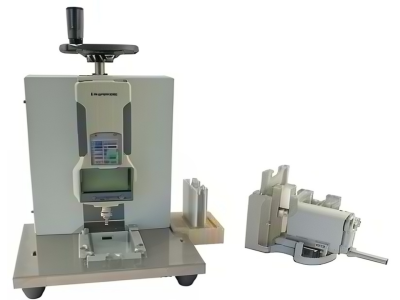
- ICC Backside Spot Pressure Tester - e-Passport Chip Module Adhesion Test
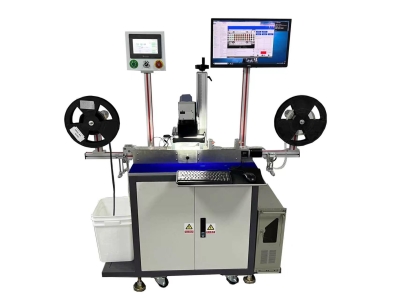
- Modules Laser Cutting Machine - Smart Card Module Chip Singulation System
- PT086 Book Bend Stress Tester for ePassport Back-Pocket Durability
- PT087 Dynamic Flexison Tester for Passport Bending Fatigue
- PT089 Sheet Turning Stress Tester | ePassport Page Folding and Torsion Durability
Ready to boost your production efficiency?
Contact us for a tailored solution and quotation on the PT074 MRP Holder for Passport | 10-Station Stationary Fixture for ePassport Testing.
Email: info@zowinda.com
WhatsApp: +86 186 2085 0485
 Modules Laser Cutting Machine
 PT074 MRP Holder for Passport
 ICC Backside Spot Pressure Tes
 PT093 Peel Strength Tester - P
Please contact us with your request
We are ready to answer your questions.