
ICC Backside Spot Pressure Tester - e-Passport Chip Module Adhesion Test
ICC Backside Spot Pressure Tester - e-Passport Chip Module Adhesion Test: Engineering Notes from the Test Floor
Published: November 09, 2026 | ZOWINDA Application Engineering
A passport data page carries its chip the way a circuit board carries its components - bonded, not socketed - and once lamination closes over the assembly, the bond is invisible. Everything else on the data page is verified optically or electrically; the module joint is verified mechanically, and the backside spot pressure test is how that verification is done. A defined force is applied through a small anvil directly against the back of the chip module, and the joint either holds at the programme force or it does not. Between those two outcomes sits the whole risk of a module separating in service - a passport that stops reading at a border gate.
Why Module Adhesion Fails
The module joint is a stack: the chip module is attached to the inlay with thermosetting adhesive, and the whole assembly is laminated into the data page. The joint can fail for several independent reasons - an under-cured adhesive, contamination on the module backside before bonding, insufficient lamination pressure over the module area, or a void trapped under the module. A module is a hard bump in a soft stack, so the lamination pressure that bonds the flat laminate perfectly can leave the module region under-pressed. Each of these causes produces the same symptom - a pull-off force below specification - but at different rates and with different signatures under the test anvil.
The second reason the joint deserves its own test is service aging. Thermal cycling flexes the data page, and the module sits at its stiffest point; the mismatch in thermal expansion between silicon, adhesive and laminate loads the joint on every warm and cold cycle. A joint at sixty percent of specification still reads perfectly at end of line and fails months later in the field. Backside spot pressure testing converts that delayed risk into a number measured at production time, while the cause is still traceable to a lamination batch.
How the Test Is Run
- Register the data page on the support fixture. The page is located on the fixture datum so the anvil lands on the module position, not beside it. A misregistered specimen measures the laminate instead of the joint.
- Align the pressure anvil to the module backside. The small-radius anvil concentrates the load on the module backside. Alignment is checked per station before the run starts.
- Apply the programmed force at the programmed rate. The machine is force-controlled, not travel-controlled. Force-controlled loading means the result is a statement about the joint against a force clause, independent of how stiff the particular page is.
- Hold and inspect the module region. At the end of the dwell, the module region is inspected for displacement, adhesive-line whitening or complete separation. Displacement without separation is often the earliest signature of a marginal bond.
- Record the result and classify the failure mode. Pass or fail comes from the module-bonding clause of the passport programme. Where the failure happened - in the adhesive line, in the laminate, or at the module itself - is recorded with the force figure.
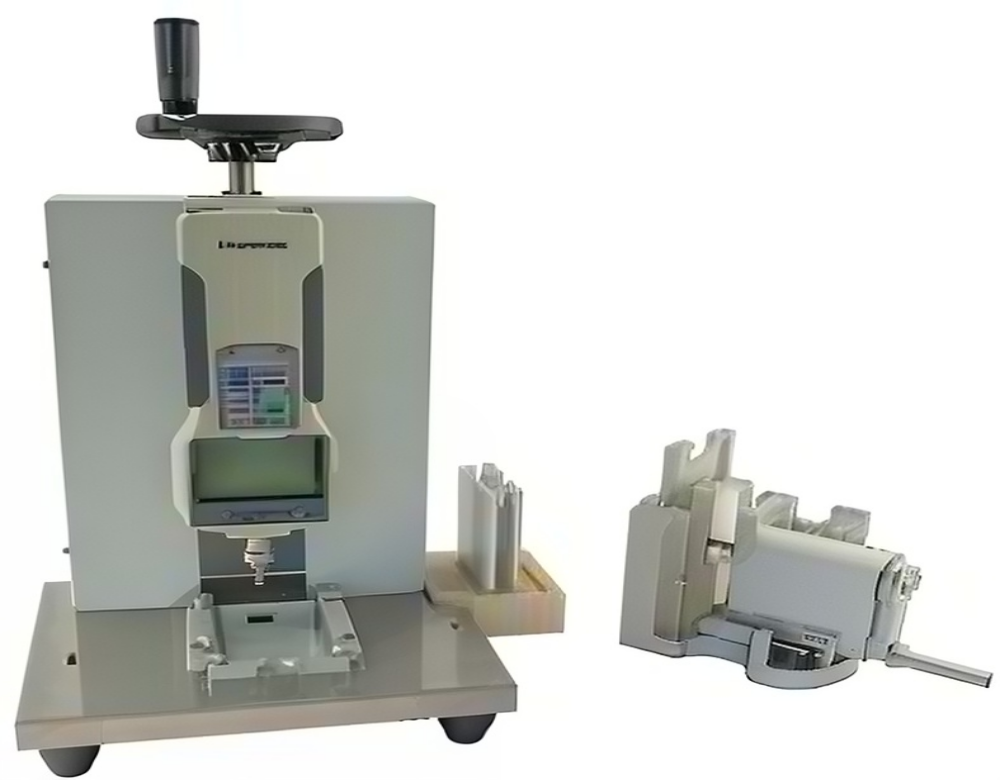
Figure: backside spot pressure applied to the chip module of a passport data page to qualify module adhesion. Equipment: ICC Backside Spot Pressure Tester - e-Passport Chip Module Adhesion Test.
Engineering Advantages
✓ Force-Controlled Loading
The tester applies a defined force rather than a defined travel, so a result from this shift is comparable with a result from last quarter and with a supplier certificate.
✓ Module-Localised Anvil
A small-radius anvil loads the module backside and not the whole laminate, which is what makes the measurement a module-joint test instead of a general stiffness test.
✓ Fixture-Registered Test Point
The specimen is registered on the data page footprint, so every run presses the same spot of the same module position and operator technique does not enter the result.
✓ Production-Cadence Testing
A single test takes seconds, which supports inline sampling plans: every lamination batch can carry its own spot pressure record instead of relying on periodic laboratory checks.
Technical Data
Applied force, dwell time and acceptance criteria follow the module-bonding clause of your passport programme. ZOWINDA configures the anvil and fixture against the module and data page construction you qualify.
Where It Fits in the Production Chain
The spot pressure figure earns its keep when it is read next to the other mechanical results. A data page that passes peel strength but fails spot pressure points at the module region specifically - usually a pressure-distribution problem over the module bump. The reverse combination, good spot pressure with weak cover peel, points at the adhesive system rather than the bonding step. And when the tester is fed by a ten-station fixture, a batch record is built in one loading instead of ten, so the sampling plan stops being the bottleneck that quietly gets reduced. The machine measures; the fixture infrastructure decides how often you can afford to measure.
- Post-lamination qualification of chip module bonding on data pages
- Comparing adhesive systems and lamination press profiles
- Inline batch sampling after any lamination parameter change
- Root-causing field failures of booklets that stopped reading
Frequently Asked Questions
How is this different from a shear or pull test on a card module?
The principle is the same but the construction differs. Cards are rigid and thick, so the load path and the fixtures differ; a passport data page is a thin, flexible laminate, and pressing its module backside requires a support fixture that carries the page without pre-stressing the joint. The tester and fixtures are specified for the passport construction.
Is the test destructive?
At the programme force it is designed as a proof-load test: the applied force is at or above the qualification clause but below the typical destructive threshold of a healthy joint. Marginal joints fail at the clause force; sound joints survive and can carry a visible inspection mark.
Does it replace electrical testing of the module?
No, and it is not meant to. A module can be electrically perfect and mechanically loose, or mechanically sound and electrically damaged. The two tests are orthogonal, and a complete qualification runs both.
Next Step
More equipment in this range is listed on the ZOWINDA CardMachine product page, and related application notes appear in our Industry News section.
Related reading:
- PT074 MRP Holder for Passport | 10-Station Stationary Fixture for ePassport Testing
- Modules Laser Cutting Machine - Smart Card Module Chip Singulation System
- ICC Backside Spot Pressure Tester for Smart Card Quality Control
- PT093 Peel Strength Tester - Passport Cover Peel Resistance Test Machine
- Automatic IC Module Testing Machine for Smart Card Production
Ready to boost your production efficiency?
Contact us for a tailored solution and quotation on the ICC Backside Spot Pressure Tester - e-Passport Chip Module Adhesion Test.
Email: info@zowinda.com
WhatsApp: +86 186 2085 0485
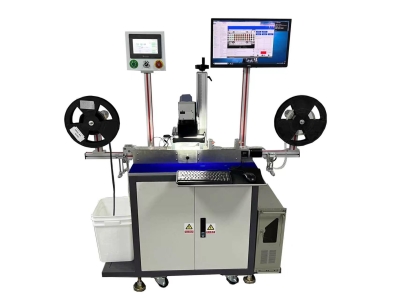 Modules Laser Cutting Machine
 PT074 MRP Holder for Passport
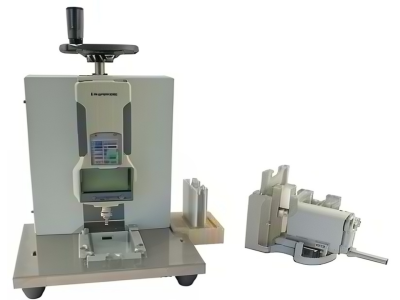 ICC Backside Spot Pressure Tes
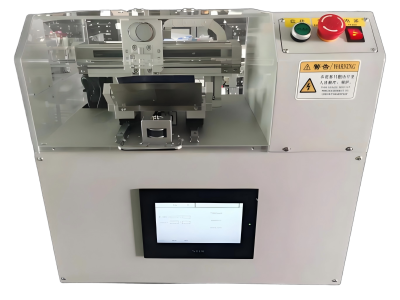 PT093 Peel Strength Tester - P
Please contact us with your request
We are ready to answer your questions.