
Letter and Flat Mail Sorting System: Building a Modern Postal Operation at Scale
Letter and Flat Mail Sorting System: Building a Modern Postal Operation That Handles Mixed Mail at Scale
Published: 2026-08-07 | Zowinda Technology | Postal & Mail Processing Automation
Letter mail has not disappeared - it has changed shape. Today's postal and mailroom operators face a stream that mixes standard letters, oversized flats, catalogues, statement envelopes and small polybags, all of which must be sequenced and sorted to increasingly granular delivery points. A dedicated letter and flat mail sorting system is what makes that economically viable. This article covers the architecture, OCR and address recognition, sequencing logic and the operational metrics that matter.
The Mixed Mail Problem
A generic parcel sorter handles thick, rigid items well and thin flexible items poorly. Letter mail is the opposite challenge: items are thin, light, easily creased, and arrive in wildly varying stiffness. A 3 g airmail envelope and a 400 g glossy catalogue must both be transported at speed without jamming, skewing or damaging - and both must be read reliably.
The result is that letter and flat sorting demands purpose-built transport: friction feeders instead of belt induction, pinch-belt or vacuum transport instead of slat beds, and divert gates rather than shoes or tilt trays. Every mechanical choice in the machine is optimised for thin flexible media.
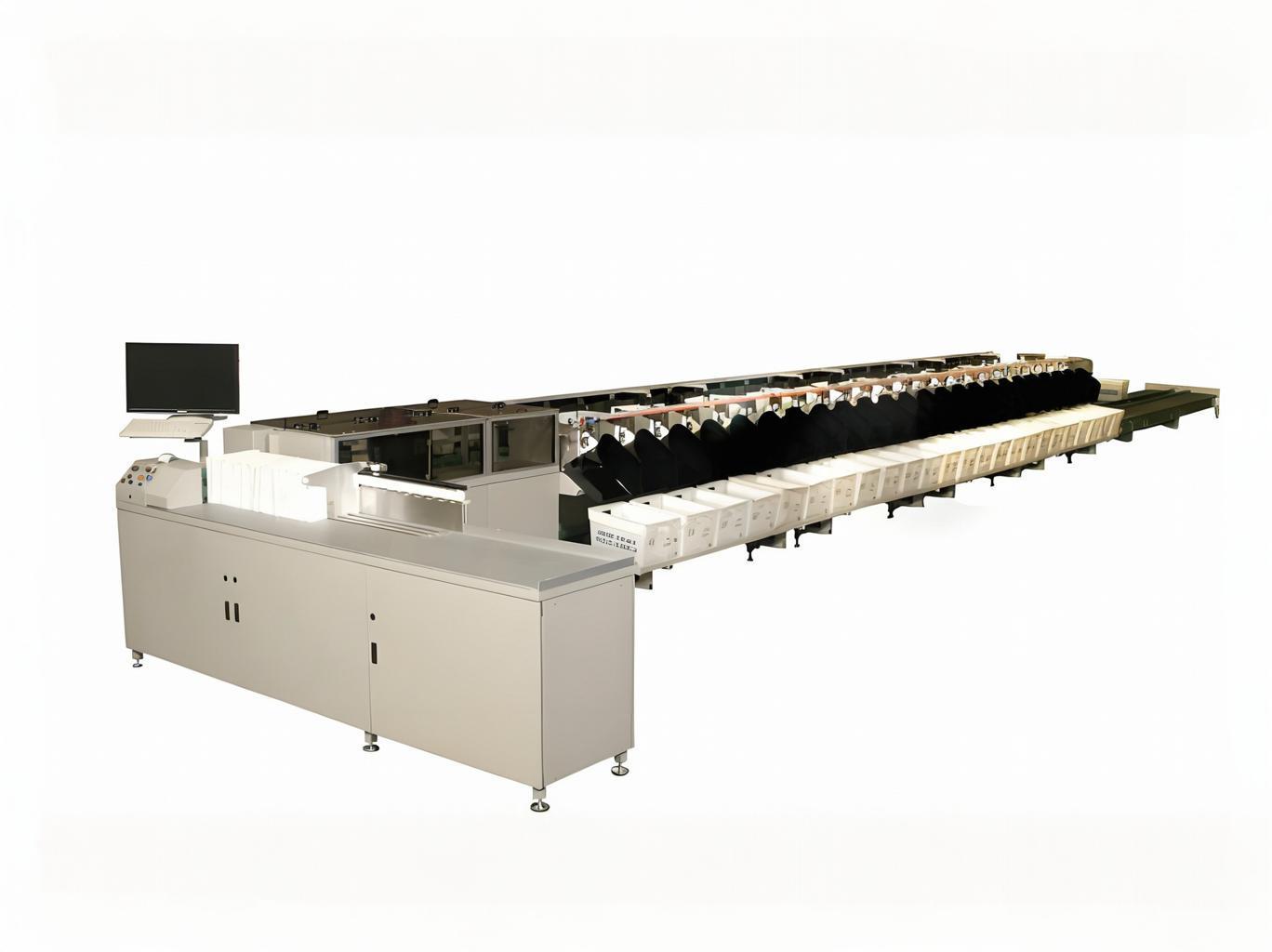
Letter and flat mail sorting system - purpose-built transport for thin, flexible mail media.
System Architecture: From Feeder to Bin
1. Automatic Feeding and Singulation
Mail is loaded in bulk stacks. A friction or vacuum feeder separates one item at a time, with double-feed detection to catch stuck envelopes. Feeder tuning is the highest-leverage adjustment in the entire machine: a feeder set correctly for the current mail mix eliminates the majority of jams before they occur.
2. Imaging and Address Recognition
Each item passes an imaging station that captures the address face. OCR resolves the printed address; where handwriting or poor print defeats OCR, the image is routed to a video coding workstation where an operator keys the missing fields in seconds. Barcode and postal code symbologies are read in the same pass, which is far faster than OCR when a machine-readable mark is present.
3. Destination Lookup and Divert
The recognised address is matched against the delivery point database to yield a sort bin. The control system tracks the item through the transport path and fires the divert gate at the calculated moment. Items that cannot be resolved are routed to a reject bin for manual handling rather than being force-sorted.
4. Multi-Pass Sequencing
Delivery point sequencing - putting mail into the exact order a carrier walks a route - normally requires two passes. The first pass sorts to route level; the second re-feeds the output and sorts within each route to walk order. This doubles the machine cycles per item but removes the single most labour-intensive task in the delivery office.
Mixed Media Handling
Letters, flats, catalogues and statement envelopes processed in a single stream without manual pre-sorting.
OCR + Video Coding
Automated address recognition with operator-assisted coding for items OCR cannot resolve, keeping the reject rate low.
Delivery Point Sequencing
Two-pass sorting places mail in carrier walk order, removing hours of manual casing work per route.
Gentle Transport
Pinch-belt transport and controlled divert gates protect thin and glossy media from creasing and jamming.
Indicative Technical Specification
Specifications are indicative and configured per project. Actual throughput depends on mail mix, thickness distribution and read rate.
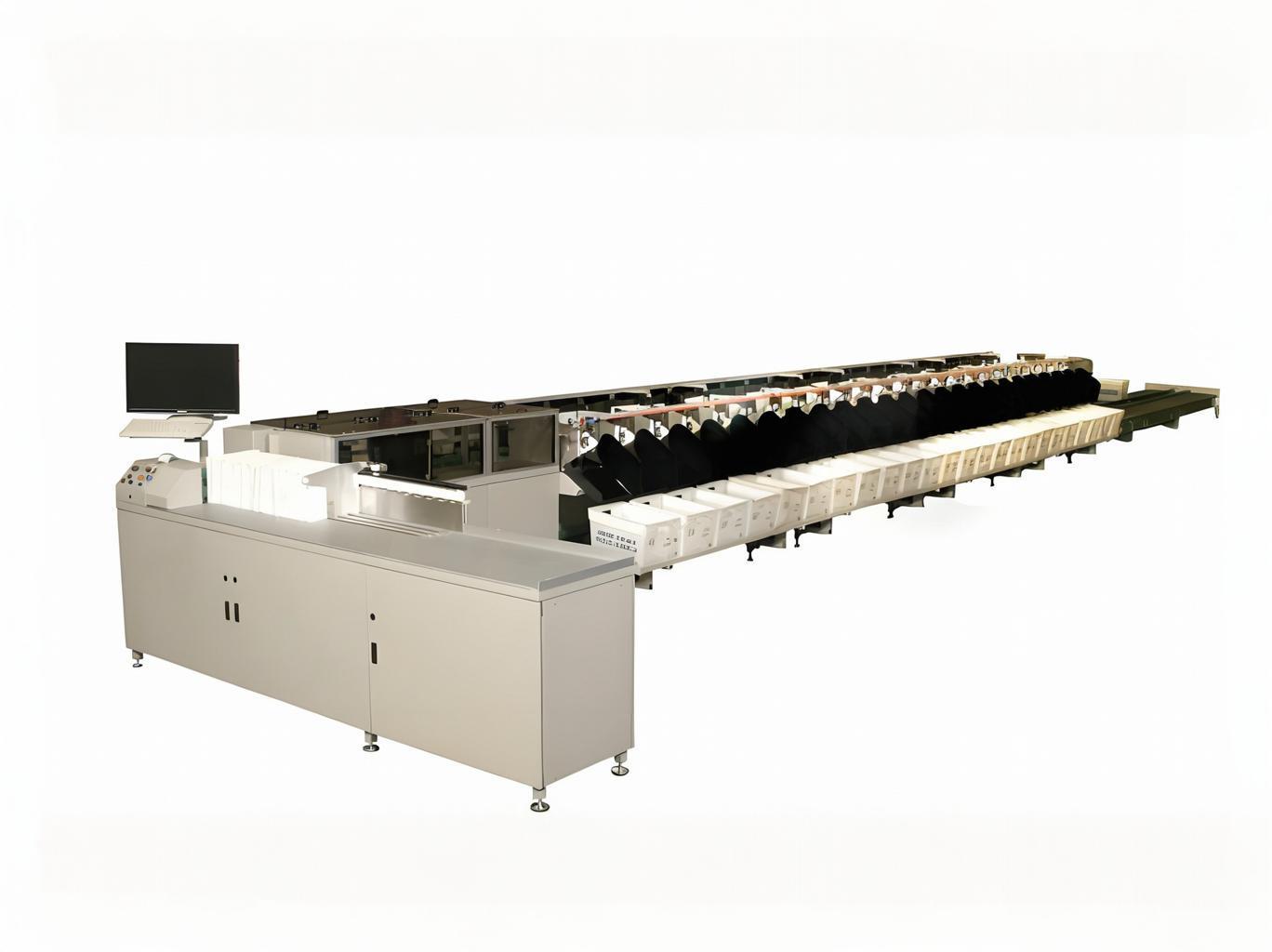
Feeder and transport section - correct feeder tuning is the highest-leverage adjustment for jam-free running.
Operational Metrics That Actually Matter
Buyers frequently compare machines on headline throughput alone. In live postal operations, three other metrics predict total cost far more reliably.
- Read rate - the percentage of items whose address resolves automatically. Each percentage point of read rate improvement removes a measurable amount of video coding labour across a year.
- Jam rate per thousand items - jams cost far more than the clearance time, because they interrupt flow and force partial re-feeds. A low jam rate on your mail mix matters more than a low rate on a demonstration stack.
- Effective throughput - rated speed multiplied by realistic uptime. A 40,000 iph machine running at 70% availability is slower than a 30,000 iph machine at 95%.
When evaluating suppliers, request these figures measured on a sample of your own mail rather than on standardised test media. The difference between catalogue figures and real-mix performance is frequently substantial.
Where Mail Sorting Automation Is Heading
Three trends are reshaping specification decisions. First, hybrid mail and parcel streams: as small e-commerce items increasingly arrive in polybags, mail sorters are being specified with wider thickness tolerance to absorb them. Second, deeper track-and-trace: customers now expect item-level visibility on letter mail, which pushes imaging and data capture requirements upward. Third, energy and footprint efficiency, as urban sorting centres face rising space and power costs.
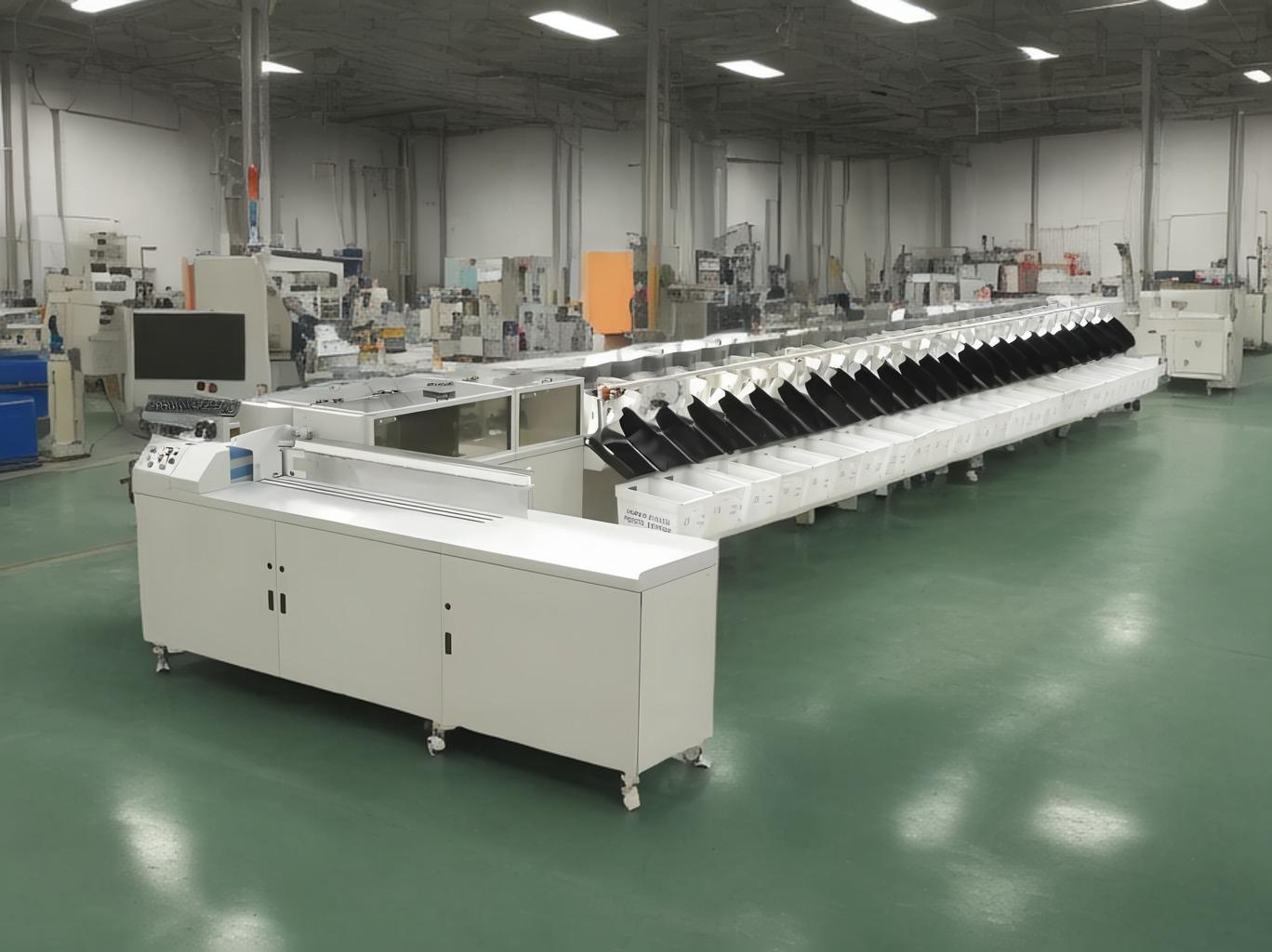
Output stacker section - bin configuration is matched to the operator's route structure.
Frequently Asked Questions
Can the system handle both letters and flats without changeover?
Yes. The transport and feeder are designed for a mixed thickness range, so standard letters and larger flats can run in the same stream. Extreme thickness outliers are best pre-separated for optimal throughput.
What read rate should we expect from OCR?
Machine-printed addresses on good quality media commonly resolve at a high rate. Handwritten and poorly printed items are routed to video coding. Actual figures depend heavily on your mail mix, so a sample test is recommended.
How many passes are needed for delivery point sequencing?
Standard practice is two passes: the first sorts to route level, the second sequences within each route into carrier walk order.
What happens to items the system cannot read?
They are diverted to a dedicated reject bin for manual handling. The system never force-sorts an unresolved item, which protects overall sorting accuracy.
Can it integrate with our existing postal address database?
Yes. The control system is designed to interface with the operator's delivery point database and track-and-trace platform. Integration scope is defined during project engineering.
Related Equipment & Reading
Modernise Your Mail Processing Operation
Talk to our engineering team for a tailored throughput study, layout drawing and quotation.
Email: info@zowinda.com
WhatsApp: +86 186 2085 0485
 RFID Inlay vs Label vs Hard Ta
NFC Forum Tag Types 1 to 5: Ho
Centralized Bureau Issuance vs
Edge-to-Edge Printing vs Borde
RFID Inlay vs Label vs Hard Ta
NFC Forum Tag Types 1 to 5: Ho
Centralized Bureau Issuance vs
Edge-to-Edge Printing vs Borde
Please contact us with your request
We are ready to answer your questions.