
Card Sorting Machine with 20/40 Outputs: Precision Batch Sorting for Bank and ID Card Production
Card Sorting Machine with 20/40 Outputs: Precision Batch Sorting for Bank, Telecom and ID Card Production
Published: 2026-08-07 | Zowinda Technology | Smart Card Manufacturing Automation
In smart card production, sorting is the quiet step that determines whether a personalisation run ships clean or gets recalled. Once cards are printed, encoded and personalised, they must be separated by batch, region, product type or customer before packing. A card sorting machine with 20 or 40 configurable outputs turns this from a slow, error-prone manual task into a controlled, auditable automated process. This article explains how card sorters work, when to choose 20 versus 40 outputs, and how sorting integrates with the wider card production line.
Why Card Sorting Deserves Dedicated Equipment
A personalised card is a high-value item carrying customer data. A sorting error is not merely a logistics inconvenience - it means a card reaching the wrong recipient, which is a data protection incident as well as a reissue cost. Manual sorting of thousands of near-identical cards is precisely the kind of task where human accuracy degrades fastest.
Automated card sorting addresses this on three fronts: it reads each card individually rather than relying on batch assumptions, it maintains a complete machine log of every card and its destination, and it sustains a constant rate that manual sorting cannot match beyond the first hour of a shift.
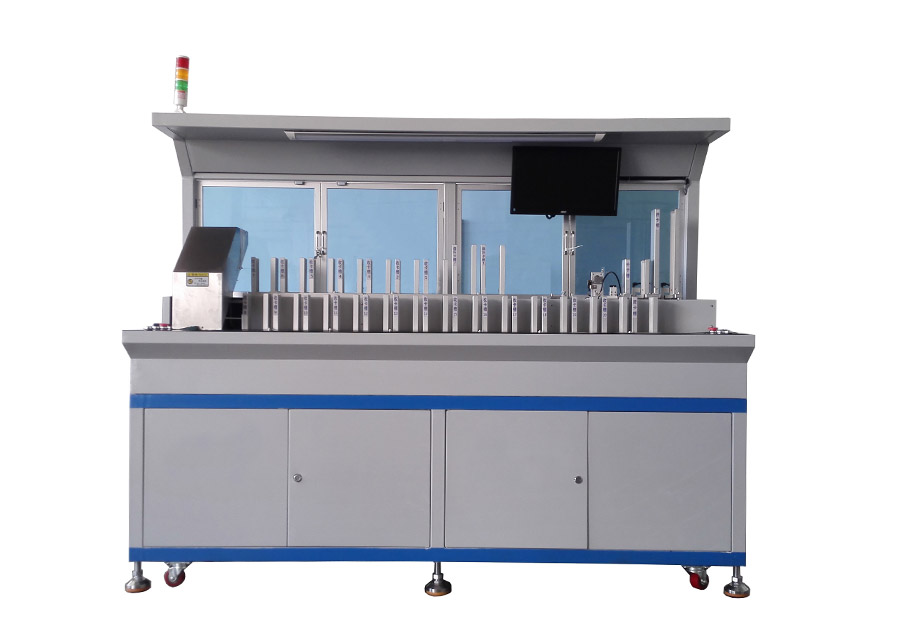
Card sorting machine with configurable 20 or 40 output stackers for high-volume card production.
How the Sorting Process Works
Step 1 - Card Feeding
Cards are loaded into an input hopper and singulated one at a time by a friction feeder engineered specifically for the standard ISO card thickness. Double-feed detection prevents two cards travelling together, which would otherwise cause a mis-assignment.
Step 2 - Identification
Each card is identified as it passes the reading station. Depending on card type this may be optical reading of a printed number or barcode, magnetic stripe reading, or contact / contactless chip reading. The identifier is the basis for every subsequent decision, so read reliability is the critical design parameter.
Step 3 - Destination Assignment
The control software matches the card identifier against the job database and returns an output number. Sorting rules can be defined by customer, region, product type, batch, expiry window or any field available in the production data - and rules can be changed between jobs without mechanical adjustment.
Step 4 - Diverting and Stacking
The card is transported to its assigned output and stacked neatly. Full-stacker detection signals the operator before an output overflows, and unreadable or unexpected cards route to a dedicated reject output rather than being placed into a valid batch.
20 or 40 Outputs
Configurable output count lets the machine match the real job structure - regional splits, customer batches or product variants.
Full Read Options
Optical, magnetic stripe and chip reading supported, so the same machine sorts printed, encoded and personalised cards.
Complete Audit Trail
Every card and its destination is logged, giving the traceability that financial and government card programmes require.
Reject Management
Unreadable and out-of-scope cards divert to a dedicated reject output, protecting the integrity of every valid batch.
Choosing Between 20 and 40 Outputs
The output count should be driven by job structure, not by a desire for maximum capability. The practical rule is to count the number of distinct destinations in a typical production job and add headroom for rejects and overflow.
Configuration is defined per project. Zowinda engineers can review a sample job structure and recommend the appropriate output count.
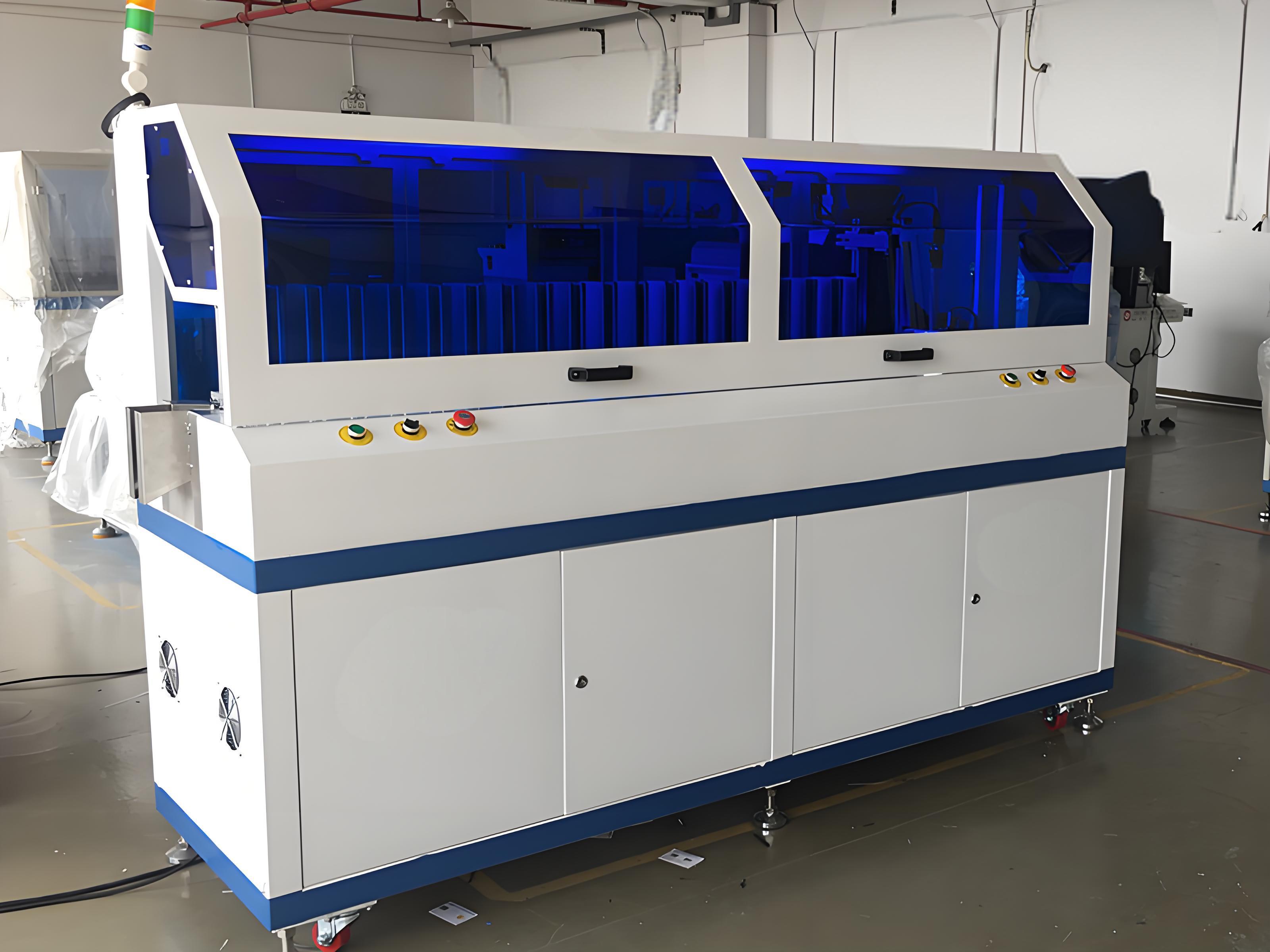
Output stacker detail - full-stacker detection alerts operators before an output overflows.
Where Sorting Fits in the Card Production Line
Card sorting sits near the end of a production chain that typically runs: sheet lamination, punching, milling and chip implanting, printing and personalisation, quality inspection, then sorting and packing. Because sorting is downstream of personalisation, it inherits the data from every prior step - which is exactly what makes it the natural point to enforce final batch integrity.
Two integration decisions matter most. The first is data handover: the sorter needs the personalisation job file to resolve card identifiers into destinations, so a clean file interface removes manual setup per job. The second is downstream packing: if the sorter outputs map directly to mailing batches or carrier bags, the packing step becomes a simple transfer rather than a second sorting operation.
- Upstream - personalisation and inspection equipment supplies both the physical cards and the job data.
- Sorting - cards are read, assigned and stacked by destination with a full audit log.
- Downstream - sorted stacks feed card sealing, labelling and envelope insertion for despatch.
Frequently Asked Questions
Can the machine sort cards that are not yet personalised?
Yes. Blank and printed cards can be sorted using optical or barcode identification. Chip and magnetic stripe reading are used where the card carries encoded data.
How are sorting rules defined?
Rules are configured in software against fields in the job data - customer, region, product type, batch or expiry window. Changing rules between jobs requires no mechanical adjustment.
What happens to a card the machine cannot read?
It is diverted to a dedicated reject output and logged with a reason code. It is never placed into a valid batch, which is essential for maintaining batch integrity.
Does the machine provide an audit trail?
Yes. Every card processed is logged with its identifier, assigned output and timestamp. Logs can be exported for integration with production MIS or ERP systems.
Can we upgrade from 20 to 40 outputs later?
Output expansion depends on the specific machine configuration and available layout space. Discuss anticipated growth with Zowinda engineering at the specification stage so the initial layout allows for it.
Related Equipment & Reading
Bring Precision and Traceability to Your Card Sorting
Talk to our engineering team for a tailored throughput study, layout drawing and quotation.
Email: info@zowinda.com
WhatsApp: +86 186 2085 0485
 RFID Inlay vs Label vs Hard Ta
NFC Forum Tag Types 1 to 5: Ho
Centralized Bureau Issuance vs
Edge-to-Edge Printing vs Borde
RFID Inlay vs Label vs Hard Ta
NFC Forum Tag Types 1 to 5: Ho
Centralized Bureau Issuance vs
Edge-to-Edge Printing vs Borde
Please contact us with your request
We are ready to answer your questions.