
Full Auto Milling and Implanting Machine ZWD-XFY-2500 | 0.01mm Accuracy Card Chip Embedding System
Full Auto Milling and Implanting Machine ZWD-XFY-2500: Milling, Testing, Laminating and Implanting in One Automated Cycle
Published: August 05, 2026 | ZOWINDA Industry News
Chip cavity milling and module implanting are the two operations that most directly determine whether a smart card will pass electrical test. Running them on separate machines introduces handling, static risk and cumulative positional error. The ZOWINDA ZWD-XFY-2500 consolidates milling, module testing, laminating and implanting into one continuous automated cycle at 2,000 cards per hour with milling accuracy held to plus or minus 0.01 mm.
Why Integration Matters at the Milling and Implanting Stage
A chip module must sit in a cavity milled to within hundredths of a millimetre. Too shallow and the module protrudes, failing thickness specification and catching in ATM readers. Too deep and the contact plate sits below the card surface, producing intermittent read failures that only surface in the field.
When milling and implanting run as separate operations, each card is picked, stacked, transported and re-fed between the two. Every one of those handling steps introduces a chance for static discharge to damage the module, for the card to shift against its reference edge, or for cards from different milling batches to be mixed with modules from a different reel.
The ZWD-XFY-2500 removes those handoffs. Cards enter once, and a single servo-driven transfer system carries each one through milling, module testing, adhesive laminating and implanting before discharge. Because the same reference is used throughout, cavity position and module placement share one coordinate system rather than two.
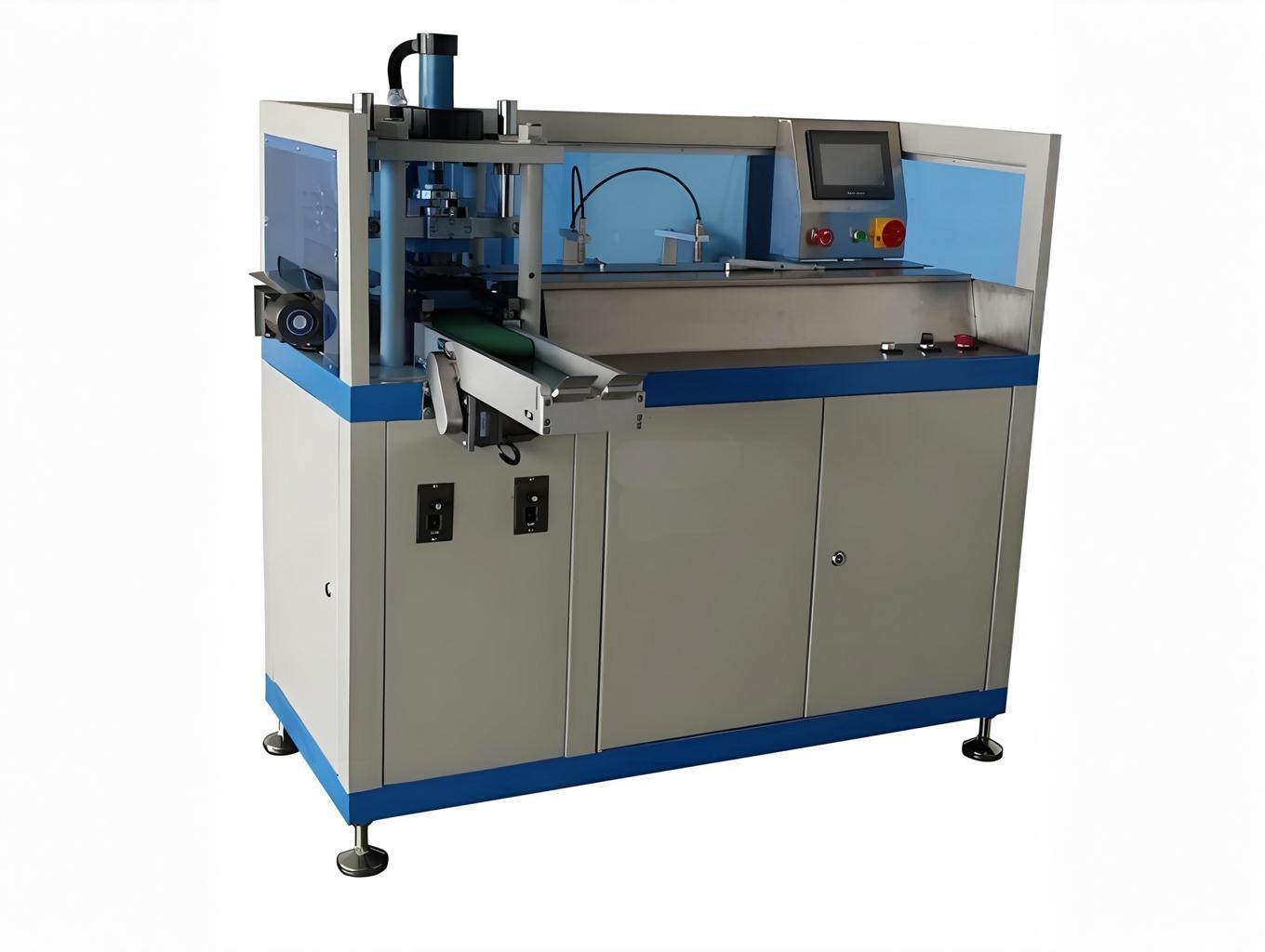
ZOWINDA ZWD-XFY-2500 Full Auto Milling and Implanting Machine - servo XYZ platform, integrated module testing and 0.01mm milling accuracy at 2,000 cards per hour.
Main Features of the ZWD-XFY-2500
Eight design features define the machine's precision and its practical usability on the shop floor.
All-in-One Integrated Process
Card milling, module testing, laminating and module implanting run in one continuous cycle, eliminating inter-station handling and the defects that come with it.
PLC + HMI Control
A PLC controller with HMI touchscreen keeps operation straightforward and maintenance requirements low. Recipes and parameters are recalled by card format rather than reset manually.
Adjustable Cavities and Chip Modules
Milling cavities and chip module handling are easily adjustable to suit different card sizes and module footprints, giving one machine coverage across a varied product portfolio.
Precision Servo Drive System
A servo drive system with guide screws and an XYZ three-axis platform delivers accurate, stable milling motion and repeatable depth control across the full card surface.
Static-Free Feeding Design
A purpose-built feeding design eliminates double-card pickup caused by static electricity - one of the most common and hardest-to-diagnose causes of jams in card lines.
Automatic Transfer System
Feeder and output magazine auto-transfer, combined with a servo-motor-driven belt system, moves cards safely and consistently while simplifying operator workload.
Customizable Milling Programs
Milling programs and parameters can be modified directly on the machine, allowing rapid adaptation when a new card specification or module type enters production.
0.01 mm Milling Accuracy
Milling accuracy of plus or minus 0.01 mm ensures cavity depth and position stay within the tolerance band required for reliable dual-interface and contact card performance.
Technical Specifications
Published specification for the standard ZWD-XFY-2500 configuration.
Target Applications and Production Economics
The machine is positioned for manufacturers who need consistent chip card output without dedicating separate floor space, operators and maintenance schedules to milling and implanting as distinct operations.
- Banking card production - EMV contact and dual-interface cards where cavity tolerance directly determines electrical contact reliability and field failure rate.
- National ID and eGovernment cards - long-life credentials where module retention over a ten-year service period depends on adhesive lamination quality during implanting.
- SIM and telecom card manufacturing - high volume with tight module footprint tolerance and frequent format variation.
- Corporate access and membership cards - mixed-volume production benefiting from fast parameter changeover between card specifications.
- Card bureaus serving multiple clients - integrated module testing means defective modules are caught before implanting rather than after personalization.
Planning Your Milling and Implanting Capacity
At 2,000 cards per hour, a single ZWD-XFY-2500 covers roughly 16,000 cards per single shift including changeover allowance. Manufacturers typically pair one milling and implanting machine with an upstream punching station running at 15,000 to 20,000 pcs/hour, using a buffer between the two rather than attempting to rate-match directly.
Integrated module testing is worth quantifying during evaluation. Catching a failed module before implanting saves not only the module but the card, the adhesive, and the downstream personalization cost - which in banking card production commonly exceeds the module cost several times over.
ZOWINDA supplies the ZWD-XFY-2500 with commissioning, operator and maintenance training, milling program setup for the customer's card formats, and a recommended spare parts package covering milling cutters, vacuum components and module handling parts. Remote diagnostic support is available for customers operating outside China.
Commissioning and Quality Control for Milling and Implanting
Integrating milling and implanting into one machine removes handling defects, but it also concentrates responsibility: if the cavity is wrong, the module is wasted too. A structured commissioning and control routine is what converts the ZWD-XFY-2500 specification into a stable field failure rate.
Establish cavity depth capability before production, not during it
Milling accuracy of plus or minus 0.01 mm describes machine capability, not process capability. Running a designed sample across the full card surface and measuring cavity depth at multiple positions establishes the real distribution for a given substrate and cutter. That baseline is what later drift is measured against.
Use integrated module testing as a gate, not a report
The machine tests modules before implanting. The value of that test is only realised if a failure stops the module from being placed. Configuring the test as a hard gate protects not just the module cost but the card, the adhesive and all downstream personalization work already invested in that card.
Track cutter life against cavity depth trend
Milling cutters wear predictably, and wear shows up as a slow shift in effective cavity depth before it produces visible defects. Correlating measured depth against cutter stroke count allows replacement to be scheduled at a defined point rather than after a batch of cards fails electrical test.
Confirm the static-free feeding design is actually performing
The anti-double-card feeding design addresses one of the most difficult intermittent faults in card lines. Periodically verifying that no double pickups are occurring, particularly after a change of substrate supplier, prevents a slow return of jams that are hard to attribute once production is running at volume.
Store milling programs per card specification
Milling programs and parameters can be modified on the machine. Saving a validated program against each card format and module footprint, rather than adjusting from the previous job, is what makes changeover repeatable and keeps the 0.01 mm figure meaningful across a varied product portfolio.
Related ZOWINDA Equipment
The machines below are the stations most often specified alongside this equipment in a complete card production line.
- Smart Card Cavity Milling Machine - a dedicated milling station for lines that separate milling from implanting.
- Automatic IC Module Implanting Machine - standalone implanting for factories milling cavities on a separate machine.
- Card Punching and Sorting Machine - supplies sorted, dimensionally consistent cards to the milling and implanting stage.
Frequently Asked Questions
Why integrate milling and implanting rather than run separate machines?
Separate machines require each card to be picked, stacked, transported and re-fed between operations. Each handling step risks static damage to the module and loss of the reference edge. The ZWD-XFY-2500 carries the card through milling, module testing, laminating and implanting on one servo transfer system, so cavity position and module placement share a single coordinate system.
What throughput and accuracy does the machine deliver?
Production capacity is 2,000 pieces per hour with milling accuracy of plus or minus 0.01 mm. That tolerance band is what keeps the module flush with the card surface, avoiding both protrusion that fails thickness specification and recession that causes intermittent read failures in the field.
What are the installation requirements?
The machine runs on AC 380V / 50Hz with 5 kW power consumption and requires compressed air at 0.6 to 0.7 MPa/cm2. Net weight is 700 kg, so a standard industrial floor and normal rigging access are sufficient for installation.
Can the machine handle different card sizes and module footprints?
Yes. Milling cavities and chip module handling are adjustable, and milling programs can be modified directly on the machine through the PLC and HMI touchscreen. One machine can therefore cover a varied portfolio without mechanical re-tooling for each format.
How much capacity does one machine represent?
At 2,000 cards per hour a single unit covers roughly 16,000 cards per shift including changeover allowance. Manufacturers typically pair it with an upstream punching station running at 15,000 to 20,000 pcs per hour and place a buffer between the two rather than attempting to rate-match directly.
Ready to Upgrade Your Card Production Line?
Talk to a ZOWINDA engineer for a tailored configuration, throughput study and quotation for your factory.
Email: [email protected]
WhatsApp: +86 186 2085 0485
 In-Mold Foil Decoration vs Pos
Friction Feeder vs Vacuum Feed
Laser Die-Cutting vs Mechanica
Smart Card Overlaminate and En
In-Mold Foil Decoration vs Pos
Friction Feeder vs Vacuum Feed
Laser Die-Cutting vs Mechanica
Smart Card Overlaminate and En
Please contact us with your request
We are ready to answer your questions.