
Auto Wire Embedding Machine (2-in-1 System)
Auto Wire Embedding Machine (2-in-1 System): Engineering Notes from the Production Floor
Published: November 03, 2026 | ZOWINDA Application Engineering
Antenna embedding is the step where an RFID inlay gains its electrical identity: copper wire laid into the substrate becomes the antenna that decides read range and resonance. The 2-in-1 auto wire embedding machine compresses two of those critical operations into one frame - embedding the wire and processing the termination in a single pass - so the sheet spends less time in transit and the antenna is finished before it can drift.
What 2-in-1 Means on the Production Floor
A conventional embedding flow separates wire laying from the follow-up operation, which means a second machine, a second operator, a second queue and one more chance for the sheet to be misaligned. With both functions in one machine, the wire is embedded and its termination is completed while the sheet is still held in the same reference. Fewer hand-offs mean fewer registration errors, and one HMI means one recipe to qualify.
The layout also saves floor space and installation cost: one frame, one set of utilities, one operator. For plants that started with manual or semi-automatic embedding, a 2-in-1 machine is usually the first step that turns a bench process into a line process.
Working Sequence
- Substrate feed. Sheet or roll substrate is fed under closed-loop tension so the wire path stays dimensionally stable.
- Wire laying and embedding. Copper wire is guided into the programmed antenna pattern and embedded into the substrate at controlled pressure and temperature.
- Termination processing. The 2-in-1 head completes the wire termination in the same pass, so the finished antenna does not leave the machine half-done.
- In-process check. Pattern completeness and termination quality are verified before release, flagging breaks or shorts at the source.
- Output and counting. Finished antennas are counted and stacked per recipe, ready for the next process step.
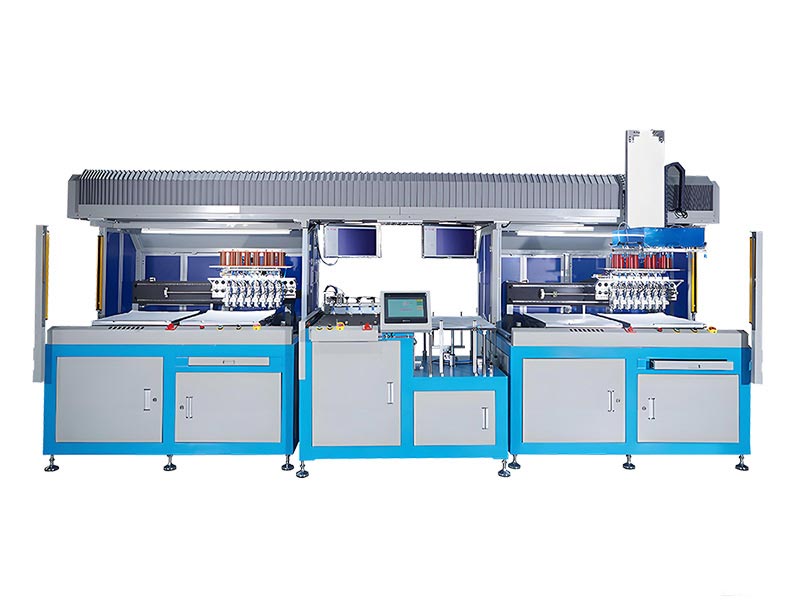
Figure: 2-in-1 auto wire embedding machine for RFID antenna production. Equipment: Auto Wire Embedding Machine (2-in-1 System).
Key Advantages
✓ One-Pass Completion
Embedding and termination happen without moving the sheet, so antenna geometry never loses its reference.
✓ Compact Footprint
One frame replaces two stations, halving installation space, utilities and operator workload.
✓ Stable Antenna Quality
Controlled pressure, temperature and wire tension keep inductance and resistance inside the window that RF performance needs.
✓ Recipe-Based Changeover
Antenna patterns are stored as recipes, so switching designs is a selection instead of a mechanical re-teach.
Technical Data
Figures are typical for the standard configuration and confirmed per project. Antenna complexity, wire gauge and substrate determine tooling and cycle time; ZOWINDA validates against your design before quotation.
Typical Applications
The machine sits at the front of the inlay process, feeding chip placement and lamination downstream. Because the termination is finished in the same pass, downstream stations receive a consistent, verified antenna - which is exactly what their vision systems and bonding processes assume. Plants that later add chip placement can do so without re-qualifying the embedding step.
- HF RFID and NFC antenna embedding
- UHF inlay antenna production
- Transit and payment inlay manufacturing
- Upscaling from manual to automatic embedding
Frequently Asked Questions
What antenna patterns can it run?
Rectangular spiral and multi-turn patterns used in HF, NFC and UHF antennas are supported; pattern geometry is recipe-driven. Send ZOWINDA your layout for confirmation.
How does it protect against wire breaks?
Wire feed and tension are monitored, and the in-process check flags missing segments so a broken wire is caught at the machine, not at final RF test.
Can it link to my existing line?
Standard sheet-handling interfaces allow connection to feeding and downstream stations; ZOWINDA matches the interface height and transfer direction to your layout.
Next Step
More equipment in this range is listed on the ZOWINDA CardMachine product page, and related application notes appear in our Industry News section.
Ready to boost your production efficiency?
Contact us for a tailored solution and quotation on the Auto Wire Embedding Machine (2-in-1 System).
Email: info@zowinda.com
WhatsApp: +86 186 2085 0485
 Auto Wire Embedding Machine (2
 ICC Backside Spot Pressure Tes
 Integrated Chip Placement and
 Smart Card Cavity Milling Mach
Please contact us with your request
We are ready to answer your questions.