
ICC Backside Spot Pressure Tester for Smart Card Quality Control
ICC Backside Spot Pressure Tester for Smart Card Quality Control: Engineering Notes from the Production Floor
Published: November 03, 2026 | ZOWINDA Application Engineering
A contact card spends its whole life being pressed against reader contacts, and the damage rarely shows on the front. The back of the card - directly opposite the module - takes concentrated loads every time the card is inserted. A backside spot pressure test reproduces that load in a controlled way, so cards that would crack, deform or lose contact continuity in the field are caught before personalization, before shipping and before a customer complaint.
What the Test Measures and Why It Matters
Spot pressure on the card back stresses the laminate stack at its weakest region: above or below the implanted module, where cavity geometry has already removed material. If the card body or the module adhesive cannot take the load, the result is micro-cracking, module lift or intermittent contact - failures that pass visual inspection and thickness checks but surface after a few thousand reader insertions.
The tester applies a defined load through a spot indenter at specified positions on the card back, holds it for a set dwell, and then the card is evaluated - visually and, where required, electrically. Because load, position and dwell are all programmable, the test can be matched to the card specification you are manufacturing against instead of an ad-hoc thumb-press.
Test Sequence
- Card loading. Cards are loaded individually and referenced so the spot positions land consistently relative to the module cavity.
- Load application. A calibrated indenter applies the programmed force at the specified backside spots, with force and dwell held closed-loop.
- Dwell and release. The load is held for the defined time and released at a controlled rate, avoiding impact that would falsify the result.
- Evaluation. The card is inspected for cracking, deformation and module integrity; electrical continuity can be verified in the same pass.
- Result logging. Pass/fail per card is recorded with load and position data, building a trendable quality record per batch.
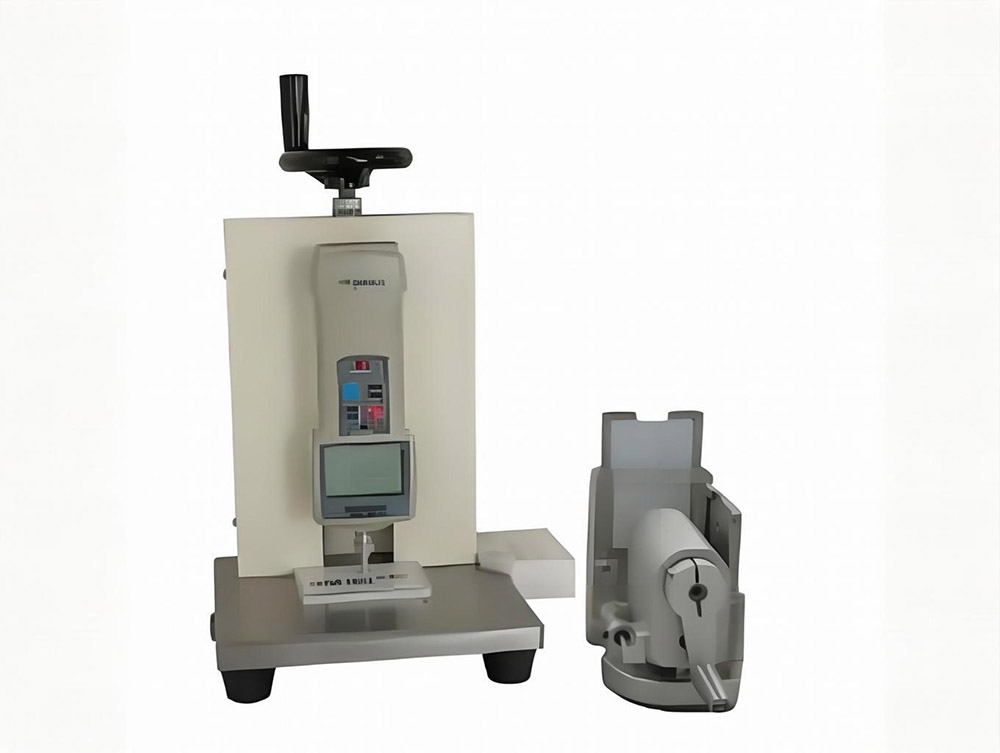
Figure: controlled spot pressure application on the backside of an ICC card body. Equipment: ICC Backside Spot Pressure Tester for Smart Card Quality Control.
Key Advantages
✓ Reproducible Loads
Closed-loop force control and fixed dwell times make every test identical, unlike manual checks that vary by operator.
✓ Module-Referenced Positioning
Spot positions are referenced to the card and module geometry, so the test hits the critical zone every time.
✓ Field-Relevant Stress
The load pattern mimics reader contact pressure, catching the exact failure mode that shows up after issuance.
✓ Batch Quality Records
Per-card results with force data feed directly into batch documentation and customer audits.
Technical Data
Force ranges, dwell times and spot layouts are configured per card specification. ZOWINDA quotes the tester against the standard your cards are certified to.
Where It Belongs in the Line
Most producers place the tester in quality control rather than in the main line: sampling per batch, or full testing during qualification and after any process change in milling, implanting or lamination. Because the backside failure mode is invisible until insertion cycles accumulate, a scheduled pressure test is one of the cheapest insurance policies a card plant can run.
- Banking and payment card qualification
- SIM and telecom card production
- Government ID and ePassport card bodies
- Incoming inspection of outsourced card bodies
Frequently Asked Questions
Which standard does the test follow?
The tester is configured to the load, dwell and acceptance criteria of the card specification you work to, including common ISO 7816 mechanical requirements. Share your standard and ZOWINDA preloads the recipe.
Can it test both sides of the card?
The station is designed for backside spot loading opposite the module region, which is the failure-critical zone; front-side mechanical tests are typically handled by separate bending and torsion equipment.
How many cards per hour?
It depends on load steps and evaluation depth per card. Tell ZOWINDA your batch sizes and sampling plan and the station will be sized to keep up.
Next Step
More equipment in this range is listed on the ZOWINDA CardMachine product page, and related application notes appear in our Industry News section.
Ready to boost your production efficiency?
Contact us for a tailored solution and quotation on the ICC Backside Spot Pressure Tester for Smart Card Quality Control.
Email: info@zowinda.com
WhatsApp: +86 186 2085 0485
 Auto Wire Embedding Machine (2
 ICC Backside Spot Pressure Tes
 Integrated Chip Placement and
 Smart Card Cavity Milling Mach
Please contact us with your request
We are ready to answer your questions.