
Smart Card Chip Recycling Machine CR3000 - Automatic IC Chip Recovery System
Smart Card Manufacturing Notes
Smart Card Chip Recycling Machine CR3000 - Automatic IC Chip Recovery System
Published: November 10, 2026 | ZOWINDA Application Engineering
Every card production line produces cards that never ship: test rejects, obsolete stock, expired credentials, mis-personalized runs. Each of those cards carries a silicon die that was functionally perfect when it was embedded, plus a set of keys that must not leave the building. The CR3000 smart card chip recycling machine addresses both halves of that problem in one cycle - recovering the chip as material value, and destroying the data residue that made the card unsellable in the first place.
Two Problems, One Machine: Material Value and Data Residue
The economics of scrap are usually underestimated. A rejected card is booked at the value of the laminate, but the module inside it is the single most expensive component on the card. Recovering modules from production rejects changes the loss per card from the full bill of materials to the labour and tooling wear of a demounting cycle. For a line that rejects one or two percent of a few million cards a year, that difference is not a rounding error - it is a line item.
The second half of the problem is data, and it is the stronger argument. A personalized card that cannot be sold still contains a credential, and a credential that leaves the plant in a scrap bag is a security incident waiting for a date. Audit frameworks increasingly ask for evidence that data was destroyed, not merely that the card was discarded. A recycling cycle that separates chip from laminate without producing a readable chip closes that question: either the die is destroyed or it is re-qualified under a controlled process, and both outcomes are recorded against the intake batch.
A Recovery Cycle
- Intake and classify by origin. Cards are sorted by origin: production reject, obsolete stock, expired credential or field return. Origin decides whether a chip is a candidate for re-qualification or for destruction, and the batch record follows that decision.
- Locate and expose the module. The module position is located on the card and the surrounding laminate is opened. The die must not be loaded, because a cracked die is still scrap - only with more handling cost attached.
- Demount the chip from the inlay. Controlled heating softens the adhesive so the module lifts without mechanical tearing. Temperature is the variable that decides whether the die and its bonds survive the step.
- Classify the recovered chip. Each chip is checked and sorted. Readable, intact chips enter the re-qualification path; chips that fail, and chips from credential batches, enter destruction.
- Destroy or release, and record. The destruction step is physical and verifiable, and the batch closes with counts per outcome. Separation of copper, PET and PVC follows as the final stage.
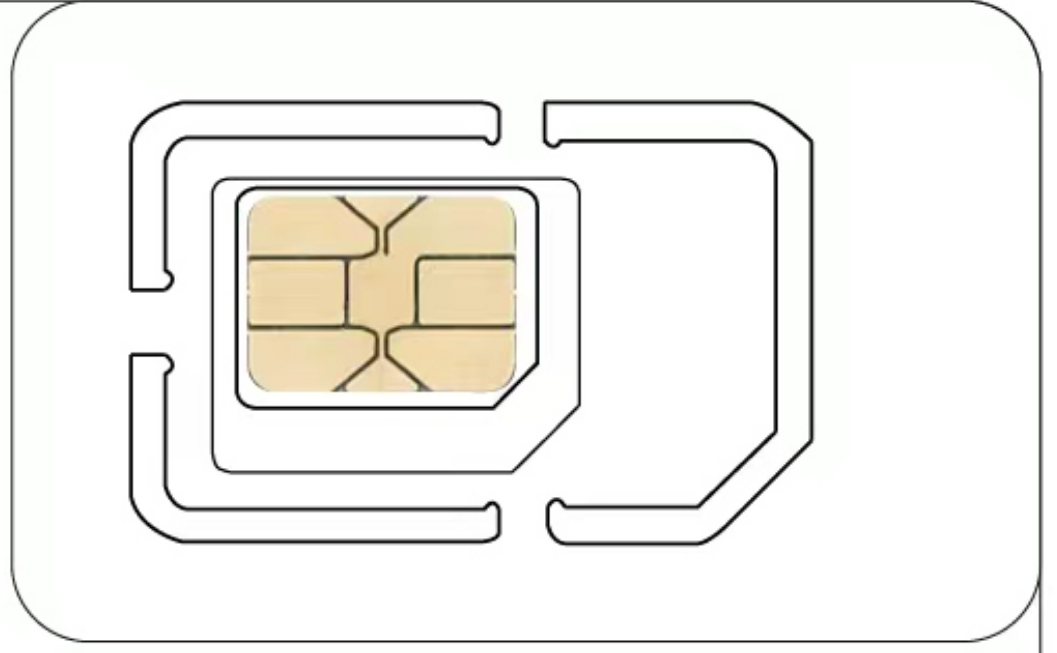
Figure: IC module recovery from rejected and expired cards, with per-chip outcome recording. Equipment: Smart Card Chip Recycling Machine CR3000 - Automatic IC Chip Recovery System.
Engineering Advantages
✓ Controlled Thermal Demounting
Adhesive is softened by controlled heat rather than torn by mechanical force, so the die and its connections survive in a condition that can actually be assessed.
✓ Data-Destruction Pathway
Chips carrying live credentials follow a destruction path whose outcome is physical and verifiable, which is what an audit examines rather than a scrap declaration.
✓ Per-Chip Outcome Recording
Every chip leaves the cycle with a recorded outcome: recovered, destroyed or unreadable. Counts reconcile against the intake batch.
✓ Material Separation
The laminate fraction is separated so copper, PET and PVC leave as streams that can enter normal recycling, instead of mixed card waste that has to be incinerated.
Technical Data
Actual throughput depends on card construction and on how much classification detail the batch record requires. Figures are typical for the production configuration.
Where Recovery Pays
Recovery is one of the few steps in card manufacturing that pays back on both the cost line and the compliance line. The material value is easy to justify internally; the harder case to make is the data argument, and it is the stronger one. A documented destruction pathway turns an unquantified liability - scrap bags with live credentials in them - into a process with counts and evidence, which is exactly what a security audit sets out to examine. Paired with a quality test regime upstream, it also closes the loop: fewer rejects reach the bag when the cause of a reject is measured, and what does reach the bag leaves with a traceable outcome.
- Recovery of production and test rejects
- Processing of obsolete and expired stock
- Disposal of mis-personalized or mis-encoded runs
- Field returns and warranty scrap
- Closed-loop material programs with documented destruction
Frequently Asked Questions
Is the recovered chip reusable?
Only through a controlled re-qualification path. A demounted die has been thermally cycled and mechanically handled, so it cannot be treated as new. Chips that pass re-qualification can be used where the specification allows it; chips from credential batches are destroyed instead.
How does the machine prove the data is gone?
By destroying the die rather than relying on a logical erase. A logical erase leaves the memory readable with the right equipment, which is not a defensible destruction claim. Physical destruction produces fragments, and the batch record documents the count.
What happens to the plastic and copper?
They leave as separated streams: copper from the antenna and contact plate, PET from the card body, PVC where used. Separated streams enter normal recycling channels, which is cleaner and better value than mixed card waste.
Next Step
More equipment in this range is listed on the ZOWINDA CardMachine product page, and related application notes appear in our Industry News section.
Related reading:
- Slot Milling Machine ZOWINDA3000 - 8500 UPH High-Speed Card Cavity Milling
- GSM Card Personalization Machine P8600 - SIM Card Data Encoding and Printing
- Modules Laser Cutting Machine - Smart Card Module Chip Singulation System
- ICC Backside Spot Pressure Tester for Smart Card Quality Control
- PT095 Data Page & Cover Warpage Tester for Passport Booklets
Ready to boost your production efficiency?
Contact us for a tailored solution and quotation on the Smart Card Chip Recycling Machine CR3000 - Automatic IC Chip Recovery System.
Email: info@zowinda.com
WhatsApp: +86 186 2085 0485
 Smart Card Chip Recycling Mach
 GSM Card Personalization Machi
 Slot Milling Machine ZOWINDA30
 Modules Laser Cutting Machine
Please contact us with your request
We are ready to answer your questions.