
Slot Milling Machine ZOWINDA3000 - 8500 UPH High-Speed Card Cavity Milling
Smart Card Manufacturing Notes
Slot Milling Machine ZOWINDA3000 - 8500 UPH High-Speed Card Cavity Milling
Published: November 10, 2026 | ZOWINDA Application Engineering
A contactless card has one feature that must satisfy two contradictory demands at the same time: the module cavity. It has to be deep enough that the chip module sits flush under the surface, and shallow enough that the cutter never reaches the antenna layer a few hundred micrometres below. Between those two limits there is a window measured in tens of microns, and every card in a shift has to land inside it. That is the whole engineering case for a dedicated slot milling machine: the cavity is not a pocket, it is the datum that module implanting, adhesive dispensing and personalization all inherit.
Why Cavity Depth Is a System Tolerance, Not a Machine Setting
Depth tolerance is usually discussed as a machine specification, but in practice it behaves like a system tolerance. The antenna layer sits at a fixed depth in a given inlay construction, so the usable cavity depth is defined by the laminate stack rather than by the cutter. What the machine controls is the variation: tool run-out, sheet flatness, table height stability and debris evacuation each add to or subtract from the nominal depth. A machine that holds a tight depth on a perfectly flat sheet can still produce out-of-window cavities if sheet flatness drifts, because the cutter follows the sheet, not the nominal plane.
The second-order effect is wear. A cutter that has milled twenty thousand cavities is a different cutter from the one that was set at the start of the shift; edge wear raises cutting force, higher force deflects the sheet locally, and effective depth changes even though the Z axis has not moved. Machines that verify by measuring the sheet, rather than by trusting a pre-set number, hold the window across a whole shift. That is the difference between a milling station that can be left alone and one that needs an operator to check every sheet - and it is the difference that shows up two process steps later, as modules sitting proud or adhesive bonds that never fully seat.
How a Production Milling Cycle Runs
- Register the sheet on the table datum. The sheet is located and clamped flat so the cutter works from the same reference for every cavity on the sheet. Registration error shows up later as a module that sits off-centre in its cavity, which adhesive cannot correct.
- Verify depth on the first cavity. The first cut is measured. If it falls outside the window the offset is corrected before the rest of the sheet is machined, so a drift never costs a whole sheet of inlays.
- Mill each cavity on the programmed path. Cavity outline, corner radius and floor finish are produced by the tool path. A clean floor matters because adhesive wetting depends on surface energy, and a torn floor traps air under the module.
- Extract debris throughout the cut. Chips left in a cavity become a thickness error at implanting. Extraction runs with the cut rather than after it, so the cavity is clean when the tool leaves it.
- Hand the sheet to implanting. The sheet leaves the machine with measured cavities and no separate inspection pass, ready for module placement and bonding.
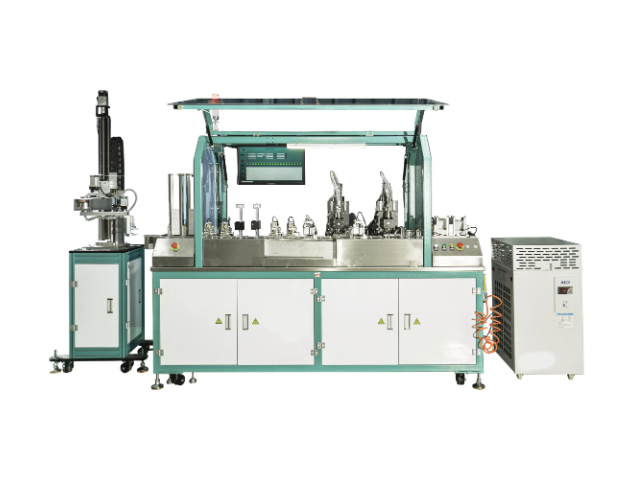
Figure: module cavity milling on a smart card sheet, with depth verified on the sheet rather than inferred from tool position. Equipment: Slot Milling Machine ZOWINDA3000 - 8500 UPH High-Speed Card Cavity Milling.
Engineering Advantages
✓ High-Throughput Milling
Up to 8500 cavities per hour on the production configuration, so the milling station tracks the output of the implanting line instead of becoming its bottleneck.
✓ Measured Depth Control
Cavity depth is verified on the sheet rather than inferred from tool position, which keeps the window intact as the cutter wears through a shift.
✓ Clean-Floor Geometry
Tool path and extraction are designed together so the cavity floor is left open and clean, which is what reliable adhesive wetting requires.
✓ Sheet-Level Handling
The machine processes sheets, so registration is established once per sheet and the downstream implanting step inherits a stable datum instead of a per-card error.
Technical Data
Throughput and depth figures are typical values for the production configuration. Final values are set against the laminate stack, cavity drawing and module type you qualify.
Where It Fits in the Production Chain
Cavity milling looks trivial next to personalization or encoding, which is exactly why it is often under-specified. The cost of a shallow cavity does not appear at the milling station; it appears two steps later as a module sitting proud, an adhesive bond that never fully seats, or a card that fails a thickness or delamination test at the end of the line. Measuring depth where it is created is far cheaper than discovering the consequence where it hurts. Read together with the laser singulation and module placement steps, the milling station is the first place in the chain where a number can still be changed profitably.
- Cavity preparation ahead of module implanting
- Converting lines where cavity depth governs module flatness
- Rework of sheets found with shallow cavities after implanting
- Dual-interface cards where antenna clearance sets the depth limit
Frequently Asked Questions
How deep should a module cavity be?
It is defined by the laminate stack, not by a universal number. The working rule is the deepest cavity that still leaves an intact antenna and dielectric layer below the floor. For a given inlay the supplier drawing gives the nominal, and the machine window is built around it.
Can the same machine mill custom cavity shapes?
Yes, within tool and fixture limits. Cavity profile is a tool-path property, so custom outlines, corner radii and dual cavities are a programming task rather than a hardware change. Very deep or very large cavities may need a different sheet support.
Does milling damage the antenna?
Only if depth control fails. The antenna sits below the cavity floor by design; the machine keeps the floor above it under all normal variation. Verifying depth on the sheet exists precisely to catch the drift that would otherwise reach the antenna.
Next Step
More equipment in this range is listed on the ZOWINDA CardMachine product page, and related application notes appear in our Industry News section.
Related reading:
- GSM Card Personalization Machine P8600 - SIM Card Data Encoding and Printing
- Smart Card Chip Recycling Machine CR3000 - Automatic IC Chip Recovery System
- Modules Laser Cutting Machine - Smart Card Module Chip Singulation System
- Automatic IC Module Implanting Machine
- Auto Patch Pick and Place Machine for Smart Card Production
Ready to boost your production efficiency?
Contact us for a tailored solution and quotation on the Slot Milling Machine ZOWINDA3000 - 8500 UPH High-Speed Card Cavity Milling.
Email: info@zowinda.com
WhatsApp: +86 186 2085 0485
 Smart Card Chip Recycling Mach
 GSM Card Personalization Machi
 Slot Milling Machine ZOWINDA30
 Modules Laser Cutting Machine
Please contact us with your request
We are ready to answer your questions.