
Three Wheel Tester for ICC Card Mechanical Reliability
Three Wheel Tester for ICC Card Mechanical Reliability: Engineering Notes from the Production Floor
Published: November 04, 2026 | ZOWINDA Application Engineering
A smart card body is a laminate of PVC, PET or PC sheets with an antenna and a module cavity cut into it, and it is expected to survive a decade of flexing in wallets and pockets. Mechanical failures - cracked antenna wire, delaminated sheets, module lift - almost never come from one hard impact. They come from cumulative bending. The three wheel tester reproduces that cumulative load in a controlled cycle count, so a card body that would fail in the field fails on the bench instead.
What Three-Wheel Testing Actually Reproduces
The name refers to the fixture geometry: the card is driven between three rollers whose spacing sets the bend radius and whose rotation drives the card back and forth. The card travels one direction through a bend, comes back through the opposite bend, and each pass stresses the laminate in tension on one face and compression on the other. That alternating load is what opens a delamination at the sheet interface, or fatigues the antenna wire where it was embedded too close to the surface.
Because bend radius, cycle rate and cycle count are programmable, the test is a severity dial rather than a single pass-or-fail gate. ISO/IEC 10373-1 defines dynamic bending and torsion procedures for card bodies; a tester configured to those parameters lets a plant run the same test the certification laboratory runs, on every batch, instead of only on the sample sent away for qualification.
Test Sequence
- Card loading. Cards are loaded into the fixture and referenced so the bend line falls on the same region of the body for every card.
- Parameter selection. Bend radius, cycle rate and cycle count are selected from a stored recipe that matches the card specification.
- Cycling. The rollers drive the card through alternating bends at the programmed rate while the counter runs closed-loop.
- In-process monitoring. Drive current and cycle count are supervised; a jam, or a card that stops feeding, is flagged with its cycle number.
- Post-test evaluation. Cards are inspected for delamination, cracking and module integrity, and electrically tested where the specification requires it.
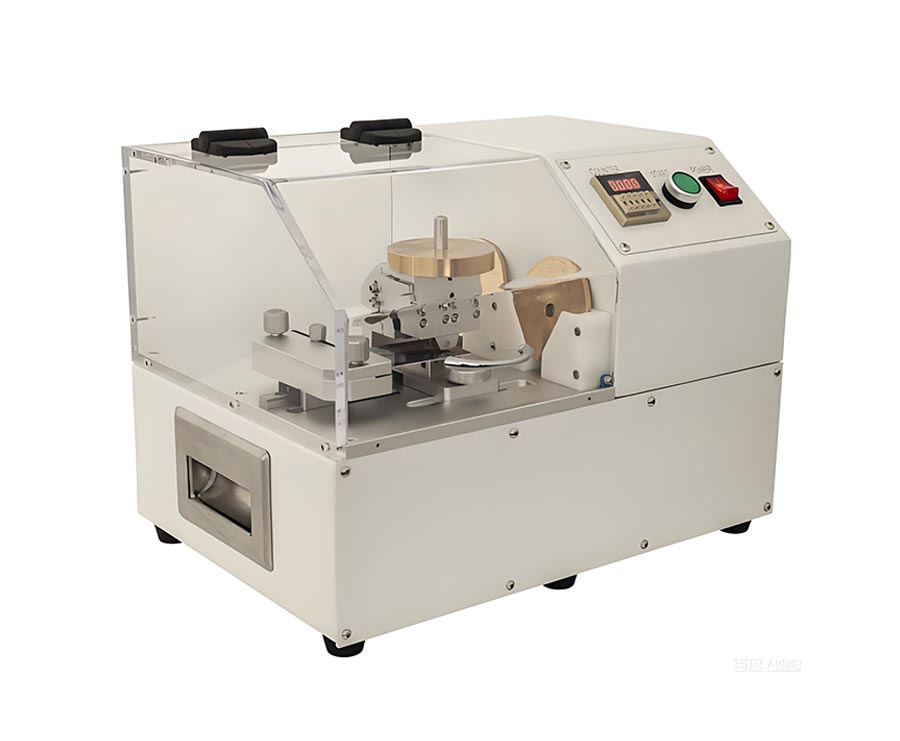
Figure: three wheel dynamic bending fixture driving a CR80 card body through alternating bend cycles. Equipment: Three Wheel Tester for ICC Card Mechanical Reliability.
Key Advantages
✓ Repeatable Severity
Bend radius and cycle rate come from fixture geometry and drive control, not from an operator hand, so results from different shifts stay comparable.
✓ Specification-Matched Recipes
Dynamic bending and torsion parameters are stored per card type, turning a laboratory procedure into a routine batch check.
✓ Early Laminate Feedback
Delamination that would surface after months of wallet life appears as a trend in cycle counts, pointing back to lamination pressure or adhesive choice.
✓ Low Operator Dependency
Loading and unloading dominate operator time; the test itself runs unattended to the programmed cycle count.
Technical Data
Bend radii, cycle counts and acceptance criteria follow the card standard you certify to, commonly the ISO/IEC 10373-1 procedures. ZOWINDA configures the fixture and recipe against your specification before shipment.
Where It Fits in the Plant
Mechanical testing belongs in two places: incoming inspection and qualification. Card bodies bought from an outside laminator are worth cycling on arrival, because a change in their adhesive or press cycle only shows up as delamination after the card has been flexed. In-house lines use the tester after lamination and before milling, so a body that would fail mechanically never consumes a module. And after any change in lamination pressure, temperature or sheet supplier, a fixed cycle count is the fastest way to prove the process is still inside its window.
- Incoming inspection of laminated card bodies
- Qualification of a new laminate or adhesive
- Post-lamination batch sampling
- Pre-implant screening before module consumption
Frequently Asked Questions
How many cycles should a card survive?
That number comes from the standard or customer specification your cards are certified against, not from the machine. The tester applies the specified bend radius and rate precisely and counts cycles reproducibly, so the comparison against that number means something.
Can it test torsion as well as bending?
Dynamic bending with the three wheel fixture is the standard configuration; torsion fixtures are supplied where the specification calls for them. Tell ZOWINDA which procedures you certify to and the fixture set is matched to that list.
Does the test destroy good cards?
It is destructive by design: cards are driven until the specified cycle count is reached, and some will fail. That is the point - a body that fails on the bench is one that does not fail inside a customers wallet.
Next Step
More equipment in this range is listed on the ZOWINDA CardMachine product page, and related application notes appear in our Industry News section.
Related reading:
- ICC Backside Spot Pressure Tester for Smart Card Quality Control
- Integrated Chip Placement and Wire Embedding/Welding System
- Auto Wire Embedding Machine (2-in-1 System)
Ready to boost your production efficiency?
Contact us for a tailored solution and quotation on the Three Wheel Tester for ICC Card Mechanical Reliability.
Email: info@zowinda.com
WhatsApp: +86 186 2085 0485
 Automatic IC Module Testing Ma
 Automatic Frequency Test Machi
 Three Wheel Tester for ICC Car
 Auto Wire Embedding Machine (2
Please contact us with your request
We are ready to answer your questions.