
Card Punching and Sorting Machine
A modern card punching and sorting machine turns stacked sheets of printed PVC, PET, or composite card material into individually separated, inspected, and neatly stacked cards ready for packaging or further personalization. For card manufacturers, personalization bureaus, and fulfillment centers that issue bank cards, SIM cards, transit passes, and identification cards at scale, this equipment is the critical link that connects high-speed lamination and printing with accurate, damage-free downstream handling.
Without automated punching and sorting, finished sheets are typically cut on a standalone press and then handled by hand. That manual step is slow, introduces orientation errors, and makes it difficult to trace individual cards back to a job or batch. An integrated line removes those weaknesses by performing cutting, verification, and sorting in one controlled, documented pass. In this guide we explain how a card punching and sorting machine works, the specifications that matter most, and how to choose the right configuration for your production line.

What Is a Card Punching and Sorting Machine?
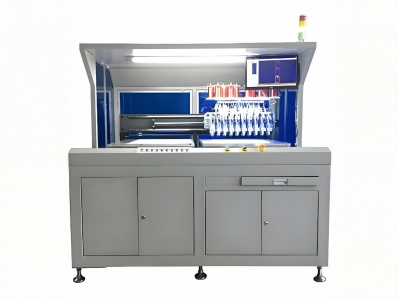
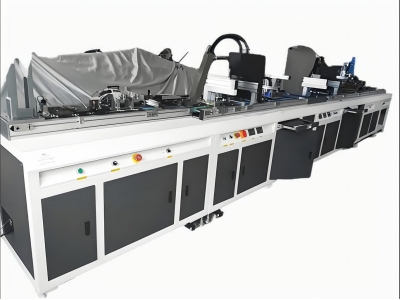
A card punching and sorting machine is an integrated system that performs three jobs in a single pass: it punches individual cards from a printed or laminated sheet, it verifies each card for readable data or visual defects, and it sorts accepted cards into designated output stacks while separating rejects. Unlike a standalone hydraulic punch that drops loose cut cards into a bin, an automated punching and sorting line maintains card orientation, tracks each card's identity, and routes good cards to collection trays by batch, account, or destination. The result is a continuous, traceable flow that removes manual handling and the costly errors that come with it.
How the Card Punching and Sorting Process Works
The workflow is straightforward but tightly controlled from sheet to finished stack:
- Sheet feeding - printed card sheets are loaded and fed with precise mechanical registration.
- Punching - a hardened steel die cuts each card to ISO 7810 ID-1 dimensions (85.6 x 54.0 mm).
- Verification - a camera or reader checks barcode, magnetic stripe, or chip presence on every card.
- Sorting - good cards are diverted to programmable output stacks; rejects are separated into a dedicated bin.
- Collection - finished cards are stacked, counted, and transferred to the next station or packaging.
Because every card is identified before it is sorted, the machine can group cards by job, maintain exact counts, and generate rejection reports for quality control. This closed-loop tracking is what makes an automatic card punching equipment setup suitable for regulated card programs where accountability is mandatory.
Card Punching Methods: Hydraulic vs. Servo-Driven
Not every punching mechanism suits every production profile. Traditional hydraulic punches deliver very high cutting force and are well suited to thick composite or multilayer cards, but they are louder, require more maintenance, and offer less precise control over dwell time. Modern servo-driven punches use programmable electric actuators that control cutting speed, position, and pressure with fine resolution, giving cleaner edges on thin PVC and reducing wear on dies.
For most personalization bureaus issuing standard CR80 cards, a servo-driven card punching and sorting machine is the better long-term choice because changeovers are faster and energy consumption is lower. Operations that punch heavy-duty access cards or dual-interface composites may still prefer hydraulic force at the cutting station while using servo control for feeding and sorting. The right answer depends on your material mix and daily volume.
Key Benefits for Card Manufacturers and Personalization Bureaus
- Higher throughput with consistent, burr-free cut quality on every card.
- Reduced labor and elimination of manual sorting mistakes.
- Full traceability for banking, telecom, and government card issuance.
- Lower damage rates compared with manual handling of loose cards.
- Easy integration with laminating, encoding, and mailing lines.
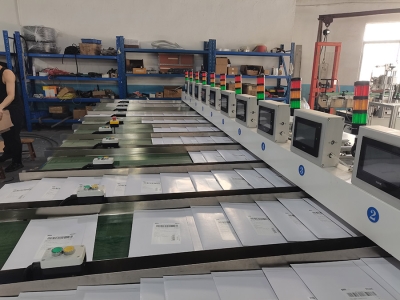
For operations that also need to envelope and address issued cards, pairing the punching line with downstream equipment such as a sealing and labeling machine or an automated letter and flats mail sorter creates an end-to-end, lights-out card issuance cell that minimizes touches between printing and dispatch.
Quality Control and Defect Detection
Verification is where a card punching and sorting machine earns its place on a regulated line. Integrated CCD cameras inspect each card for misregistration, surface scratches, and print defects, while barcode and chip readers confirm that the data carrier is present and readable. Cards that fail any check are diverted to a reject bin and logged with a reason code, so quality teams can spot trends before a whole batch is compromised.
Advanced configurations add vision-based checks for color accuracy and edge quality, pushing first-pass yield above 99.5 percent. Because the rejection data is tied to the sheet and job, managers can trace a defective card back to its source print run and take corrective action. This level of control is difficult or impossible to achieve with manual sorting, where defects are often discovered only after cards reach the customer.
Typical Applications by Industry
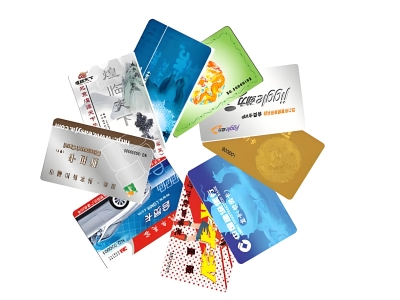
- Banking and finance - EMV debit and credit cards issued in high volume.
- Telecom - SIM and USIM cards sorted by batch and carrier profile.
- Government - national ID, health, and social security cards.
- Transit - contactless fare cards and employee badges.
- Loyalty and retail - gift, membership, and promotional cards.
In each case, the card punching and sorting machine protects card quality while keeping pace with personalization printers that can output thousands of sheets per shift. Where larger parcels are involved, a dual lane parcel sorter can extend automated handling beyond the card itself to envelopes and shipping cartons.
Technical Specifications at a Glance
The following specifications define the production envelope of a standard Zowinda card punching and sorting system:
| Specification | Details |
|---|---|
| Card Size | ISO 7810 ID-1, 85.6 x 54.0 mm (CR80) |
| Sheet Format | A4 / A3 multi-up sheets, 3x8 or 5x5 layout |
| Card Thickness | 0.30 - 1.00 mm (PVC, PET, ABS, composite) |
| Punching Speed | Up to 6000 cards per hour |
| Sorting Channels | 4 - 8 programmable output stacks |
| Verification | CCD camera plus barcode and chip reader |
| Reject Accuracy | Greater than 99.5% |
| Control System | Windows-based HMI with job recipes |
| Power Supply | AC 220V, 50/60 Hz |
| Air Supply | 0.6 MPa clean, dry compressed air |
| Dimensions (L x W x H) | 2600 x 1200 x 1650 mm |
| Weight | About 850 kg |
Choosing the Right Card Punching and Sorting Configuration
Select your configuration around four variables: sheet size, card thickness range, required throughput, and the data you must verify. If you issue multiple card types, choose a machine with quick-change tooling and programmable sorting logic so changeovers stay short. Operations that already run downstream sorting or mailing equipment should confirm conveyor heights and communication protocols so cards move seamlessly between stations without manual transfer.
Also consider future growth. A line sized exactly to today's volume will become a bottleneck as issuance grows, while a moderately larger system protects your investment. Discuss your peak seasonal demand with the manufacturer rather than average demand, because card programs frequently spike during holidays, elections, or product launches.
Maintenance and Uptime Tips
- Keep punch dies sharp and inspect for burrs on a weekly schedule.
- Clean optical sensors and cameras at the start of every shift.
- Calibrate sheet registration before each production run.
- Use only manufacturer-approved lubrication on moving parts.
- Train at least two operators per line to avoid single-point dependency.
A short preventive-maintenance routine is the single biggest factor in avoiding unplanned downtime during peak issuance periods such as holiday card campaigns or national ID rollouts. Keeping spare dies and a documented checklist on the floor turns potential stoppages into minutes rather than hours.
When planning a purchase, request a site demonstration with your own card stock so you can validate cut quality and read rates under real conditions rather than on supplier samples. A reputable supplier will also provide operator training, spare parts, and remote support, which materially shortens the time from installation to full production. Budget for tooling changes and annual calibration so the line keeps delivering certified quality as your card programs evolve.
Frequently Asked Questions
What types of cards can the machine punch and sort?
It handles PVC, PET, ABS, and composite cards, including contact and contactless smart cards, SIM cards, and standard CR80 cards, across a thickness range of 0.30 to 1.00 mm.
How fast is a card punching and sorting machine?
Typical throughput reaches up to 6000 cards per hour, depending on sheet layout, material, and the complexity of the verification step configured for each job.
Can it verify chips and barcodes before sorting?
Yes. Integrated CCD cameras and readers validate barcodes, magnetic stripes, and chip presence on every card, automatically routing rejects to a dedicated bin and logging them for quality reporting.
Does it integrate with existing personalization lines?
Yes. It connects upstream to laminators and printers and downstream to sorting, sealing, and mailing equipment through standard conveyor interfaces and programmable job recipes.
How many operators does it require?
One trained operator per shift is enough for loading and monitoring. The line runs automatically between changeovers, freeing staff for higher-value tasks.
Get a Quote on the Card Punching and Sorting Machine
If you issue cards at volume, a card punching and sorting machine can cut labor cost, eliminate manual sorting errors, and compress production lead times while improving traceability. Zowinda Technology designs and manufactures these systems for banks, government institutions, telecom operators, and personalization bureaus worldwide.
Contact our team to discuss configuration, sheet layouts, and lead time:
- Email: info@zowinda.com
- WhatsApp: +86 186 2085 0485
- Product page: Card Punching and Sorting Machine
Reach out today and let us help you build a faster, more accurate card production line.
 Zowinda’s AI-Powered Envelope
 Zowinda Unveils Next-Gen Auto
 DOD Printing System Boosts Sma
 DOD Printing System Proposal:
Please contact us with your request
We are ready to answer your questions.