
RFID Inlay Die-Cutting and Web-Handling Best Practices for High-Yield Production
RFID Inlay Die-Cutting and Web-Handling Best Practices for High-Yield Production
Publish Date: 2026-08-23
RFID inlay converting is where raw antenna webs become finished smart labels. Small gains in die-cutting accuracy and web tension directly translate into fewer rejects and lower material cost at volume. This guide breaks down the process variables that matter most on a production floor.
Why Web Stability Drives Inlay Yield
In a roll-to-roll converting line, the inlay web passes through printing, lamination, and die-cutting in a single pass. The single largest source of scrap is web drift: when tension is uneven, the antenna layer shifts relative to the adhesive and release liner, producing mis-registered cuts. Servo-driven unwind/rewind with closed-loop tension feedback keeps the web centered to within a fraction of a millimeter, which is what separates a 92% yield line from an 80% one.

High-speed rotary die-cutting station processing a pre-laminated RFID inlay web.
Core Process Capabilities
✅ Rotary vs Flat-Bed Cutting
Rotary dies run continuously at high speed and suit long runs; flat-bed offers tighter tolerance for complex cavity shapes. Match the tool to your label geometry.
✅ Vision-Guided Registration
A line-scan camera locks the cut to printed marks, compensating for web stretch so every antenna is cut at the same relative position.
✅ Matrix Stripping & Rewind
Clean matrix removal and a controlled rewind profile prevent edge ooze and telescoping on the finished roll, protecting downstream application.
Representative Production Parameters
Ready to Improve Your Production Efficiency?
Contact us for a tailored solution and quotation.
Email: info@zowinda.com
WhatsApp: +86 186 2085 0485
 Automatic 3D Curved Antenna Em
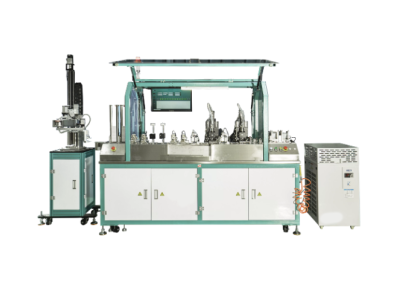 Automatic Module Testing Machi
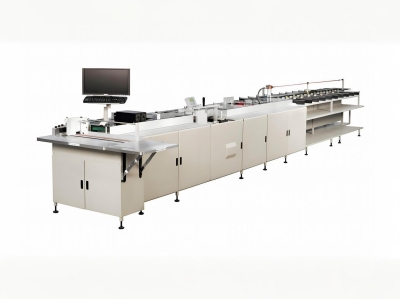 Auto Envelope Sealing and Labe
 Automated Card Sealing Labelin
Please contact us with your request
We are ready to answer your questions.