
Card Embossing vs. Thermal Re-transfer Printing: Choosing the Right Personalization Method
Card Embossing vs. Thermal Re-transfer Printing: Choosing the Right Personalization Method
Publish Date: 2026-08-14
Every card program eventually faces the same decision: how should the card surface be personalized? Embossing—the raised characters you feel on a credit card—and thermal re-transfer printing—the crisp full-color method behind most ID badges—solve different problems. Choosing wrong means higher rejects, slower lines, or cards that fail in the field. Here is a practical comparison to guide the choice.
What Embossing Actually Delivers
Embossing physically raises characters from the card body using male/female dies. The result is tactile, machine-readable by imprinters, and immune to surface wear—which is why payment cards still use it decades after flat printing became possible. The trade-off is speed and flexibility: each character set requires die changes, and color is limited to subsequent tipping (painting the raised numerals).
Where Thermal Re-transfer Wins
Re-transfer printing lays a reverse image onto a clear film, then fuses it to the card. Because the print head never touches the card, it handles uneven surfaces, smart card chips, and mag stripes without artifacting. Output is photo-quality, edge-to-edge, and supports variable data at full line speed. The printed layer sits above the card, however, so heavy abrasion can eventually scuff it.
Matching Method to Application
Use embossing when tactile readback or legacy imprinter compatibility is required—typically payment and membership cards. Use re-transfer when you need high-resolution photos, barcodes, or serialized variable data at speed—ID cards, transit, and corporate badges. Many modern lines run both: emboss for the primary number, re-transfer for the photo and artwork.

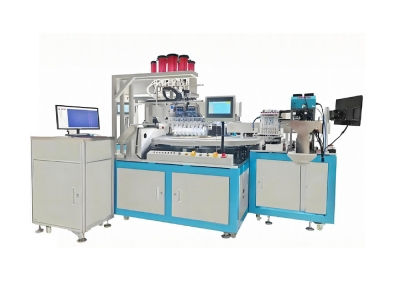
Side-by-side comparison of embossed tactile characters and re-transfer printed card surface.
Key Advantages
✔ Tactile Durability
Embossed characters survive decades of handling and remain imprinter-readable.
✔ Photo-Quality Output
Re-transfer delivers edge-to-edge, scratch-resistant full-color printing.
✔ Variable Data at Speed
Re-transfer handles serialized UID, barcode, and photo without die changes.
✔ Hybrid Lines
Combine emboss + re-transfer to satisfy both tactile and visual requirements.
Technical Parameters
Ready to Upgrade Your Production Line?
Contact us for a tailored solution and quotation.
Email: info@zowinda.com
WhatsApp: +86 186 2085 0485
 NFC Operating Modes Explained:
Smart Card Data Encoding Forma
UHF RFID vs BLE for Asset Trac
NFC Operating Modes Explained:
Smart Card Data Encoding Forma
UHF RFID vs BLE for Asset Trac
 Smart Card Types and How They
Please contact us with your request
We are ready to answer your questions.