
High-Frequency RFID Tag Testing: How to Validate Read Range and Data Integrity at Scale
High-Frequency RFID Tag Testing: How to Validate Read Range and Data Integrity at Scale
Publish Date: 2026-08-14
As RFID adoption accelerates across logistics, retail, and access control, defective tags that pass undetected can cascade into costly read failures downstream. High-frequency (HF, 13.56 MHz) RFID tag testing at the production line is no longer optional—it is the last line of defense for read reliability. This guide breaks down how modern automated test stations validate both read range and data integrity, and what parameters matter most for consistent output.
Why HF RFID Tag Testing Matters on the Production Line
A single misencoded or poorly tuned HF tag may work on the bench but fail at the reader gate. Production-scale testing catches three failure modes: (1) antenna detachment or weak coupling that shrinks read range, (2) encoding errors where the UID or user memory does not match the golden sample, and (3) adhesive or lamination defects that compromise long-term reliability. Automated test stations sample 100% of output rather than relying on statistical sampling, eliminating the blind spot of manual QC.
Core Test Methods Compared
Two principal approaches dominate HF tag validation. Closed-loop reader testing places each tag on a calibrated antenna and measures minimum field strength for reliable read—this directly characterizes read range. Bit-level data verification reads back the full memory block and compares it against the expected dataset, flagging single-bit flips and checksum mismatches. Advanced lines combine both into a single pass, rejecting tags that fail either criterion before they reach the reel.
Throughput and Layout Considerations
Inline test stations are typically positioned immediately after the encoding or laminating module. A dual-lane configuration can double throughput without increasing footprint, while a reject lane physically diverts failed tags so good product never mixes with scrap. For high-mix lines, programmable test profiles let operators switch between ISO 15693 and ISO 14443 parameter sets in seconds.

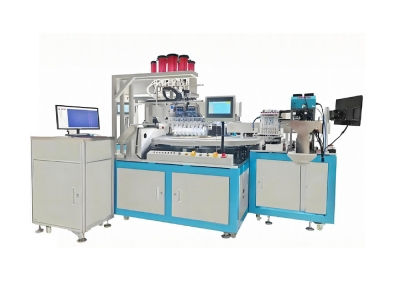
Inline HF RFID tag test station performing read-range and data-integrity validation.
Key Advantages
✔ 100% Inline Sampling
Every tag is tested, not just a statistical sample, closing the QC blind spot of manual inspection.
✔ Dual-Criteria Reject
Combines read-range measurement with bit-level data verification for maximum catch rate.
✔ Programmable Profiles
Switch between ISO 15693 / 14443 test sets instantly for high-mix production.
✔ Reject Lane Diverter
Physically separates failed tags so scrap never contaminates the good reel.
Technical Parameters
Ready to Upgrade Your Production Line?
Contact us for a tailored solution and quotation.
Email: info@zowinda.com
WhatsApp: +86 186 2085 0485
 NFC Operating Modes Explained:
Smart Card Data Encoding Forma
UHF RFID vs BLE for Asset Trac
NFC Operating Modes Explained:
Smart Card Data Encoding Forma
UHF RFID vs BLE for Asset Trac
 Smart Card Types and How They
Please contact us with your request
We are ready to answer your questions.