
RFID Flip Chip System for Inlay Production 2026 | ZOWINDA
RFID Flip Chip System for Inlay Production 2026 | ZOWINDA
The global demand for RFID inlay production is accelerating in 2026, driven by smart packaging, contactless payments, asset tracking, and Industry 4.0 supply chains. At the heart of every reliable RFID tag is a precise flip chip bonding process that connects the microchip to the antenna. The automatic RFID flip chip system from ZOWINDA replaces manual or semi-automatic workflows with a fully integrated platform that delivers 8,500 UPH, ±30 μm bonding accuracy, and a 99.5% yield rate. Whether you produce HF or UHF inlays, this machine is engineered to increase throughput while reducing defect rates and labor dependency.
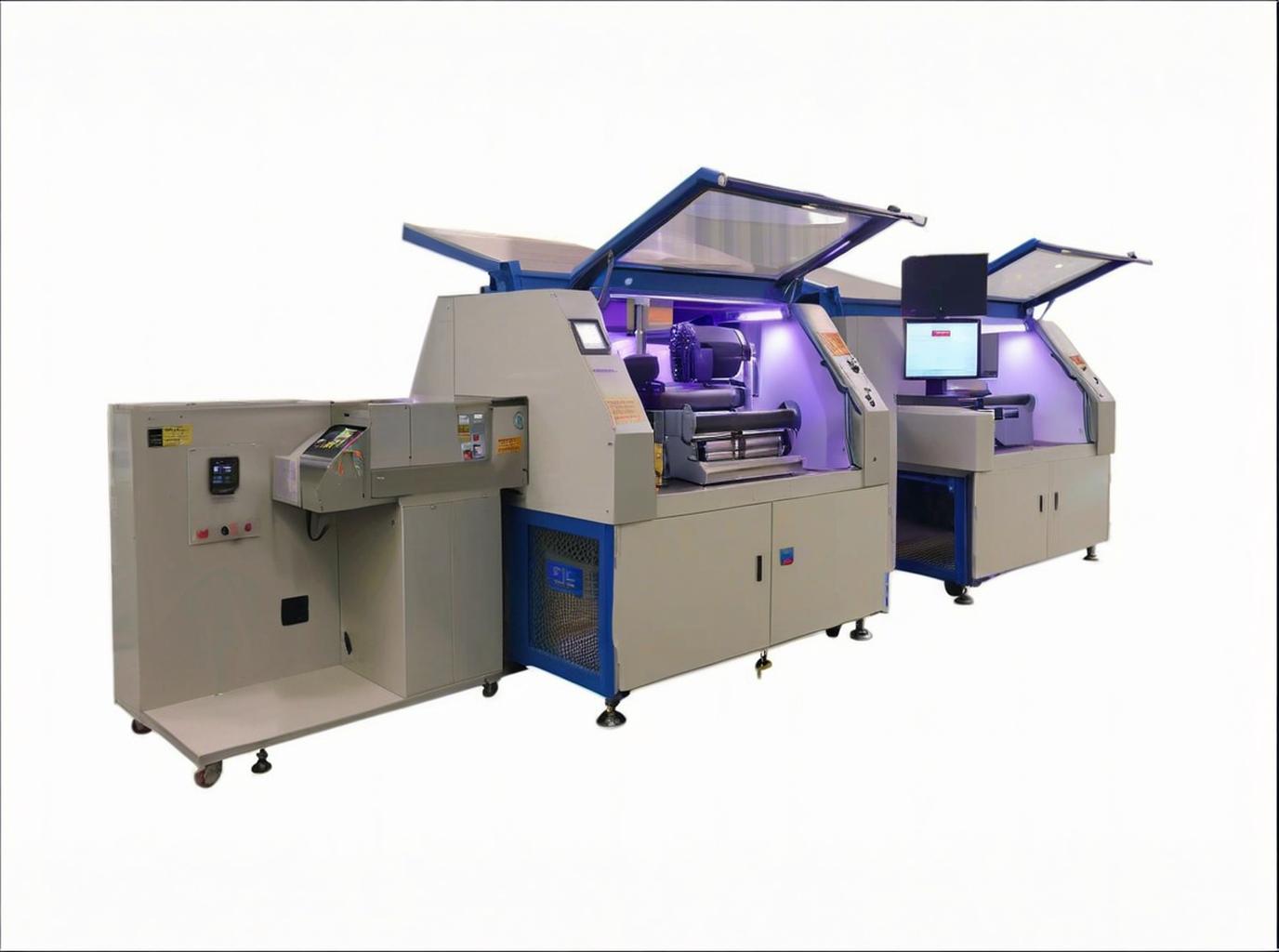
ZOWINDA RFID Automatic Flip Chip System integrates loading, dispensing, flip chip placement, curing, and testing in one line.
What Is an Automatic RFID Flip Chip System?
An automatic RFID flip chip system is a production machine that mounts RFID microchips face-down onto antenna substrates using conductive adhesive or solder bumps, then cures and tests the assembled inlay. The term "flip chip" refers to the chip being flipped so its bond pads face the antenna, enabling a compact, high-frequency-compatible connection. This is fundamentally different from wire bonding because it eliminates loops and reduces parasitic inductance, which is critical for HF and UHF performance.
Traditional RFID inlay lines often split chip placement, curing, and inspection across separate stations. ZOWINDA's design combines these steps into a single, servo-driven platform. The system handles antenna web loading, adhesive dispensing, chip pick-and-place with vision alignment, curing, and final electrical testing. By integrating every stage, it removes the alignment errors that commonly occur when inlays are transferred between machines. The result is consistent bond quality, faster changeovers, and a smaller factory footprint.
For buyers evaluating RFID inlay production machines, the key differentiators are placement accuracy, supported chip sizes, wafer diameter compatibility, and software traceability. ZOWINDA addresses each of these with a Basler vision system, 8"/12" wafer handling, and a PC + servo control architecture that logs production parameters for quality control.
Key Specifications and Performance Metrics
The ZOWINDA RFID Automatic Flip Chip System is built for high-volume, precision manufacturing. Below is the complete technical profile that engineers and procurement teams typically review when specifying a new flip chip bonder.
| Parameter | Value |
|---|---|
| Bonding Speed | Up to 8,500 UPH (related to antenna layout) |
| Bonding Accuracy | ±30 μm |
| Yield Rate | 99.5% |
| Supported Inlays | HF / UHF RFID inlays |
| Chip Size Range | 0.4 mm – 2.0 mm |
| Wafer Diameter | 8" or 12" |
| Power Supply | 10 KW, AC 220 V / 50 Hz |
| Compressed Air | 0.45 MPa – 0.60 MPa |
| Machine Dimensions | 7,300 mm × 1,500 mm × 1,560 mm |
| Machine Weight | 4,500 kg |
| Vision System | High-speed Basler camera |
| Drive System | Panasonic / JSCC servo and speed motors |
The 8,500 UPH rating makes this system competitive with mid-to-high-end European and Asian flip chip bonders, while the ±30 μm accuracy meets the requirements of both standard RFID tags and smaller, more densely packed antenna designs. The 99.5% yield rate is achieved through closed-loop vision correction that compensates for web stretch, thermal drift, and minor substrate variations during the production run.
How the Flip Chip Bonding Process Works
Understanding the process flow helps operators, process engineers, and quality managers set realistic production expectations. The ZOWINDA RFID Automatic Flip Chip System executes the following sequence in one continuous line:
- Antenna Web Loading: The PET or paper antenna web is fed into the machine under controlled tension. Proper web handling prevents misalignment before dispensing begins.
- Adhesive Dispensing: A precision dispenser applies conductive adhesive or epoxy to the antenna bond pads. Dot volume and placement are calibrated per chip size.
- Chip Pick-and-Place: A die bonder picks chips from the diced wafer, flips them, and places them onto the antenna pads. The Basler camera aligns each chip to the antenna pattern in real time.
- Curing: The assembled inlay passes through a heated curing zone that polymerizes the adhesive without damaging the chip or substrate.
- Electrical Testing: HF/UHF test modules verify read range, sensitivity, and impedance. Failed inlays are marked or sorted out automatically.
- Rewind / Collection: Finished inlays are rewound onto a roll or cut into sheets, depending on downstream converting requirements.
Because all stations share a common machine base and control system, alignment errors caused by transfer between standalone machines are eliminated. The software also stores recipe parameters for different antenna layouts, so switching from one inlay design to another takes minutes rather than hours.
Benefits of Upgrading to an Automatic Flip Chip Bonder
Moving from manual placement or older semi-automatic equipment to an automatic flip chip bonder delivers measurable returns across output, quality, and operational cost.
- Higher Throughput: At 8,500 UPH, the system can support multi-shift production schedules that manual lines cannot match.
- Improved Yield: Vision-guided placement and in-line testing push typical yields toward 99.5%, reducing scrap and rework.
- Labor Efficiency: One operator can monitor the entire line, while the machine handles loading, bonding, curing, and testing automatically.
- Process Traceability: Production data, including placement coordinates, curing temperature, and test results, can be logged for ISO and customer audits.
- Flexible Product Mix: The 0.4 mm – 2.0 mm chip range and 8"/12" wafer compatibility allow the same line to produce different RFID tag formats.
- Compact Layout: Integrating six process steps into one machine reduces floor space and simplifies material flow.
For factories already running RFID label converting or smart card lamination, the ZOWINDA system can be installed as a standalone inlay line or linked to downstream equipment such as the RFID Label Detecting & Encoding Machine and the RFID Inlay Sample Bonding Machine. This creates a complete RFID manufacturing ecosystem under one supplier.
Applications Across Industries
RFID inlays produced on the ZOWINDA flip chip system serve a wide range of markets. The ability to switch between HF and UHF formats, combined with the broad chip-size support, makes the machine suitable for both commodity tag makers and specialized electronics manufacturers.
- Logistics and Supply Chain: Pallet tags, carton labels, and reusable transport item (RTI) tags that must survive repeated handling.
- Retail and Apparel: Item-level tags for inventory accuracy, loss prevention, and self-checkout systems.
- Access Control and Identification: Tickets, badges, and secure documents requiring consistent HF performance.
- Pharmaceuticals: Tamper-evident labels and serialization tags that support track-and-trace regulations.
- Electronics and Automotive: Embedded RFID modules where small chip sizes and tight tolerances are required.
The demand for these applications is expected to grow through 2026 and beyond as retailers, logistics providers, and regulators push for more automated identification. Investing in a reliable RFID inlay production machine now positions manufacturers to capture this growth without re-tooling later.
Selecting the Right Flip Chip Bonder for Your Facility
Choosing a flip chip bonder is not only about the headline speed. Procurement and engineering teams should evaluate the complete cost of ownership, including floor space, power requirements, compressed air consumption, spare parts availability, and supplier support. The ZOWINDA system requires 10 KW electrical power and 0.45–0.60 MPa compressed air, which are standard for most card and label manufacturing facilities. Its 7,300 mm length means buyers should plan a straight-line layout with adequate infeed and outfeed zones.
Another important factor is wafer and chip compatibility. Many older bonders are limited to 8" wafers or narrow chip-size ranges. ZOWINDA supports both 8" and 12" wafers and chips from 0.4 mm to 2.0 mm, which protects the investment as chip suppliers move to larger wafers and smaller dies. Finally, ask for sample processing and factory acceptance testing before shipment. ZOWINDA offers layout drawings, sample runs, and on-site or remote commissioning to ensure the machine reaches rated performance after installation.
Frequently Asked Questions
What is the bonding accuracy of the ZOWINDA RFID flip chip system?
The system achieves ±30 μm bonding accuracy using a high-speed Basler vision system that aligns each chip to the antenna pattern in real time. This level of precision supports both standard RFID inlays and more compact antenna designs.
How many units per hour can the machine produce?
The rated throughput is up to 8,500 UPH. Actual speed depends on the antenna layout, chip size, and curing parameters. The servo-driven platform is designed to maintain stable throughput across long production runs.
Can it handle both HF and UHF RFID inlays?
Yes. The ZOWINDA automatic RFID flip chip system supports both HF and UHF RFID inlays. The HF/UHF testing module integrated into the line verifies performance before inlays leave the machine.
What chip and wafer sizes are compatible?
The machine handles chips from 0.4 mm to 2.0 mm and accepts 8" or 12" wafers. This range covers most RFID microchips used in retail, logistics, access control, and industrial applications.
Is the machine easy to maintain and upgrade?
Yes. The system uses a modular design, allowing individual stations such as dispensing, curing, or testing to be serviced or upgraded without replacing the entire line. This reduces downtime and protects the long-term value of the investment.
Request a Quote and Next Steps
If you are planning an RFID inlay production line upgrade in 2026, the ZOWINDA RFID Automatic Flip Chip System offers the speed, accuracy, and integration needed to compete in high-volume markets. View the full product specifications and images on the RFID Automatic Flip Chip System product page, or contact ZOWINDA directly for a customized quotation, layout drawing, and sample processing plan.
Contact ZOWINDA today:
Email: [email protected]
WhatsApp: +86 186 2085 0485
 RFID Antenna Etching Wastewate
Thermal Lamination vs Solvent-
Edge Computing and IIoT Data I
RFID Antenna Etching Wastewate
Thermal Lamination vs Solvent-
Edge Computing and IIoT Data I
 How Smart Cards Are Made: Proc
Please contact us with your request
We are ready to answer your questions.