
Edge Computing and IIoT Data Integration for Smart Card Production Lines
Edge Computing and IIoT Data Integration for Smart Card Production Lines
Publish Date: 2026-09-14
Modern smart card and RFID inlay manufacturing is no longer a collection of isolated machines. Edge computing and Industrial IoT (IIoT) integration turn each station into a data-producing node, feeding Manufacturing Execution Systems (MES) in real time. This article explains the architecture, protocols, and deployment steps that connect a card production line to the factory data backbone.
Why Edge Computing for Card Production Lines
A smart card line combines lamination, milling, module implanting, personalization, and inspection stations. Each generates signals — temperature, pressure, encoder counts, vision pass/fail, RFID encode results. Sending all raw data to a distant cloud is slow and brittle. An edge gateway deployed inside the line cabinet aggregates, filters, and normalizes these signals locally, then forwards only meaningful events upstream. This cuts bandwidth, protects against network outages, and keeps control loops within the machine where latency matters.

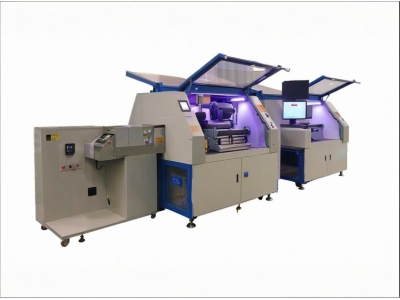
Edge gateway aggregating multi-station production data on a smart card line.
Core Building Blocks of an IIoT Integration
Edge Gateway & OPC-UA
A fanless industrial PC runs an OPC-UA server, exposing each PLC tag as a secure, browsable node. PLCs from Xinjie, Omron, or Siemens all map to one unified address space.
MES / SCADA Uplink
The edge node pushes per-card records (serial, station, result, timestamp) to MES via REST or MQTT, enabling full traceability from substrate to finished card.
Representative Integration Parameters
Ready to connect your production line to the factory data backbone?
Contact us for an edge-integration assessment and a tailored MES uplink plan.
Email: info@zowinda.com
WhatsApp: +86 186 2085 0485
RFID Antenna Etching Wastewate
Thermal Lamination vs Solvent-
Edge Computing and IIoT Data I
 How Smart Cards Are Made: Proc
Please contact us with your request
We are ready to answer your questions.