
Thermal Lamination vs Solvent-Free Lamination for Smart Card Bodies
Thermal Lamination vs Solvent-Free Lamination for Smart Card Bodies
Publish Date: 2026-09-14
The outer layer of a smart card protects the printed graphic and the embedded chip or antenna. Two dominant methods compete for this step: traditional thermal (hot-roll) lamination and newer solvent-free adhesive lamination. Understanding their trade-offs helps line engineers choose the right process for cost, durability, and sustainability targets.
How the Two Processes Differ
Thermal lamination uses heated rollers to fuse a polyester (PET) overlay onto the printed card body under pressure and temperature (typically 120 to 160 C). Solvent-free lamination applies a 100% solid reactive adhesive between the overlay and body, then cures it with UV or low-temperature process — eliminating volatile organic compound (VOC) emissions. The first favors throughput and proven durability; the second favors a cleaner shop floor and lower energy use.

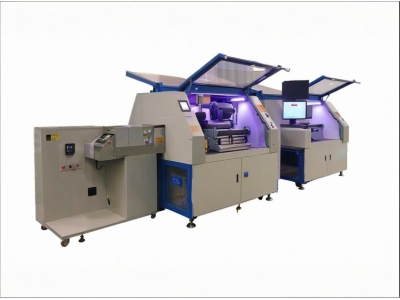
Lamination station bonding overlay to printed smart card bodies.
Selection Criteria at a Glance
Thermal Lamination
Mature, high bond strength, tolerant of surface variation. Cons: higher energy, occasional haze if temperature drifts, VOC from some overlays.
Solvent-Free Lamination
Zero VOC, lower temperature, crisp finish. Cons: stricter adhesive cure control, slightly higher material cost at low volume.
Process Parameter Comparison
Want a lamination process matched to your volume and ESG goals?
Contact us for a process recommendation and equipment quotation.
Email: info@zowinda.com
WhatsApp: +86 186 2085 0485
RFID Antenna Etching Wastewate
Thermal Lamination vs Solvent-
Edge Computing and IIoT Data I
 How Smart Cards Are Made: Proc
Please contact us with your request
We are ready to answer your questions.