
Smart Card Production Line Setup Guide 2026 | Zowinda
Smart Card Production Line Setup Guide 2026
Setting up a smart card production line is one of the most important investments a card manufacturer can make. Whether you produce SIM cards, banking cards, government ID cards, or transit passes, the right combination of machines decides your output, your quality yield, and your unit cost. This guide explains how to plan a complete line in 2026: the core workflow, the essential smart card manufacturing equipment, how to size the line by production volume, and what to verify before you buy.
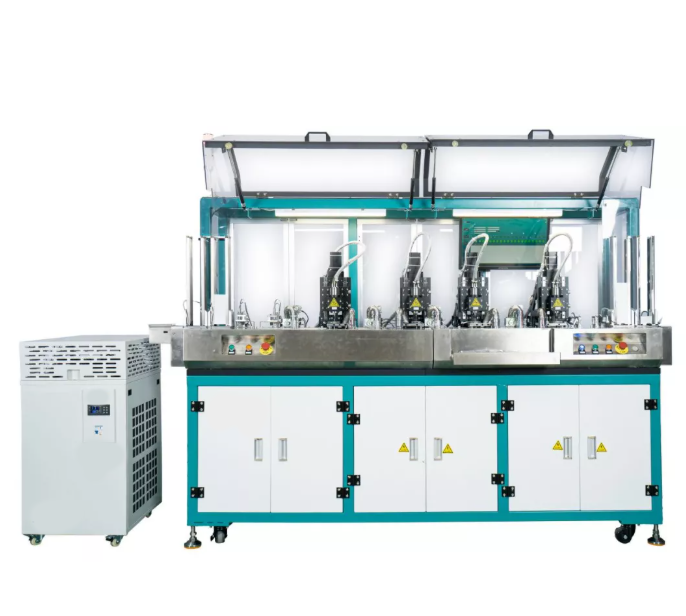
In 2026 the business case for building or upgrading a line is stronger than ever. Demand for dual-interface bank cards keeps rising as issuers replace pure magnetic-stripe products, and local SIM and IoT module manufacturing is expanding to reduce supply-chain risk. At the same time, machine prices have fallen while reliability has improved, so a properly sized line pays back faster than it did five years ago. The mistake most buyers make is treating the line as a list of separate machines instead of one balanced system.
1. The Core Smart Card Production Line Workflow
A complete line turns raw PVC, PET, or PETG sheets and silicon chips into finished, personalized cards. The typical flow has seven stations, and each one depends on the one before it:
- Inlay or antenna embedding — the RFID coil or pre-made inlay is placed into the card body.
- Printing and lamination — graphic layers, security features, and overlays are applied and bonded under heat and pressure.
- Cavity milling — a precise pocket is cut for the chip module without damaging the antenna loop.
- Module implanting — the IC module is placed into the cavity and bonded with conductive adhesive or hot-bar welding.
- Personalization and encoding — magnetic stripe, chip data, embossing, or laser engraving turns a blank into a working card.
- Electrical and mechanical testing — every card is verified for function, contact, and contactless performance.
- Sheet trimming, sorting, and packing — finished cards are cut, routed, and prepared for shipment.
When you plan a line, you are really choosing which of these stations to automate, which to combine, and where to add buffer capacity so one slow machine does not bottleneck the whole line.
Material flow between stations matters as much as the machines themselves. Sheets move on racks, carts, or conveyors, and every manual hand-off adds labor and defect risk. In a balanced line, each station feeds the next through a short buffer conveyor or stacker, so a brief stop at one station does not stop the others. Plan the physical path before you buy: a straight line is simplest to service, while a U-shaped cell saves floor space and lets one operator watch two stations at once.
2. Essential Equipment for a Complete Line
The equipment list below covers a standard contact or dual-interface card line. Each machine links to the corresponding Zowinda product page so you can compare specifications.
The right automation level depends on your labor cost and volume, not just your budget. A semi-automatic milling or implanting station costs less and is easy to staff, but it needs an operator at every step and its output is limited by human pace. A fully automatic station runs unattended between magazine loads and holds tighter tolerance, but it demands more stable power and cleaner air. Most buyers start with automatic embedding and milling, then automate personalization and testing as volume grows. Leave physical space and utility capacity for those later stations so you do not re-layout the floor twice.
Inlay Embedding Station
For contactless and dual-interface cards, the antenna must be embedded accurately and repeatedly. An Auto Contactless Card Inlay Line automates coil feeding, placement, and welding at high speed. For lower volumes or development work, an all-in-one pick, place, wire embed, and welding machine can cover embedding, bonding, and welding in a single footprint.
Cavity Milling Station
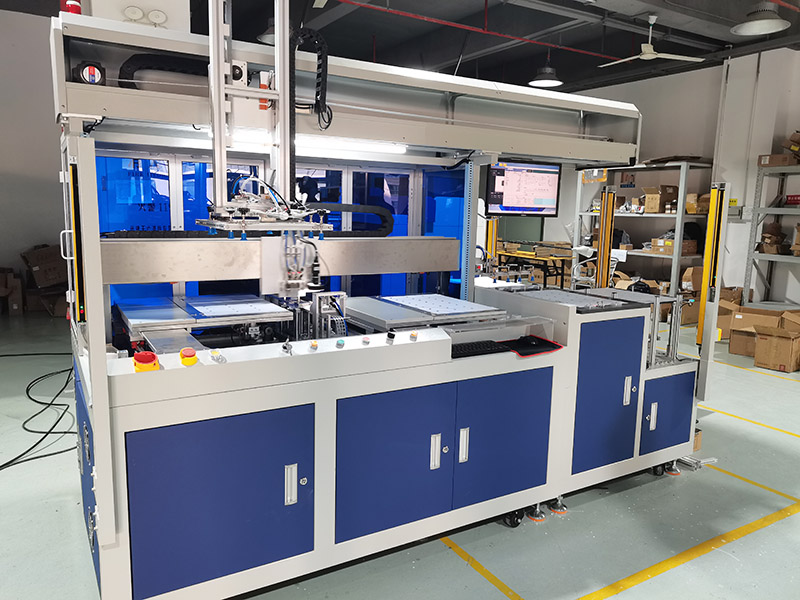
Dual-interface and contact cards require a milled cavity to house the chip module. A Smart Card Cavity Milling Machine cuts a precise pocket across multiple cards per sheet in one pass, holding tight depth tolerance so the antenna is never damaged. Milling quality is the single biggest driver of module bond strength and long-term reliability.
Module Implanting Station
The IC module is placed into the milled cavity and bonded. A dedicated Automatic IC Module Implanting Machine reaches thousands of cards per hour, while a combined Milling & Implanting Machine performs both steps in one system and reduces material handling between stations. For flexible or small-batch work, an Auto Patch Pick and Place Machine adds vision-guided placement for demanding modules.
Personalization Station
Personalization is where a blank card becomes a bank card, SIM, ID, or access card. A GSM Card Personalization Machine handles SIM, banking, and ID profiles with stable data handling and verification. High-volume SIM lines often pair it with the p8600 model for maximum throughput.
Testing Station
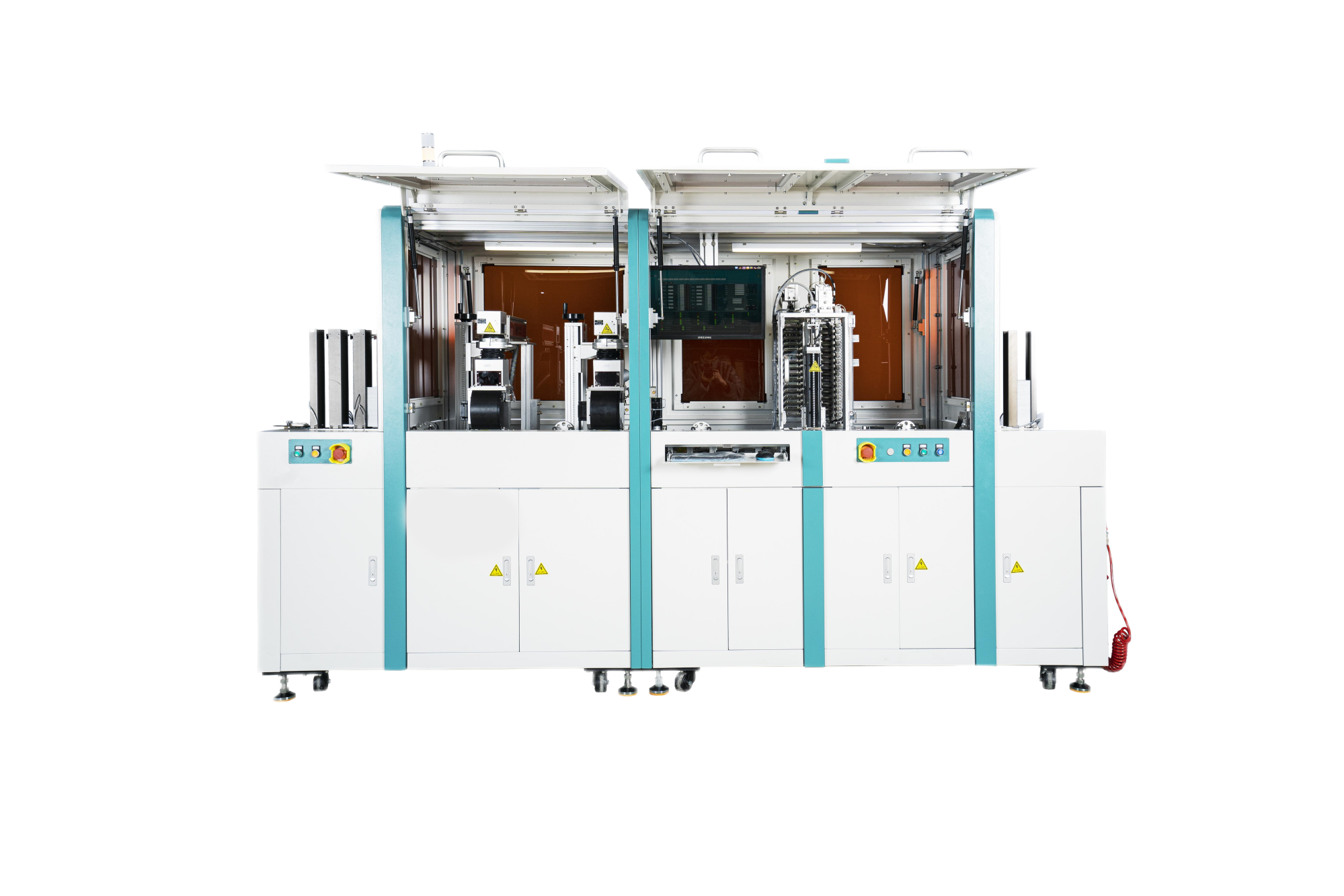
Every finished card must be electrically and mechanically verified. An RFID NFC Card Frequency Test Machine checks contactless performance at 13.56 MHz, while a three-wheel tester validates mechanical durability. Testing before packing protects your yield and your customer relationship.
Finishing Station
After personalization, cards are typically trimmed, sealed, labeled, and sorted. An Auto Sheet Trimming Machine cuts sheets to final size, and a Card Sealing, Labeling, and Sorting Machine handles the final routing and packing stage.
3. How to Size Your Line by Production Volume
The same seven stations exist in every line, but the machine count and automation level change dramatically with volume. Use the table below as a starting point, then let Zowinda engineers tune it to your card mix.
| Tier | Monthly output | Recommended configuration | Footprint (m2) | Power (kW) | Throughput (UPH) |
|---|---|---|---|---|---|
| Pilot | Under 50,000 | All-in-one pick/place/wire unit + semi-auto milling and personalization | 25 - 40 | 8 - 12 | 300 - 600 |
| Mid-volume | 50,000 - 300,000 | Inlay Line + Cavity Milling + Implanting + Personalization + Test | 80 - 140 | 25 - 40 | 1,500 - 3,000 |
| Mass production | Over 300,000 | Full-auto line with parallel stations and multiple personalizers | 200 - 400 | 60 - 100 | 4,000 - 8,000 |
A common mistake is buying the fastest personalizer but leaving a slow miller or manual embedding station upstream. Balance each station to the same hourly rate, then add one buffer station at the slowest step.
A simple way to find the bottleneck is to write each station's rated UPH on paper, then assume real output is 80 to 85 percent of the nameplate because of changeovers, rejects, and material loading. The line can only run as fast as its slowest adjusted station. If milling is rated at 2,000 UPH but implanting at 1,500 UPH, the implanting station sets the pace, and any extra speed in the personalizer is wasted. Spend the next upgrade dollar on the slowest station, not the flashiest one.
4. Space, Power, and Staffing Requirements
Beyond the machines themselves, a production line needs supporting infrastructure:
- Layout — arrange stations in a U or straight flow so sheets move in one direction. Leave 0.8 - 1.2 m of service clearance behind each machine.
- Power — use a stable supply with voltage regulation; milling spindles and laminators are sensitive to dips. Budget 10 - 30 percent headroom over the nameplate total.
- Environment — temperature control and low dust protect optics and bonding quality. An ESD-safe floor and wrist straps are required at the module and personalization stations.
- Staffing — a mid-volume line typically runs with two to three operators per shift plus one technician; mass-production lines add a shift supervisor and a quality inspector.
Do not overlook utilities beyond electricity. Milling spindles and some laminators need clean, dry compressed air, and bonding stations may need local extraction. Vacuum feeders and stackers rely on stable air pressure, so size the compressor with headroom and add a dryer. Ergonomics also matter: loading heights, screen positions, and reject bins should keep operators comfortable through a full shift, because fatigue is a hidden source of defects and downtime.
5. Quality Control and Compliance
Card programs are governed by strict standards. Banking and SIM cards must pass EMV and carrier approvals; ID cards must meet national security and durability specs. Build testing into the line from day one rather than as a separate audit step. Use the RFID NFC Card Frequency Test Machine for contactless verification and a three-wheel tester for mechanical life, and keep records for every batch so issues can be traced to a date and a station.
Traceability software ties it all together. A line that logs each sheet ID, the station that processed it, the operator, and the test result can prove compliance to a carrier auditor and isolate a bad batch in minutes instead of days. Many modern personalizers and testers export data to a manufacturing execution system, and even a simple spreadsheet per shift is far better than no record. Treat data collection as part of the line specification, not an afterthought, because retrofitting it later is expensive and often incomplete.
Frequently Asked Questions
How much space does a smart card production line need?
A pilot line fits in 25 - 40 square meters. A mid-volume automated line needs 80 - 140 square meters including material staging and packing. Mass-production lines span 200 - 400 square meters across parallel stations.
What throughput can I expect from a card production line?
Pilot setups reach 300 - 600 cards per hour. Mid-volume lines run 1,500 - 3,000 UPH, and fully automated mass-production lines reach 4,000 - 8,000 UPH depending on the number of parallel personalizers and testers.
Can a single machine produce a complete card?
Not for volume production. An all-in-one unit can embed, mill, and implant for development or low batches, but printing, lamination, personalization, and testing are separate stations in any scalable line. Combining milling and implanting in one machine is the most common space-saving step.
How long does it take to install and commission a line?
Pilot lines can be running within two to four weeks. Mid-volume lines typically take six to ten weeks including installation, operator training, and first-article qualification. Mass-production lines need three to six months for layout, utilities, and staged commissioning.
How do I choose the right configuration for my card types?
Start from card type and volume. Pure contactless cards emphasize inlay embedding and testing. Dual-interface cards add cavity milling and module implanting. SIM and banking cards demand high-speed, verified personalization. Share your card mix with the equipment supplier so stations are balanced and compliant.
Ready to plan your smart card production line? Contact Zowinda engineers for a free line configuration review:
Email [email protected] | WhatsApp +86 186 2085 0485
 RFID Antenna Etching Wastewate
Thermal Lamination vs Solvent-
Edge Computing and IIoT Data I
RFID Antenna Etching Wastewate
Thermal Lamination vs Solvent-
Edge Computing and IIoT Data I
 How Smart Cards Are Made: Proc
Please contact us with your request
We are ready to answer your questions.