
ICC Card Three Wheel Tester Standards 2026 | Zowinda
ICC Card Three Wheel Tester Standards 2026 | Zowinda
Smart cards are expected to survive thousands of insertion cycles in ATMs, POS terminals, hotel locks, and access-control readers. A single cracked chip, delaminated foil, or worn contact pad can cause field failure, brand damage, and costly replacements. The ICC card three wheel tester is the standard factory tool used to verify that finished cards meet mechanical durability requirements before they reach customers.
In this 2026 guide, Zowinda explains how a three wheel testing machine works, which international standards apply, and what to look for when selecting equipment for a smart card QC laboratory or production line.
Whether you produce EMV cards, SIM cards, access badges, or e-passport inlays, investing in the right mechanical testing equipment reduces field failures and strengthens customer confidence.
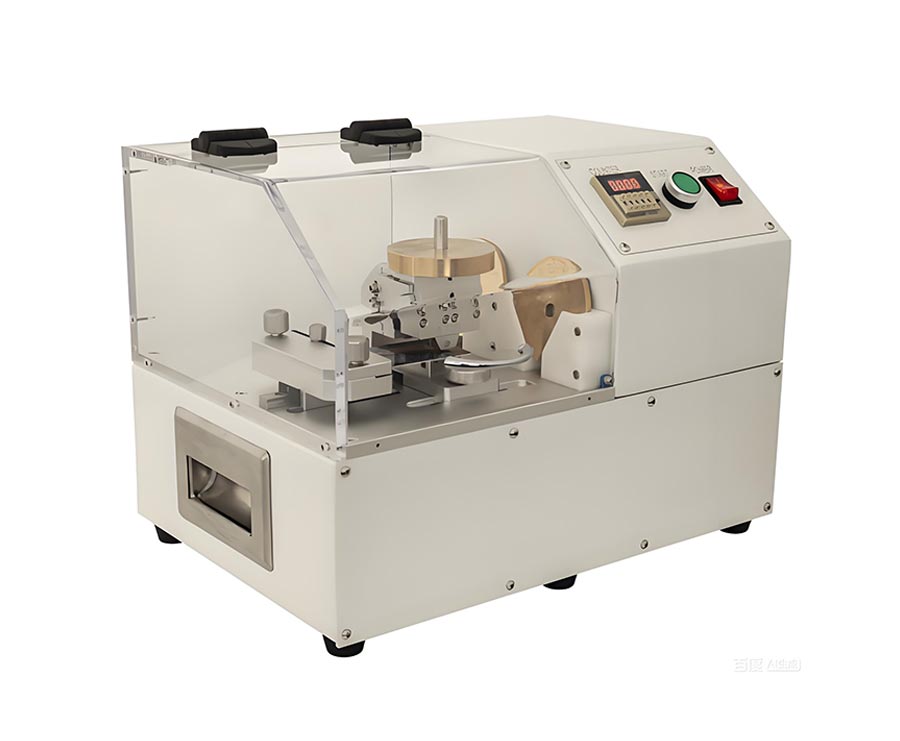
What Is an ICC Card Three Wheel Tester?
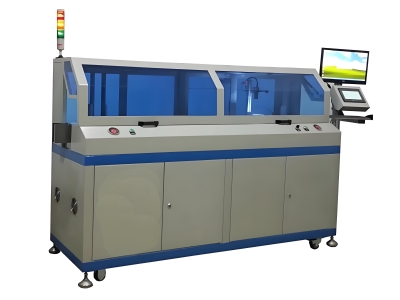
An ICC card three wheel tester is a mechanical reliability machine designed to simulate repeated card insertion and withdrawal. It uses three rotating wheels or rollers to press, bend, and slide a card through a simulated card mouth in a controlled way. The test reproduces the mechanical stresses that cards experience in real-world readers, including bending moments, friction on the contact pads, and edge loading.
The machine is widely used for ISO/IEC 7816 identification cards, EMV payment cards, SIM cards, banking cards, and ID-1 format government documents. Manufacturers run the test to confirm that the card body, embedded chip module, magnetic stripe, and printed layers remain intact after a defined number of cycles.
Unlike simple manual flex tests, a motorized three wheel testing machine delivers repeatable force, speed, and cycle counts. This repeatability is essential for comparing batches, qualifying new materials, and providing test reports to payment networks or government agencies.
Zowinda builds its testers with industrial-grade frames, precision drive systems, and PLC-based controls. The machines are designed for continuous use in high-volume card factories and third-party test houses where downtime and measurement drift must be minimized.
Why Mechanical Reliability Testing Matters for Smart Cards
Card issuers and payment schemes set strict durability targets. A typical EMV payment card must survive at least 10,000 to 50,000 insertion cycles without electrical failure or visible damage. Public-transport cards and hotel key cards may face even higher daily use. If the chip module lifts, the antenna wire breaks, or the card body delaminates, the card fails in the field and the issuer bears replacement costs.
Factory-level ICC card reliability testing catches these weaknesses early. By sampling cards from each production lot and running them on a three wheel tester, quality engineers can:
- Verify that lamination and chip embedding processes are stable.
- Compare different substrates, adhesives, and overlay materials.
- Detect batch-to-batch variation before cards ship.
- Generate test certificates requested by banks, telecom operators, or government clients.
For card personalization bureaus, the three wheel test is also a useful incoming-goods check. Even if cards are purchased from an external supplier, running a sample through the tester proves that the material meets internal acceptance criteria.
In addition to cost control, mechanical testing supports regulatory and scheme compliance. Payment networks, government ID programs, and telecom associations increasingly require documented evidence that cards can withstand defined physical stress before approval for issuance.
How the Three Wheel Test Works
The test fixture holds the card and drives it through a set of three wheels arranged to apply controlled pressure on the card edges and surface. The motion is typically reciprocating: the card is pushed forward and pulled back through the simulated reader mouth for a programmed number of cycles.
Key process parameters include:
- Cycle speed: Usually adjustable from a few hundred to several thousand cycles per hour, depending on the standard and card type.
- Applied force: The wheel pressure is set according to ISO 10373-1 or customer-specific requirements.
- Test temperature: Some standards require conditioning at elevated or low temperature before or during testing.
- Pass/fail criteria: Cards are inspected for cracks, chip lifting, contact pad wear, and electrical continuity after the test.
Modern testers use servo motors and PLCs to maintain precise speed and force profiles. A touch-screen HMI allows operators to save recipes for different card formats and standards. Counters, sensors, and automatic stop functions make it easy to run unattended overnight tests.
Reading Test Results and Setting Acceptance Criteria
After the programmed cycle count is reached, the sample card is removed and inspected under magnification. Quality engineers look for cracks in the card body, delamination between layers, lifted chip modules, worn or discolored contact pads, and deformation of the magnetic stripe or signature panel.
Electrical testing usually follows the mechanical test. For contact cards, contact resistance and communication protocols are checked against the original baseline. For contactless cards, the resonance frequency and read range are measured to confirm that the embedded antenna and chip module still perform correctly after flexing and abrasion.
Acceptance criteria should be documented before testing begins. Some customers accept only zero visible defects, while others allow minor cosmetic marks that do not affect function. Having clear criteria prevents disputes and ensures that test reports are interpreted consistently across shifts and laboratories.
Key Features and Specifications of a Three Wheel Testing Machine
When evaluating a smart card mechanical tester, focus on repeatability, ease of recipe setup, and compatibility with the standards your customers require. Below is a representative specification table for industrial three wheel testers used in smart card manufacturing.
| Parameter | Typical Value / Range |
|---|---|
| Applicable standards | ISO/IEC 7816, ISO/IEC 10373-1, EMVCo, customer-specific |
| Card formats | ID-1, ID-000 (mini-SIM), custom sizes |
| Test cycles | Programmable, 1 to 200,000+ cycles |
| Wheel configuration | Three-wheel set, hardened steel or coated rollers |
| Load adjustment | Adjustable spring or pneumatic force |
| Drive system | Servo motor + ball screw |
| Control | PLC with touch-screen HMI |
| Data output | Cycle counter, pass/fail indicator, optional test report |
These specifications can be customized for specific card materials and customer standards. Zowinda provides configuration guidance based on the target market, whether that is banking, telecommunications, transportation, or identity documents.
When comparing machines, pay attention to frame rigidity, wheel bearing quality, and the resolution of the force and position feedback. Low-cost units may use open-loop stepper drives that drift over time, while industrial units use closed-loop servo control and encoded positions to maintain test consistency across thousands of cycles.
Related Zowinda Smart Card Testing Equipment
A complete smart card QC laboratory usually combines mechanical, electrical, and functional tests. Zowinda offers several machines that complement the three wheel tester:
- ICC Backside Spot Pressure Tester — measures the bond strength between the chip module and card body to detect weak embedding.
- RFID NFC Card Frequency Test Machine — verifies resonance frequency and RF performance of contactless cards and inlays.
- Smart Card Module Tape & Reel Automated Handling System — protects modules before embedding, reducing defects that later show up in reliability tests.
Used together, these systems help manufacturers move from random inspection to a structured quality workflow where mechanical, electrical, and process data are all traceable.
Frequently Asked Questions
What standards does an ICC card three wheel tester follow?
Most machines are configured for ISO/IEC 7816 and ISO/IEC 10373-1, with optional settings for EMVCo and customer-specific test plans. ISO/IEC 10373-1 defines the general test methods for identification cards, while ISO/IEC 7816 covers the physical and electrical characteristics of integrated circuit cards. Always confirm the required standard with your end customer before starting qualification.
How many cycles should a smart card survive?
Requirements vary by application. Banking cards are often tested to 10,000 to 50,000 cycles, while transit and access cards may require higher counts. The test plan should match the expected lifetime use case.
Can the tester handle both contact and contactless cards?
Yes. The three wheel test is a mechanical test, so it applies to any ID-1 or compatible card format. After cycling, contact cards are checked for pad wear and electrical continuity, while contactless cards are checked for antenna and chip integrity.
Is the three wheel test destructive?
The test is usually destructive or semi-destructive. Sample cards are taken from production lots and tested until failure or until the target cycle count is reached. The remaining cards in the lot are not tested and are shipped to the customer.
Does Zowinda offer calibration and training support?
Yes. Zowinda provides installation, operator training, calibration guidance, and spare parts for its range of smart card testing machines. Remote technical support is also available for software and process questions.
Get a Quote for Your Smart Card Testing Line
If you are building or upgrading a smart card QC laboratory, Zowinda can help you select the right ICC card three wheel tester and matching equipment for your standards and throughput targets.
Our team can recommend the appropriate wheel configuration, force range, cycle count, and data-reporting options based on your card format and customer requirements. We also supply complementary machines for electrical testing, pressure testing, and automated module handling to create a complete quality-control workflow.
Contact Zowinda today:
Email: [email protected]
WhatsApp: +86 186 2085 0485
 Manual IC Module Punching Mach
 Semi-Automatic Card Punching M
 Card Punching and Sorting Mach
 Contactless Card Personalizati
Please contact us with your request
We are ready to answer your questions.