
Sustainable Smart Card Manufacturing: Green Initiatives and Eco-Friendly Practices Reshaping the Card Industry in 2026
Sustainable Smart Card Manufacturing: Green Initiatives and Eco-Friendly Practices Reshaping the Card Industry in 2026
Published: July 14, 2026 · Category: Industry News
The global smart card industry produces billions of plastic cards annually -- a volume that carries significant environmental responsibility. From raw material sourcing through manufacturing, personalization and end-of-life disposal, each phase offers opportunities to reduce carbon footprint, minimize waste, and transition toward circular economy principles. In 2026, leading card manufacturers are adopting comprehensive green initiatives spanning material substitution, energy recovery, solvent-free processing, and closed-loop recycling programs. Zowinda's equipment portfolio supports this transition with purpose-built machines optimized for eco-friendly materials and low-energy operation.
The Environmental Imperative in Card Production
Traditional PVC-based card manufacturing relies on petroleum-derived plastics, solvent-based inks, energy-intensive lamination ovens, and generates trim waste that historically went to landfill. Regulatory pressure in the EU (Single-Use Plastics Directive), corporate ESG commitments from major issuers, and consumer preference for sustainable financial products are accelerating change. The shift involves three pillars: replacing virgin PVC with recycled PETG, rPET, and bio-sourced polymers like PLA; reducing per-card energy consumption through heat-recovery lamination and servo-driven motion; and implementing scrap reclamation systems that grind off-cuts back into usable granulate. Equipment designed for conventional PVC often struggles with alternative materials' different thermal properties, surface energy, and flexural modulus -- creating demand for machines specifically engineered for sustainable card stocks.
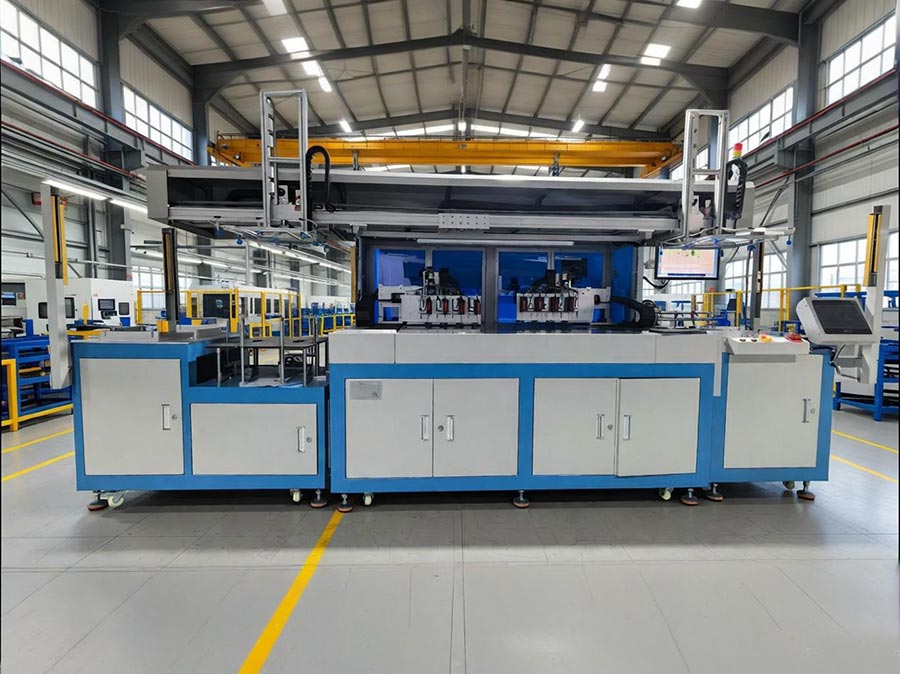
Zowinda sustainable smart card manufacturing solutions -- engineered for eco-friendly materials, energy efficiency and minimal waste.
Core Capabilities
Six engineered capabilities define this solution:
Eco-Material Compatibility
Machines calibrated for recycled PETG, rPET, wood-fiber composites, and bio-polymers (PLA, PHA) with adjusted temperature profiles and dwell times.
Energy Recovery Lamination
Heat exchangers capture exhaust heat from lamination ovens to pre-warm incoming sheets, reducing net energy use by up to 35%.
Solvent-Free Printing
UV LED curing systems replace solvent-based ink drying, eliminating VOC emissions and reducing cure time from minutes to seconds.
Trim Reclamation Integration
On-board granulators collect edge-trim and punch-out waste, compacting it into reusable pellets that feed back into the extrusion line.
Low-Power Standby Mode
Servo motors and heaters enter micro-power state during pauses, cutting standby consumption below 50W from typical 400W+ baselines.
Lifecycle Carbon Reporting
Built-in meters track electricity, compressed air, and material usage per thousand cards, generating carbon-footprint reports for ESG audits.
Technical Specifications
Building the Green Card Factory of Tomorrow
Financial institutions, government ID programs, transit authorities, and enterprise badge providers increasingly require suppliers to demonstrate measurable sustainability metrics. Zowinda's green manufacturing equipment enables card producers to meet these requirements while maintaining the throughput, yield, and cost-efficiency needed for competitive tendering. From the material extrusion line through printing, embedding, lamination and testing, each station contributes to a verifiable chain of custody for reduced environmental impact -- a differentiator that is rapidly becoming a requirement rather than an option in global procurement.
Ready to Boost Your Production Efficiency?
Contact us for a tailored solution and quotation.
Email: [email protected]
WhatsApp: +86 186 2085 0485
 Auto COB Pick and Placer Machi
 Auto Hole Punching Machine – P
 Auto Sheet Shearing Machine -
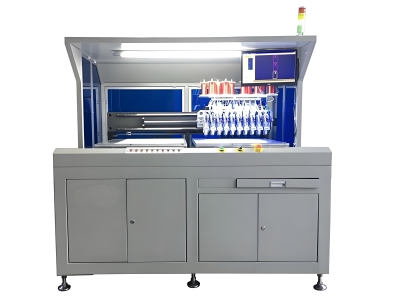 Auto Antenna Embedding Machine
Please contact us with your request
We are ready to answer your questions.