
How to Choose the Right Smart Card Personalization Line for Your Production Volume
How to Choose the Right Smart Card Personalization Line for Your Production Volume
Published: August 13, 2026
Choosing a smart card personalization line is less about the headline speed and more about matching throughput, yield, and encoding flexibility to your actual order profile. This guide breaks the decision down into measurable criteria so you can specify the right configuration instead of over- or under-buying.
Define Your Real Throughput Window
Production volume is rarely uniform. A line rated at 6,000 UPH looks attractive, but if your real mix is 800 cards on Monday and 20,000 on Friday, you need quick changeover and buffered input, not just peak speed. Map your weekly distribution first, then size the bottleneck station-usually milling and module implanting-to the 80th-percentile load, not the average.

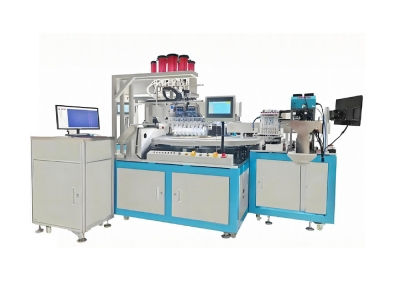
A modular smart card personalization line combining milling, implanting, and inline inspection.
Match Stations to Card Types
Contact, contactless, and dual-interface cards demand different antenna embedding and module implanting setups. A 3D curved antenna embedding station handles dual-interface layouts; a standard implanting head suits contact cards. Specifying the wrong station type forces rework and kills yield.

A modular smart card personalization line combining milling, implanting, and inline inspection.
Don't Skip Inline Inspection
Vision-based inspection catches mis-registered modules and bad encoding before cards reach the customer. Lines that omit inline ICC backside spot-pressure and data-verification testing trade a small capex saving for a large returns risk.

A modular smart card personalization line combining milling, implanting, and inline inspection.
Key Takeaways
✓ Throughput sizing
Size the bottleneck station to 80th-percentile load, not peak marketing speed.
✓ Station modularity
Mix milling, implanting, and embedding heads to match your card-type mix.
✓ Inline QA
Add vision inspection + data verification to protect yield and brand.
✓ Changeover speed
Quick product changeover matters more than raw peak UPH for mixed orders.
Quick Reference
Ready to specify the right equipment?
Contact us for a tailored configuration and quote.
Email: info@zowinda.com
WhatsApp: +86 186 2085 0485
 NFC Operating Modes Explained:
Smart Card Data Encoding Forma
UHF RFID vs BLE for Asset Trac
NFC Operating Modes Explained:
Smart Card Data Encoding Forma
UHF RFID vs BLE for Asset Trac
 Smart Card Types and How They
Please contact us with your request
We are ready to answer your questions.