
RFID Inlay Production: Wire Embedding vs. Flip-Chip Bonding Explained
RFID Inlay Production: Wire Embedding vs. Flip-Chip Bonding Explained
Published: August 13, 2026
RFID inlay manufacturing splits into two dominant methods: wire embedding (aluminum wire formed into the antenna coil) and flip-chip bonding (die attached to a printed antenna). Both produce working tags, but they differ sharply in cost structure, throughput, and where they shine. Here is the practical comparison.
Wire Embedding: Mature and Cost-Effective
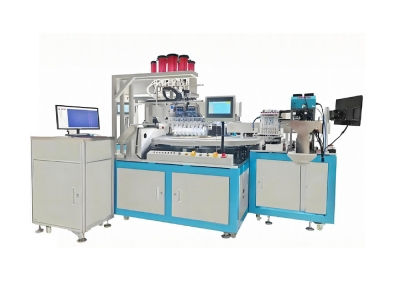
Wire embedding draws an aluminum or copper wire into the antenna shape and laminates it into the inlay. It is the workhorse for HF and many UHF applications, offers excellent coil consistency, and keeps per-unit material cost low at volume.

RFID inlay production comparing wire-embedded coils and flip-chip bonded dies.
Flip-Chip Bonding: Precise for High-Frequency Dies
Flip-chip attaches a bare die directly to a printed or etched antenna. It excels where the die footprint is tiny and placement accuracy is critical, and it pairs naturally with reel-to-reel RFID label detecting and encoding downstream.

RFID inlay production comparing wire-embedded coils and flip-chip bonded dies.
How to Choose
Pick wire embedding for high-volume HF/UHF coils with tight coil-tolerance needs; pick flip-chip when die placement precision and a minimal footprint dominate. Many lines run both via swappable heads.

RFID inlay production comparing wire-embedded coils and flip-chip bonded dies.
Key Takeaways
✓ Coil consistency
Wire embedding gives repeatable coil geometry at scale.
✓ Die precision
Flip-chip delivers micron-level die placement accuracy.
✓ Material cost
Wire embedding wins on per-unit aluminum cost.
✓ Flexibility
Dual-head lines switch methods without new tooling.
Quick Reference
Ready to specify the right equipment?
Contact us for a tailored configuration and quote.
Email: info@zowinda.com
WhatsApp: +86 186 2085 0485
 NFC Operating Modes Explained:
Smart Card Data Encoding Forma
UHF RFID vs BLE for Asset Trac
NFC Operating Modes Explained:
Smart Card Data Encoding Forma
UHF RFID vs BLE for Asset Trac
 Smart Card Types and How They
Please contact us with your request
We are ready to answer your questions.