
Dual-Interface vs Contact Smart Cards: Manufacturing Process Compared
Dual-Interface vs Contact Smart Cards: Manufacturing Process Compared
As payments and identity move to contactless, many factories must decide whether to keep producing contact cards or switch to dual-interface (contact + contactless) cards. The difference is not just the chip - it is an extra, precision-critical manufacturing stage.
Contact Cards: The Baseline Process
A contact smart card needs printing, lamination, punching and personalization. There is no cavity milling and no module implantation. The process is shorter, with fewer failure points, which is why legacy lines remain common for simple access and membership cards.
Dual-Interface Cards: The Added Stage
Dual-interface cards embed an RFID or NFC module alongside the contact chip. This requires:
- Milling - a CNC or laser station cuts a precise cavity in the laminated sheet (accuracy +/-0.05mm).
- Implanting - an auto pick-and-place machine inserts the module into the cavity.
- Bonding and testing - the module is bonded and electrically tested before final lamination and personalization.
Why Precision Matters
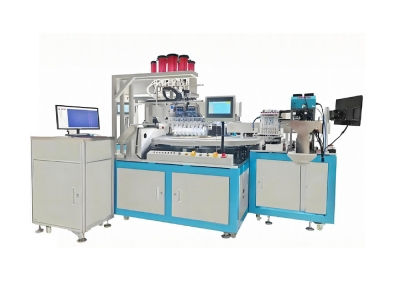
If the cavity is too deep or shallow, the module fails electrical contact or cracks under use. Zowinda milling-implanting machines achieve +/-0.05mm placement accuracy and +/-0.03mm repeatability, with PLC/HMI-adjustable programs so one machine covers varied portfolios without mechanical re-tooling.
Process Comparison at a Glance
| Step | Contact Card | Dual-Interface Card |
|---|---|---|
| Printing / lamination | Yes | Yes |
| Cavity milling | No | Yes (+/-0.05mm) |
| Module implanting | No | Yes |
| Bond + electrical test | No | Yes |
| Personalization | Yes | Yes |
For factories serving banks, transit and government, dual-interface is becoming the default. Budget for the milling and implanting stations, plus a module tester, when planning a dual-interface line. Zowinda supplies complete turnkey lines and free configuration consulting.
 Smart Card Types and How They
 RFID Inlay vs Label vs Hard Ta
NFC Forum Tag Types 1 to 5: Ho
Centralized Bureau Issuance vs
RFID Inlay vs Label vs Hard Ta
NFC Forum Tag Types 1 to 5: Ho
Centralized Bureau Issuance vs
Please contact us with your request
We are ready to answer your questions.