
How to Choose a Smart Card Production Line: A Practical 2026 Buyer's Guide
How to Choose a Smart Card Production Line: A Practical 2026 Buyer's Guide
Selecting the right smart card production line is one of the most consequential decisions for a card manufacturer. The wrong configuration wastes capital and bottlenecks yield; the right one scales smoothly with demand. This guide walks through the five factors that matter most in 2026.
1. Define Your Daily Output
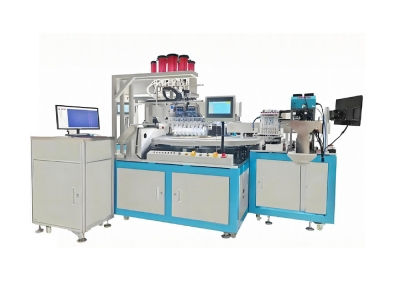
Volume drives the architecture. Below 1,000 cards/day, a semi-automatic patching machine with manual trimming is cost-effective. Between 1,000 and 5,000 cards/day, an integrated patching-and-milling cell pays off. Above 5,000 cards/day, a fully automated line combining patching, laminating, milling, implanting, testing and personalization becomes essential. Zowinda offers free line-configuration consulting before any order.
2. Match the Card Type
PVC, PET, PETG and ABS each behave differently under heat and pressure. Dual-interface (contact + contactless) cards require an additional milling and chip-implanting stage with cavity accuracy of +/-0.05mm. PETG is recommended for high-durability and dual-interface cards because of its heat resistance during lamination.
3. Verify Precision and Yield
Positioning accuracy, repeatability and in-line testing determine scrap rate. Look for placement accuracy of +/-0.05mm, repeat positioning of +/-0.03mm, and read-back verification after encoding. A 72-hour continuous burn-in test before shipment is a strong quality signal.
4. Plan Utilities and Footprint
Most stations draw 1.5kW-3kW and need stable power plus 0.6-0.8 MPa compressed air. Plan for 15-30 C and 40-70% humidity (non-condensing). Request a factory layout diagram and utility list from the supplier up front.
5. Evaluate Support and Lead Time
Standard equipment ships in 15-30 days; customized lines take 30-45 days. Prioritize suppliers offering lifetime technical support, free operator training, and 24/7 remote channels (WhatsApp, Skype, Email). On-site training of 3-5 days smooths commissioning.
| Volume (cards/day) | Recommended Architecture | Typical Lead Time |
|---|---|---|
| Under 1,000 | Semi-auto patching + manual trim | 15-30 days |
| 1,000 - 5,000 | Integrated patching/milling cell | 20-35 days |
| Over 5,000 | Full auto line (patching, laminating, milling, implanting, test) | 30-45 days |
Choosing well means balancing volume, card type, precision, utilities and support. Zowinda's turnkey lines cover all three tiers and ship worldwide with CE-compliant designs.
 Smart Card Types and How They
 RFID Inlay vs Label vs Hard Ta
NFC Forum Tag Types 1 to 5: Ho
Centralized Bureau Issuance vs
RFID Inlay vs Label vs Hard Ta
NFC Forum Tag Types 1 to 5: Ho
Centralized Bureau Issuance vs
Please contact us with your request
We are ready to answer your questions.