
Auto Sheet Shearing Machine: Precision Edge Cutting That Determines Smart Card Yield
Auto Sheet Shearing Machine: Precision Edge Cutting That Determines Smart Card Yield
Published: 2026-08-06 | Zowinda Technology | Industry News
In smart card manufacturing, the operations that attract attention are usually lamination, milling and chip implanting. Yet a surprising share of yield loss originates much earlier, at the moment inlay sheets are trimmed to size. An edge that is out of square by a fraction of a millimetre propagates through every subsequent station.
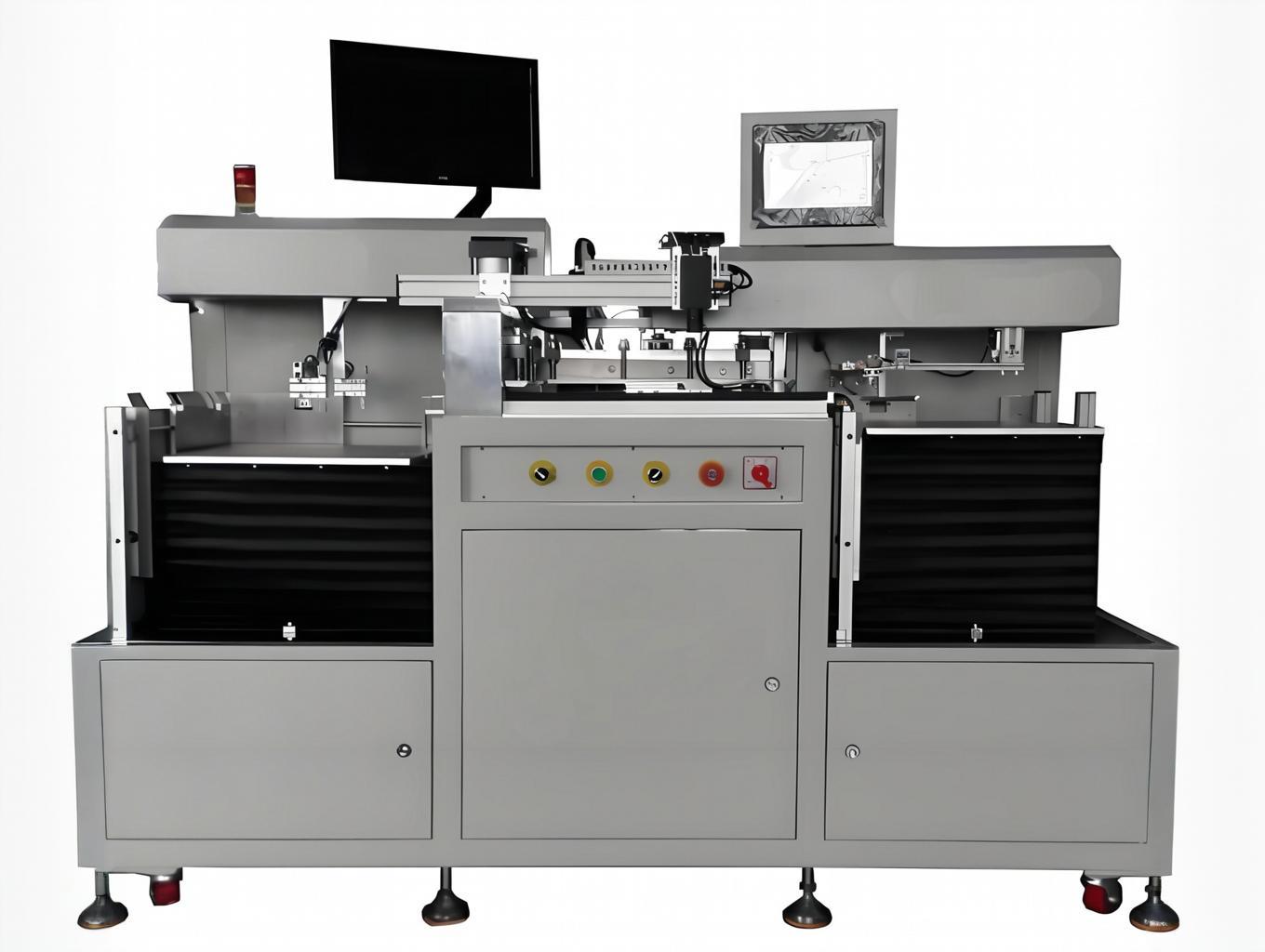
Auto Sheet Shearing Machine - engineered by Zowinda Technology for continuous industrial operation.
Why Sheet Edge Accuracy Governs Downstream Yield
Smart card production is a registration-driven process. Antenna position, chip cavity location and final card outline are all referenced from the sheet edge, which means the shearing stage effectively defines the coordinate system for everything that follows.
If sheets are cut with inconsistent dimensions or out-of-square edges, lamination stacks drift out of alignment. Antennas shift relative to the punch position, chip cavities are milled off-centre, and finished cards fail electrical or dimensional inspection.
The damaging characteristic of this failure mode is that it is cumulative and invisible until late in the process. Defects surface after material, machine time and energy have already been consumed - the most expensive point at which to discover a fault.
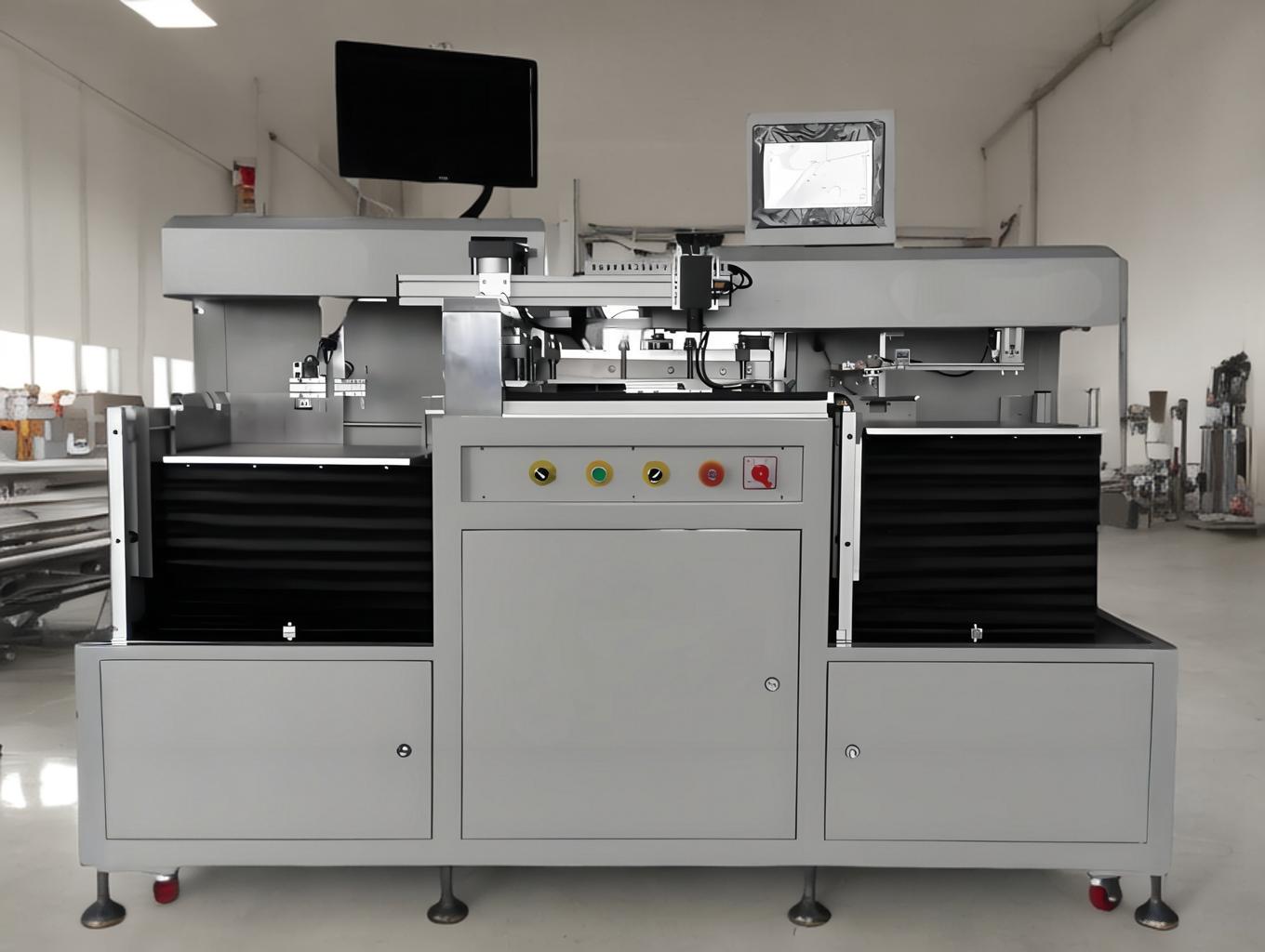
Close-up of the Auto Sheet Shearing Machine working section.
Automated Shearing Versus Manual Trimming
Manual or semi-automatic trimming relies on operator positioning against a fixed guide. Even a careful operator introduces variation, and that variation increases with fatigue, shift changes and differences in individual technique.
Automated shearing removes the human variable. Sheets are fed, positioned and referenced mechanically, and the cut executes against a fixed machine datum rather than a visual alignment. The result is dimensional consistency that holds from the first sheet of a batch to the last.
Throughput improves alongside accuracy. The machine processes sheets continuously at a controlled rate, allowing a single operator to supervise the station rather than perform every cut - which redeploys skilled labour to inspection and setup where it adds more value.
Key Capabilities at a Glance
High Dimensional Precision
Cuts against a fixed machine datum, holding consistent sheet dimensions from first sheet to last across a batch.
Clean Burr-Free Edges
Optimised blade geometry and controlled clamping produce square edges without delamination or micro-cracking.
Broad Material Compatibility
Handles PVC, PET, PETG and composite laminate substrates used across smart card and RFID inlay production.
Automated Sheet Handling
Mechanical feeding and positioning remove operator variation and allow one operator to supervise the station.
Improved Downstream Yield
Accurate edges preserve lamination registration, protecting antenna alignment and chip cavity position.
Line Integration Ready
Infeed and outfeed handling suit continuous production flow, reducing work-in-progress and handling damage.
Clean Cut Quality and Material Compatibility
Card substrates behave differently under a blade. PVC, PET, PETG and composite laminates each have distinct hardness and thermal characteristics, and an incorrectly configured cut produces burrs, delamination at the edge or micro-cracking.
Precise blade geometry combined with controlled clamping pressure produces a clean, square edge across these materials. Because the sheet is held firmly through the cut, there is no lateral movement to cause taper or ragged edges.
Clean edges matter beyond appearance. Burrs interfere with sheet stacking in the lamination press and can create pressure points that produce visible surface defects in the finished card - defects that are unrecoverable once laminated.
Integrating Shearing Into a Continuous Production Line
A shearing station rarely operates in isolation. It sits between sheet printing or inlay assembly upstream and lamination downstream, so its cycle time and handling method must match the wider line.
Automated infeed and outfeed handling allow the machine to be integrated into a continuous flow rather than functioning as a batch island. This reduces work-in-progress inventory and eliminates the handling damage that occurs when partially processed sheets are moved between separate stations.
For manufacturers scaling toward higher volumes, this integration is what converts a collection of individually capable machines into a genuinely productive line with predictable output and traceable quality.
Technical Specifications
Frequently Asked Questions
How does sheet shearing accuracy affect final card quality?
Antenna position, chip cavity location and card outline are all referenced from the sheet edge. Inconsistent or out-of-square edges cause lamination stacks to drift, shifting antennas relative to the punch and milling cavities off-centre - producing electrical and dimensional failures late in the process.
Which substrate materials can the machine process?
It handles the standard smart card family including PVC, PET, PETG and composite laminates. Blade configuration and clamping pressure are set per material to avoid burrs, edge delamination and micro-cracking.
Can it replace manual trimming in an existing line?
Yes. It is designed as a direct upgrade from manual or semi-automatic trimming, removing operator-to-operator variation while raising throughput. Automated infeed and outfeed allow it to be integrated into continuous flow rather than run as a batch island.
Why are burr-free edges important before lamination?
Burrs interfere with sheet stacking in the lamination press and create localised pressure points that appear as surface defects in the finished card. Once laminated, these defects are unrecoverable, so edge quality directly affects scrap rate.
Related Equipment
- Auto Sheet Shearing Machine - full product specifications and enquiry
- RFID Label Automatic Lamination Machine
- Sheet Shearing Machine with Laser
Ready to Improve Your Production Efficiency?
Contact Zowinda Technology for a tailored solution, detailed specifications and a competitive quotation.
Email: [email protected]
WhatsApp: +86 186 2085 0485
 Edge-to-Edge Printing vs Borde
Card Stacking and Banding vs T
Hot-Stamping Foil vs Digital F
In-Mold Foil Decoration vs Pos
Edge-to-Edge Printing vs Borde
Card Stacking and Banding vs T
Hot-Stamping Foil vs Digital F
In-Mold Foil Decoration vs Pos
Please contact us with your request
We are ready to answer your questions.