
Dual Lane Sliding Shoe Sorter: How 24,000 Parcels Per Hour Became the New Logistics Benchmark
Dual Lane Sliding Shoe Sorter: How 24,000 Parcels Per Hour Became the New Logistics Benchmark
Published: 2026-08-06 | Zowinda Technology | Industry News
E-commerce parcel volumes no longer grow in gentle curves - they spike. When a distribution centre that comfortably handled 8,000 parcels an hour is suddenly asked to clear 20,000 during a peak campaign, the sorting line becomes the single point where the entire operation succeeds or fails. The dual lane sliding shoe sorter was engineered for exactly that moment.
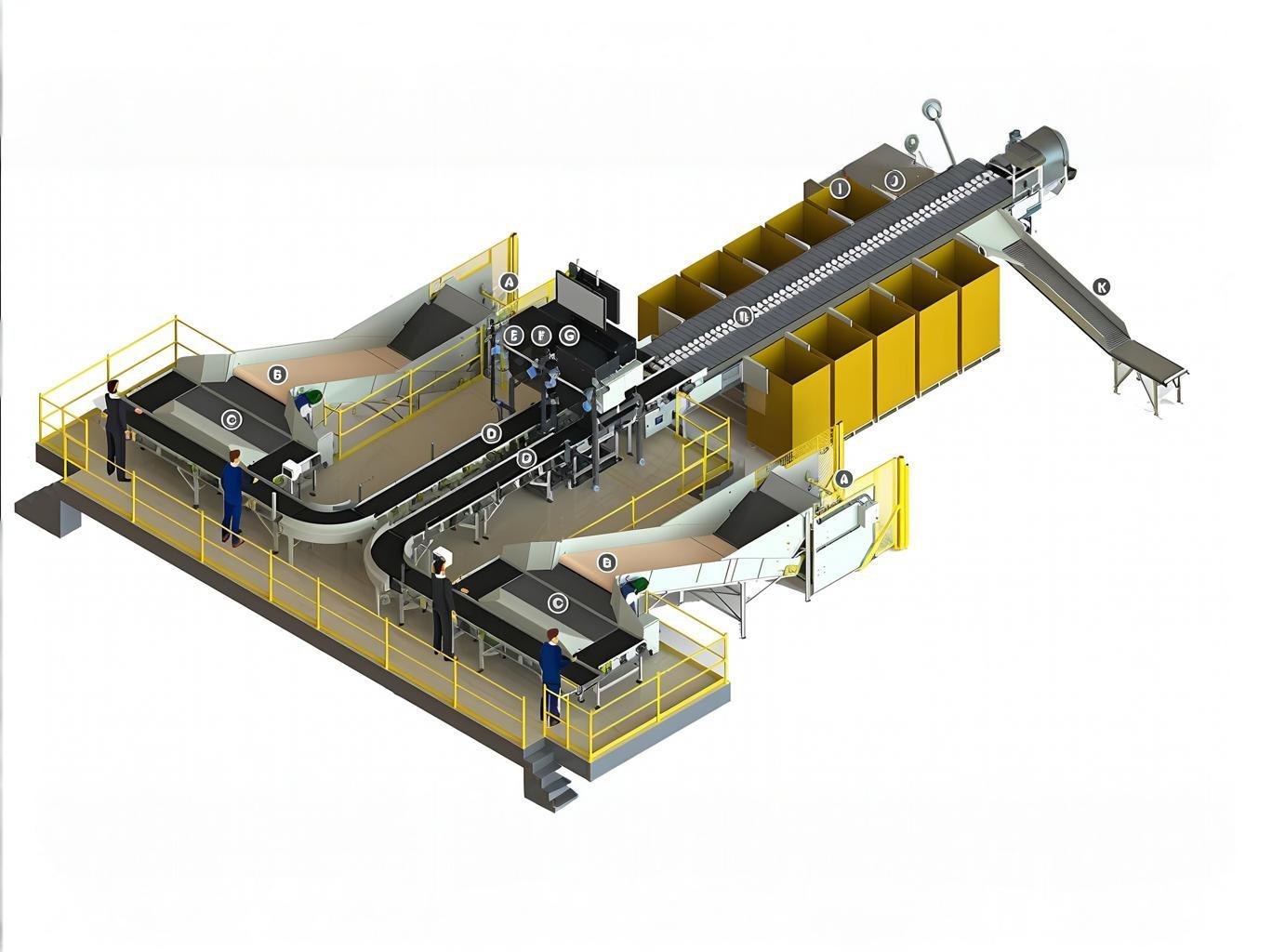
Dual Lane Sliding Shoe Sorter - engineered by Zowinda Technology for continuous industrial operation.
Why Sliding Shoe Technology Outperforms Conventional Diverters
Traditional pusher and pop-up wheel diverters move a parcel by striking it or lifting it. Both approaches introduce sudden lateral force, which is acceptable for rigid cartons but destructive for polybags, padded mailers and irregular soft packs that now dominate e-commerce flows.
A sliding shoe sorter works differently. Rows of low-friction shoes travel with the conveyor slats and gradually glide across the belt width, guiding each parcel diagonally toward its destination chute. Because the parcel is never struck, it maintains its orientation and its contents remain undamaged throughout the divert.
The dual lane configuration doubles this benefit. Two independent sorting lanes run in parallel on one frame, so the machine processes two parcel streams simultaneously without doubling the required floor space. This is the core reason throughput reaches 24,000 parcels per hour while divert accuracy stays above 99.9 percent.

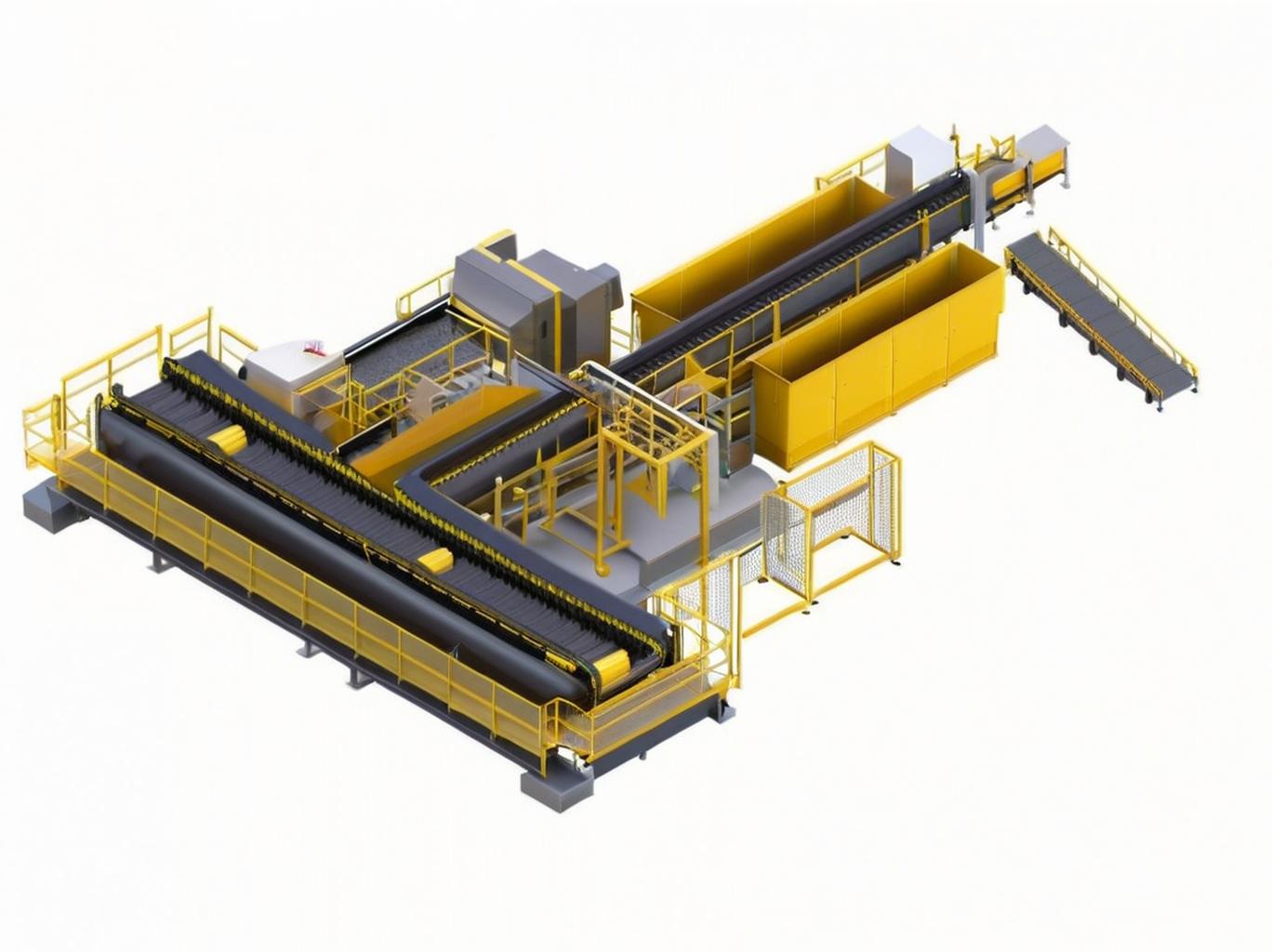
Close-up of the Dual Lane Sliding Shoe Sorter working section.
Multi-Sided Barcode Scanning Eliminates the No-Read Bottleneck
Throughput figures mean very little if a meaningful share of parcels cannot be identified. In most facilities the true constraint is not conveyor speed but the no-read rate - every unscanned parcel must be recirculated or handled manually, consuming both time and labour.
This system addresses that with a multi-sided scanning tunnel that reads top, both sides and, where required, the leading and bottom faces. Labels that are creased, poorly printed, wrapped around an edge or partially obscured by tape are still captured on the first pass.
Reducing no-reads from a typical 3 percent to below 0.5 percent removes hundreds of manual handling events per shift. On a 24,000 parcel-per-hour line, that difference alone can justify the equipment investment within a single peak season.
Key Capabilities at a Glance
Throughput up to 24,000 PPH
Two parallel sorting lanes on a single frame deliver peak-season capacity without expanding the building footprint.
Gentle, Non-Impact Diverting
Sliding shoes guide parcels laterally instead of striking them, protecting polybags, mailers and fragile contents.
Multi-Sided Barcode Reading
Top, side and optional bottom scanning drives first-pass read rates above 99.5 percent and eliminates recirculation.
Zone-Level Anti-Jam Control
Gap-controlled induction and photo-eye monitoring isolate faults to one segment, keeping the rest of the line running.
Modular Chute Expansion
Add sorting sections and destinations as volume grows, with no replacement of existing equipment.
Full WMS / ERP Integration
Standard data interfaces keep sorting logic, wave planning and manifests aligned with upstream systems.
Anti-Jam Architecture and Continuous Uptime
Unplanned stoppages are far more expensive than slightly lower rated speed. A jam on a high-speed line does not merely halt one section - it cascades upstream, backs up induction, and can idle an entire shift while operators clear the blockage.
The sorter uses gap-control induction that meters parcels onto the sorting bed at a calculated spacing, ensuring no two items compete for the same divert window. Photo-eye arrays monitor parcel position continuously, and the control system adjusts shoe timing in real time when spacing drifts.
Should an anomaly still occur, zone-level detection isolates only the affected segment rather than stopping the complete line. Operators clear a short section and production resumes in seconds instead of minutes.

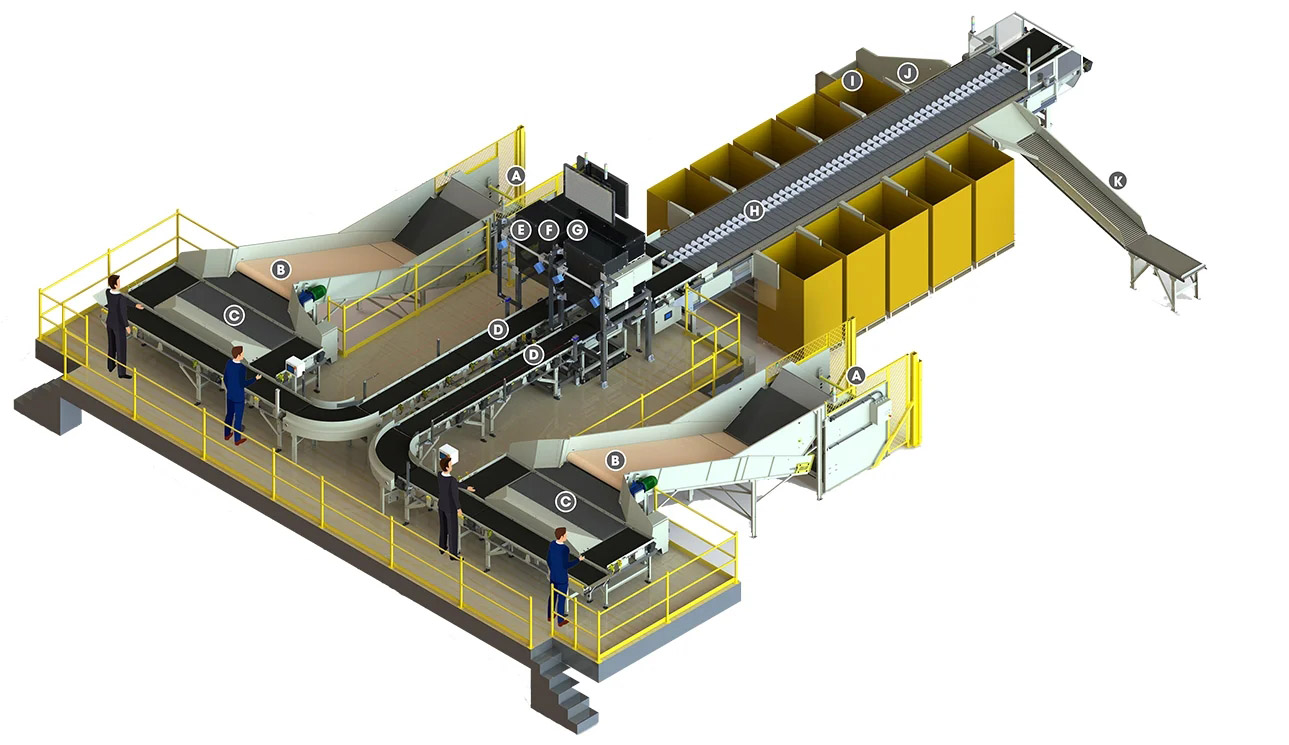
Operational view of the Dual Lane Sliding Shoe Sorter in a production environment.
Modular Design Protects the Investment as Volumes Grow
Few operators can accurately forecast parcel volume five years out. Specifying a fixed-length sorter therefore carries real risk: undersize it and it becomes a constraint within two years, oversize it and capital sits idle.
A modular frame resolves this. Sorting sections, chutes and induction points are added incrementally as demand develops. The original control architecture accommodates the extension, so growth does not require replacing the installed base.
Integration is equally important. The sorter communicates with WMS, TMS and ERP platforms through standard interfaces, so destination logic, wave planning and shipment manifests remain synchronised with the wider operation.
Technical Specifications
Equipment Gallery
Frequently Asked Questions
What parcel types can the dual lane sliding shoe sorter handle?
It handles cartons, polybags, padded mailers, jiffy bags and irregular soft packs from 0.05 kg to 30 kg. Because the shoes glide rather than strike, soft and semi-rigid packaging is diverted without deformation - a common failure mode on pusher-type diverters.
How does dual lane operation differ from running two separate sorters?
Two lanes share one frame, one control system and one maintenance regime. This roughly halves the floor space and significantly reduces installation and lifetime service cost compared with commissioning two independent single-lane machines.
Can the sorter be expanded after installation?
Yes. The modular architecture allows additional sorting sections, chutes and induction points to be added later. The original control system is designed to accommodate the extension without replacing installed equipment.
What throughput should be expected in real operating conditions?
Rated capacity is 24,000 parcels per hour. Sustained real-world throughput depends on parcel mix, induction quality and destination count; facilities with well-controlled induction typically operate in the 20,000 to 23,000 range during peak.
Related Equipment
- Dual Lane Sliding Shoe Sorter - full product specifications and enquiry
- Efficient and Customizable Envelope Sorting Machine
- Intelligent Envelope Sorting System
Ready to Improve Your Production Efficiency?
Contact Zowinda Technology for a tailored solution, detailed specifications and a competitive quotation.
Email: [email protected]
WhatsApp: +86 186 2085 0485
 Edge-to-Edge Printing vs Borde
Card Stacking and Banding vs T
Hot-Stamping Foil vs Digital F
In-Mold Foil Decoration vs Pos
Edge-to-Edge Printing vs Borde
Card Stacking and Banding vs T
Hot-Stamping Foil vs Digital F
In-Mold Foil Decoration vs Pos
Please contact us with your request
We are ready to answer your questions.