
How DOD Printing Systems Boost Smart Card Production Efficiency and ROI
How DOD Printing Systems Boost Smart Card Production Efficiency
Published: July 31, 2026 | Category: Smart Card Production Optimization
Card personalization bureaus face relentless pressure to cut cost-per-card while handling shorter, more varied orders. Traditional printing approaches -- ribbon-based transfer and pre-printed panels -- force trade-offs between flexibility and throughput. Drop-on-Demand (DOD) inkjet printing removes many of those trade-offs: no plates, no ribbons to swap, instant job changeover, and full variable data at line speed. This article quantifies the efficiency gains and outlines how to model the return on investment for a DOD printing upgrade.
Where Efficiency Is Won
DOD printing improves line economics across several dimensions that compound over a production year:
Zero Plate Changeover
Switching from one card design to another is a software action, not a mechanical rebuild. Changeover that took 20-40 minutes on plate systems drops to near zero.
No Ribbon Waste
Only the ink actually printed is consumed. There is no partial ribbon discarded at job end, unlike fixed-panel thermal transfer runs.
Inline Single-Pass
Printing merges into the personalization line rather than a separate pre-print batch step, eliminating WIP queues between stages.
Higher Utilization
Because small and large jobs run equally well, the line stays busy instead of idling between big fixed-layout campaigns.
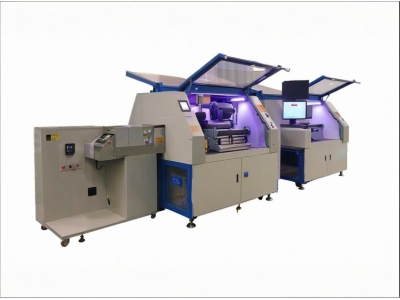
Figure 1: Integrated DOD printing station sustaining high throughput with zero changeover between variable jobs
Efficiency Comparison
Modeling the ROI
A simple payback model compares the DOD upgrade against the status quo across a representative annual volume:
For many bureaus running mixed daily batches, the combination of saved changeover labor and eliminated ribbon waste alone recovers the equipment investment within 12-24 months, before counting new short-run revenue. Actual payback varies with volume mix and local labor cost.
Implementation Best Practices
- Start With a Pilot: Run one variable-data product (e.g., member cards) on DOD while keeping the legacy line for bulk jobs, then compare cost-per-card empirically.
- Instrument the Line: Capture per-job counts, ink usage, and reject rates so the ROI model is fed by real data, not estimates.
- Train Operators on Ink Handling: Proper degassing, viscosity control, and nozzle maintenance keep uptime high and avoid print defects.
- Integrate QA: Add a vision check for barcode/QR readability so efficiency gains never come at the cost of quality escapes.
- Phase the Rollout: Expand DOD coverage to back-side printing and additional product families once the pilot proves stable.
Calculate Your Efficiency Gain
Send us your typical batch sizes, substrates, and current print method -- we will help model the DOD upgrade payback for your operation.
Email: [email protected]
WhatsApp: +86 186 2085 0485
 RFID Antenna Etching Wastewate
Thermal Lamination vs Solvent-
Edge Computing and IIoT Data I
RFID Antenna Etching Wastewate
Thermal Lamination vs Solvent-
Edge Computing and IIoT Data I
 How Smart Cards Are Made: Proc
Please contact us with your request
We are ready to answer your questions.