
Auto Antenna Embedding Machine Smart Cards 2026 | Zowinda
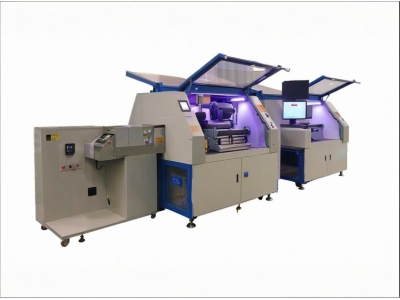
Auto Antenna Embedding Machine for Smart Cards: Precision RFID Antenna Placement in 2026
Contactless and RFID smart cards depend on one invisible but critical component: the embedded antenna coil that carries power and data between the card and the reader. Placing that coil accurately, at volume, and with repeatable quality is exactly what a custom auto antenna embedding machine is built for. Zowinda’s ultrasonic embedding system closes the gap between raw card sheet and finished inlay, giving card manufacturers a controllable, high-yield path to producing payment, ID, healthcare, and SIM cards that read first time, every time.
What Is an Auto Antenna Embedding Machine?
An auto antenna embedding machine automatically lays a thin conductive wire (typically copper or aluminum) onto a card sheet in a precise coil pattern, then fixes it in place so it becomes part of the inlay. Unlike manual or semi-auto methods, a fully automated unit programs the coil geometry in software, drives the placement head with servo precision, and verifies the result before the sheet moves on. For smart card makers, this means consistent electrical performance across millions of units without relying on operator skill.
The machine profiled here is built around ultrasonic embedding technology. Instead of gluing a pre-made coil, it embeds the wire directly into the sheet material using localized ultrasonic energy, producing a flat, durable, low-profile antenna that survives lamination and personalization. That distinction matters: embedded antennas resist delamination and keep the card within ISO thickness limits.
How Ultrasonic Antenna Embedding Works
The process follows a tight, repeatable loop:
- Sheet loading and clamping. A vacuum aspirating platform holds each card sheet firmly, eliminating the micro-shifts that cause misaligned coils.
- Programmed coil path. Operators draw the antenna geometry in dedicated software and select a standard layout such as 3×8, 4×8, or 5×5. Custom spirals and geometric coils are supported for non-standard cards.
- Servo-driven placement. A biaxial servo system tracks the programmed path and embeds the wire with stated accuracy of 0.05 mm, keeping turns evenly spaced.
- Ultrasonic fixation. Localized ultrasonic energy sets the wire into the sheet so it stays put through downstream lamination.
- In-line verification. Integrated testing checks antenna continuity and performance before the sheet is released, so defective sheets are caught early rather than after lamination.
The result is a coil that is mechanically stable and electrically consistent, which is the foundation of reliable contactless performance.
Core Features That Drive Production Efficiency
Beyond the embedding head itself, several design choices determine whether the machine fits a real production floor:
- PC-controlled automation. A dedicated PC and control software let operators manage layouts, recipes, and diagnostics from one screen, reducing training time and setup errors.
- Flexible, customizable programming. Because coil patterns are drawn in software, the same machine handles payment, ID, and telecom layouts without mechanical retooling. CAD import and custom parameters support full design freedom.
- Modular scalability. The unit runs standalone for R&D and low-volume custom jobs, or synchronizes with additional modules for high-speed mass production. Capacity grows with demand instead of requiring a full line replacement.
- Wire compatibility. The system supports copper, aluminum, and specialty conductive wires, so material choice is driven by performance and cost rather than machine limits.
- Low operator intervention. With production rated up to 1200 antennas per hour (and 800–1500 cards per hour depending on complexity), the machine sustains throughput while keeping labor input low.
Technical Specifications
| Parameter | Specification |
|---|---|
| Embedding technology | Ultrasonic embedding |
| Control system | PC-controlled with biaxial servo positioning |
| Placement accuracy | 0.05 mm |
| Production speed | Up to 1200 antennas/hour (800–1500 cards/hour by complexity) |
| Supported layouts | 3×8, 4×8, 5×5 and custom coil patterns |
| Material compatibility | 0.2–0.4 mm sheet (PVC, ABS, PET, PETG) |
| Wire types | Copper, aluminum, specialty conductive wires |
| Power supply | AC 220V, 50/60 Hz, approx. 2 kW |
| Compressed air | 6 kg/cm² |
| Machine weight | Approx. 1300 kg |
| Dimensions (L×W×H) | 63 × 156 × 190 cm |
| Quality control | Integrated antenna continuity and performance test |
Applications Across Smart Card Types
The same embedding platform serves a wide range of card programs because the coil geometry and material are software-defined:
- RFID payment cards. Reliable antenna placement underpins secure contactless transactions and consistent read range.
- Identification and security cards. Access control badges, ID cards, and security credentials benefit from stable coils that survive daily handling.
- Healthcare cards. Patient identification and medical record cards require dependable in-field reads; embedded antennas deliver that reliability.
- Telecom and SIM cards. High-frequency, low-power designs for SIM and telecom cards are handled with the same programmable accuracy.
For manufacturers running mixed programs, the ability to switch coil recipes in software rather than swapping tooling is a direct productivity gain.
Where It Fits in a Smart Card Production Line
Antenna embedding sits early in the inlay stage, immediately before lamination and chip bonding. In a complete line it pairs naturally with upstream and downstream equipment:
- An RFID automatic flip chip system attaches the IC to the inlay after the antenna is embedded.
- A RFID label detecting and encoding machine validates and encodes finished labels and cards downstream.
- The broader sequencing, yield, and layout decisions are covered in our smart card production line setup guide.
Because the embedding machine is modular, it drops into an existing line or scales as a standalone cell for custom and prototype runs. That flexibility is especially valuable for factories serving both high-volume standard cards and low-volume specialized programs.
Frequently Asked Questions
What does “custom” mean for this antenna embedding machine?
It refers to the ability to handle non-standard antenna patterns and embedding requirements for specialized smart cards. Coil geometry is drawn in software, so unique spirals and geometric shapes are produced without mechanical changes.
What antenna shapes can the machine produce?
It supports complex shapes including spirals, loops, and custom geometric patterns defined in the control software, with standard 3×8, 4×8, and 5×5 layouts available out of the box.
How accurate is the embedding?
Placement accuracy is stated at 0.05 mm, delivered by the biaxial servo system and the vacuum aspirating platform that holds each sheet steady during embedding.
Which wire and sheet materials are supported?
The machine handles copper, aluminum, and specialty conductive wires on 0.2–0.4 mm sheets including PVC, ABS, PET, and PETG.
Does the machine include quality testing?
Yes. Integrated testing verifies antenna continuity and performance before the sheet leaves the station, catching defects early and protecting downstream lamination yield.
Get a Custom Antenna Embedding Solution
Zowinda designs and builds custom auto antenna embedding machines for RFID and contactless smart card production, with ultrasonic embedding, PC-controlled programming, and modular scaling from prototype to mass production. To discuss your card layout, throughput, and integration requirements, contact our engineering team:
- Email: [email protected]
- WhatsApp: +86 186 2085 0485
- Product page: Custom Auto Antenna Embedding Machine for Smart Cards
Request a quote or a sample run specification and we will match the machine configuration to your production line.
 RFID Antenna Etching Wastewate
Thermal Lamination vs Solvent-
Edge Computing and IIoT Data I
RFID Antenna Etching Wastewate
Thermal Lamination vs Solvent-
Edge Computing and IIoT Data I
 How Smart Cards Are Made: Proc
Please contact us with your request
We are ready to answer your questions.