
RFID NFC Card Frequency Test Machine 2026 | Zowinda
RFID NFC Card Frequency Test Machine 2026 | Zowinda
Published: July 20, 2026 | Category: Smart Card Testing Equipment
Frequency consistency is the heartbeat of every RFID, NFC, and contactless smart card. A card tuned to the wrong 13.56 MHz resonant point will fail at readers, cause payment delays, or be rejected by access-control gates. The automatic frequency test machine from Zowinda removes that uncertainty by measuring each card's resonant frequency, Q factor, and impedance profile in a single automated pass. Whether you produce banking cards, transit tickets, or NFC tags, this equipment gives you the data you need to ship products that readers recognize on the first tap.
Why RFID NFC Card Frequency Testing Is Non-Negotiable
Contactless cards communicate with readers through inductive coupling at 13.56 MHz. The antenna coil and chip form an LC resonant circuit. If the resonance drifts above or below the reader's target window, the coupling efficiency drops, transaction times increase, and the card may not power the chip at all.
Common causes of frequency drift include:
- Antenna etching tolerances: Variations in copper trace width or etching depth shift inductance.
- Embedding inconsistencies: Wire bond loops, crossover positions, and substrate thickness affect coil geometry.
- Lamination pressure: Excessive heat or pressure during card lamination can flatten the antenna and change its electrical properties.
- Chip module impedance: Different IC batches present slightly different input capacitance, pulling the resonance.
- Environmental aging: Humidity, temperature cycling, and mechanical stress cause long-term drift.
Manual frequency checks with bench instruments are too slow for mass production. A dedicated RFID NFC card frequency tester integrates the signal source, antenna probe, and sorting logic into one inline station, catching out-of-spec cards before they leave the factory.
How an Automatic Frequency Test Machine Works
Zowinda's automatic frequency test machine is designed for high-volume card manufacturing lines. The operator loads cards into a cassette or connects the unit to an upstream conveyor. The machine then performs the following sequence for each card:
- Card feeding and alignment: A precision belt or pusher positions the card under the test antenna with repeatable placement accuracy.
- RF excitation: The internal RF generator sweeps a controlled frequency range around 13.56 MHz and couples energy into the card antenna.
- Resonance detection: The analyzer measures the reflected or transmitted signal to identify the peak resonant frequency, bandwidth, and Q factor.
- Parameter comparison: Measured values are compared against programmable upper and lower limits for frequency, Q factor, signal amplitude, and impedance.
- Sorting decision: Cards within specification are sent to the pass output; failed cards are routed to a reject bin for rework or scrap.
- Data logging: Every measurement is recorded with a timestamp, batch number, and serial number for traceability and SPC analysis.
The entire cycle typically takes less than one second per card, making it practical to test 100% of production rather than relying on sampling.
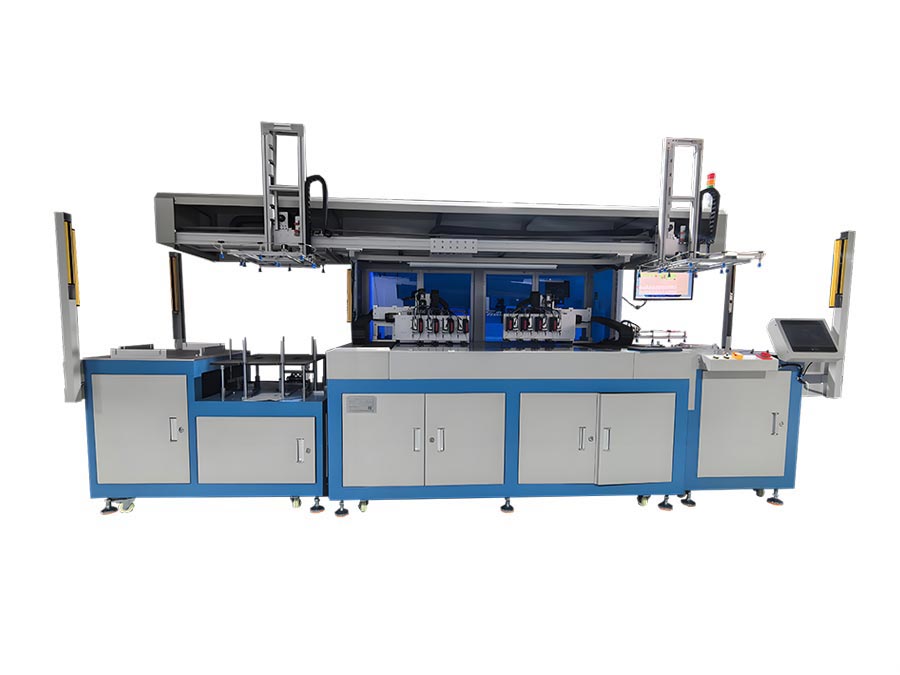
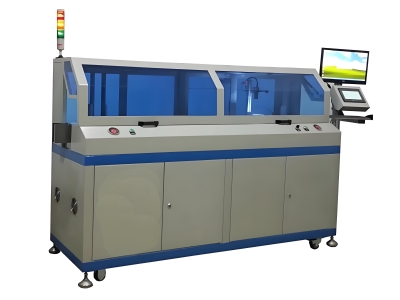
Figure 1: Zowinda automatic frequency test machine designed for 13.56 MHz RFID NFC card validation
What the Zowinda Frequency Test Machine Measures
Resonant Frequency
Pinpoints the exact frequency at which the card antenna-chip circuit resonates. Standard target is 13.56 MHz, with acceptable windows defined by ISO/IEC 14443 and ISO/IEC 15693.
Quality Factor (Q)
Indicates how sharply the card resonates. A balanced Q value ensures reliable energy transfer without excessive bandwidth that could pick up interference.
Impedance Matching
Measures the real and imaginary components of the card impedance. Poor matching reduces read range and transaction speed.
Signal Amplitude
Reports the strength of the coupled response, helping detect broken antennas, open circuits, or weak connections.
Bandwidth
Quantifies the frequency range over which the card responds. Too narrow or too wide can indicate manufacturing defects.
Pass/Fail Sorting
Physical or software-driven separation of good and bad cards based on user-defined tolerance bands.
Setting Acceptance Windows for Frequency Tests
Successful frequency testing depends on setting the right pass/fail limits. Tolerances that are too loose allow defective cards to reach customers; tolerances that are too tight reject good cards and waste yield. Zowinda's test software lets engineers define independent limits for every measured parameter.
A typical acceptance window for a 13.56 MHz contactless card might look like this:
Engineers can also apply statistical process control. When a batch begins to drift toward a limit, the software highlights the trend, allowing operators to adjust upstream processes before cards fail.
Manual vs. Automatic Frequency Testing
Some factories still rely on hand-held RF analyzers or network analyzers for spot checks. While these instruments are accurate, they are not designed for production-line throughput. The comparison below explains why a dedicated automatic frequency test machine pays for itself quickly.
Technical Specifications
Where This Equipment Fits in Your Production Line
A typical smart card factory deploys the frequency tester as part of a quality-control island. Cards come from the integrated inlay manufacturing system or from a dedicated embedding station, pass through lamination and punching, and then enter electrical testing.
Because the 13.56 MHz card test equipment operates non-destructively, it can be placed before or after personalization. When placed upstream, it prevents bad cards from consuming expensive chip modules or overlay foils. When placed downstream, it acts as a final gate before packaging and shipment.
For a complete testing workflow, pair the frequency tester with complementary equipment:
- Three Wheel Tester - checks mechanical reliability and card body durability under cyclic bending and torsion.
- Automatic Module Testing Machine - verifies chip module electrical contact and functional communication.
- ICC Backside Spot Pressure Tester - measures backside pressure and bonding integrity to prevent delamination failures.
This combination creates a multi-layered defense against both electrical and mechanical defects.
Maintenance and Calibration Schedule
Like any RF measurement system, the automatic frequency test machine requires periodic care to maintain accuracy. Zowinda recommends a simple three-tier maintenance plan:
Daily
Clean the card transport path and test antenna surface with a lint-free cloth. Run a reference card through the machine and confirm readings are within the daily check window.
Weekly
Inspect belts, pusher fingers, and sensors for wear. Verify sorting gate timing and clear any debris from the pass/reject outputs. Backup measurement data to external storage.
Every 6-12 Months
Perform full RF calibration using a calibrated reference card and a network analyzer. Replace consumable parts such as drive belts, pneumatic seals, and antenna protection film.
Following this schedule reduces unexpected downtime and keeps measurement uncertainty within specification. Zowinda supplies spare parts kits and on-site calibration services for customers who prefer full vendor support.
Frequently Asked Questions
Q1: Can this machine test both contactless cards and NFC tags?
Yes. The tester is optimized for ISO 7810 ID-1 cards but can be adapted for NFC stickers, key fobs, and small tags by changing the test fixture and antenna probe. The same 13.56 MHz carrier is used for both HF RFID and NFC applications.
Q2: How does the frequency tester handle cards with different chip suppliers?
The operator stores a separate recipe for each card design. Each recipe contains the expected resonant frequency window, Q factor limits, and impedance targets. Switching between recipes takes seconds and does not require mechanical changeover.
Q3: Is calibration required, and how often?
A built-in reference card is used for daily calibration. A full RF calibration with an external network analyzer is recommended every 6-12 months, depending on production volume and environmental conditions.
Q4: Can the machine be integrated with an MES or factory database?
Yes. The tester exports measurement data via Ethernet or USB in CSV format. With a simple middleware script, the data can be pushed into most MES, ERP, or SPC systems for real-time monitoring and traceability.
Q5: What is the difference between frequency testing and final card personalization testing?
Frequency testing measures the antenna's electrical performance, while personalization testing checks whether the chip is correctly programmed and electrically functional. Both are necessary. The contactless card frequency testing step is often performed before personalization to avoid programming defective cards.
Industries That Rely on This Equipment
Banking & Payment Cards
Contactless debit/credit cards and dual-interface cards must meet strict EMV and ISO frequency tolerances.
Public Transit
Transit cards must read reliably through turnstiles and validators, often in high-volume daily use.
Government ID & Access Control
National ID cards, e-passports, and corporate access badges require consistent read range across reader brands.
Retail & Loyalty
NFC loyalty cards, gift cards, and brand authentication tags depend on first-tap reliability.
Telecommunications
SIM and eUICC cards with NFC capabilities must pass frequency tests before being loaded into mobile devices.
Healthcare & Pharmaceuticals
Patient wristbands and medication tracking tags require stable RFID performance for safety-critical scanning.
Get a Quote for the Automatic Frequency Test Machine
Contact Zowinda for pricing, delivery schedules, factory acceptance testing, and integration support.
Email: [email protected]
WhatsApp: +86 186 2085 0485
 Manual IC Module Punching Mach
 Semi-Automatic Card Punching M
 Card Punching and Sorting Mach
 Contactless Card Personalizati
Please contact us with your request
We are ready to answer your questions.