
RFID vs NFC Card Production: Equipment, Process & Spec Differences
RFID vs NFC Card Production: Equipment, Process & Spec Differences
RFID and NFC share silicon but diverge in frequency, range, and production tolerances. This guide clarifies the differences that affect which card production equipment you should buy.
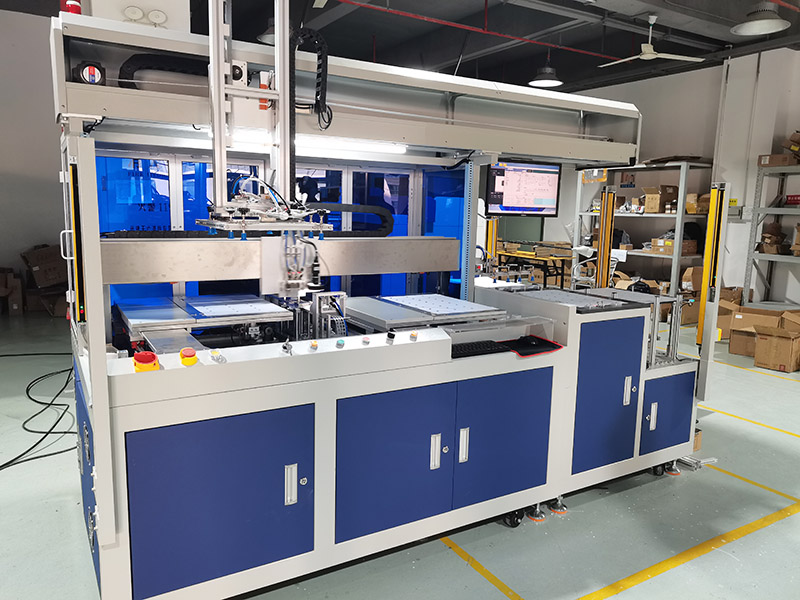
Are RFID and NFC the Same?
Technically, NFC (Near Field Communication) is a subset of RFID operating at 13.56 MHz under the ISO 14443 / ISO 18092 standards. "RFID" is the broader family spanning LF (125 kHz), HF (13.56 MHz), and UHF (860–960 MHz). An NFC card is an HF RFID card with peer-to-peer and tap-features enabled — but from a production standpoint the antenna and chip embedding are nearly identical.
Key Technical Differences
| Dimension | RFID (general) | NFC (HF subset) |
|---|---|---|
| Frequency bands | LF / HF / UHF | HF 13.56 MHz only |
| Read range | cm to several meters (UHF) | < 10 cm (intentional) |
| Antenna shape | Coil (HF) or dipole (UHF) | Coil, tightly tuned |
| Typical use | Logistics, access, payment | Tap payment, pairing, sharing |
| Production overlap | Same embedding & lamination equipment for HF | |
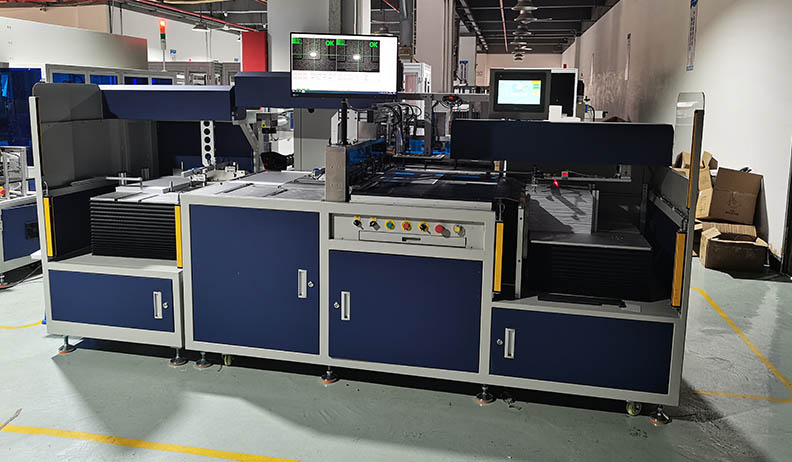
Does the Production Line Change?
For HF RFID and NFC cards, the manufacturing equipment is essentially the same: antenna embedding, chip bonding, lamination, and testing. The difference appears in tuning and testing — NFC demands tighter frequency tolerance and functional tap testing, while UHF RFID needs dipole embedding and longer-range validation.
Where Production Equipment Must Diverge
- Antenna embedding — HF coil embedding (wire/foil) vs. UHF dipole layouts require different tooling and pitch control.
- Frequency test — NFC/HF tested at 13.56 MHz; UHF validated across its band. Both need calibrated testers.
- Reliability test — Mechanical stress (bending, pressure) confirms the embedded coil survives the card's service life.
ZOWINDA Equipment for RFID & NFC Production
- Automatic 3D Curved Antenna Embedding Machine — Advanced RFID/NFC antenna embedding.
- Auto Wire Embedding Machine (2-in-1 System) — Dual-function HF antenna embedding and bonding.
- Automatic Frequency Test Machine — RFID/NFC card frequency testing equipment.
- Three Wheel Tester — Precision mechanical reliability testing for ICC cards.
- ICC Backside Spot Pressure Tester — Quality control for smart card durability.
Frequently Asked Questions
Q: Can one production line make both RFID and NFC cards?
A: Yes for HF (13.56 MHz) — the embedding and lamination are identical; only tuning/test differ. UHF needs separate antenna tooling.
Q: Is NFC more expensive to produce?
A: Not materially. NFC chips cost marginally more but share the same inlay process as HF RFID.
Q: What test proves an NFC card works?
A: Frequency compliance at 13.56 MHz plus a functional tap/read test on a calibrated reader.
Q: Which should I specify for payment?
A: Dual-interface (contact + NFC) is the global standard for bank cards and most government IDs.
Conclusion
RFID and NFC cards share the same HF production backbone; the differentiators are tuning, testing, and (for UHF) antenna tooling. Standardize on flexible embedding and rigorous test equipment. Explore ZOWINDA's RFID/NFC embedding and test systems or contact us to scope a line for your target frequencies.
Scope your RFID/NFC line
Email: [email protected] | WhatsApp: +86 186 2085 0485
 Auto COB Pick and Placer Machi
 Auto Hole Punching Machine – P
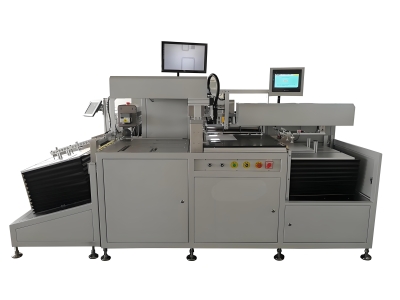 Auto Sheet Shearing Machine -
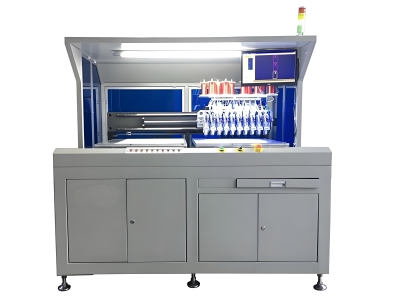 Auto Antenna Embedding Machine
Please contact us with your request
We are ready to answer your questions.