
Smart Card Quality Control and Testing Guide 2026 | Zowinda
Smart Card Quality Control and Testing: A Practical 2026 Guide for Card Manufacturers
Smart card quality control is the discipline that turns a raw RFID inlay and a laminated PVC or PC sheet into a payment, ID, transit, or access card that keeps working after years of daily handling. A repeatable smart card testing standards program protects your production yield, your certification status, and your reputation with issuers. This guide explains which standards matter, the mechanical and electrical tests that catch defects before shipment, and how to assemble an in-line QC station with proven ZOWINDA equipment.
Why Quality Control Matters in Smart Card Production
A single weak bond between the chip module and the antenna, or a laminate layer that delaminates under heat, can turn an entire batch into returned stock. In high-volume lines running tens of thousands of cards per shift, defects that escape the line multiply fast. Effective card quality control is not a final inspection gate; it is a series of checks distributed across printing, lamination, personalization, and packing. Catching a failure at the module-embedding stage costs a fraction of a recall after cards are personalized and mailed.
The most common field failures are predictable: laminate delamination, module pop (the chip lifting off the surface), broken antenna bonds, and print wear on the overlay. Each of these maps to a specific test, which means each is also preventable with the right fixture on the line. Beyond cost, compliance drives the program. Issuers and schemes require evidence that cards meet dimensional, electrical, and durability limits, and documented testing against recognized standards is what lets a manufacturer ship to banks, transit agencies, and government programs.
The Standards That Define Card Quality
Most card programs reference a short stack of international standards. Knowing which one applies tells you which test to run:
- ISO/IEC 7810 - physical characteristics: dimensions (85.60 x 53.98 mm), thickness, warpage, flammability, and chemical resistance.
- ISO/IEC 7816 (parts 1 to 3) - contact smart cards: electrical signals, contact durability, and electrostatic discharge immunity.
- ISO/IEC 14443 / 15693 - proximity and vicinity contactless cards: operating frequency, polling, and data-integrity behavior.
- ISO/IEC 10373-1 / -3 - the test methods themselves: how to perform bending, torsion, dynamic bending, and abrasion tests.
- EMV and ICAO - scheme-specific requirements layered on top of the ISO base for payment and e-passport programs.
For a manufacturer, the practical takeaway is to pick tests by card type. A contactless transit card lives or dies on its antenna, so frequency testing is non-negotiable. A financial contact card must pass ESD and contact-insertion cycles. Mapping each product to its standards up front prevents over-testing simple cards and under-testing critical ones.
Mechanical Durability Testing
Cards are bent, dropped, swiped, and carried in wallets for years. Mechanical tests confirm they survive that life and stay readable, and they are the cheapest insurance against field returns.
Bending, Torsion, and Dynamic Bending
ISO/IEC 10373-1 defines bending (a fixed curvature applied for a set number of cycles) and torsion (a twisting load applied at the corners). A card that cracks at the module corner fails here. Dynamic bending simulates the repeated flex of a card carried in a pocket. These tests are usually run on sample cards pulled from the line, then paired with a documented sampling plan.
Three-Wheel Abrasion
The ICC card three-wheel tester drags a card between three rotating wheels under a defined load for hundreds of cycles, simulating the surface wear a card sees in a reader or wallet. It is the standard way to verify print and overlay durability. ZOWINDA's unit lets you set load and cycle count to match your issuer's specification, so the same fixture serves both incoming qualification and routine lot checks.
Backside Spot Pressure
Module embedding can leave a raised or weak spot on the card back. The ICC backside spot pressure tester applies a localized load to confirm the module sits flush and the laminate holds under pressure. This catches embedding defects that visual inspection misses and that would otherwise surface as field returns months later.
Electrical and RF Testing
For contact cards, electrical testing checks contact resistance, signal integrity, and ESD immunity. For contactless cards, the critical check is the operating frequency and coupling behavior of the embedded antenna.
The RFID and NFC card frequency test machine measures the 13.56 MHz carrier and verifies that HF and UHF cards respond within specification. Running automated frequency testing at the end of the line flags antennas with weak coupling or broken bonds before cards are encoded, which saves the cost of personalizing defective units and protects the integrity of every serialized card.
Contact-card lines should also verify ESD immunity and contact insertion endurance, because a card that passes once can still fail after thousands of reader insertions. ZOWINDA supplies the fixtures to cover both contact and contactless paths, so a mixed line needs one QC cell rather than two separate stations.
Building an In-Line QC Station
A practical QC station combines sample-level durability tests with 100-percent electrical or RF checks. The layout that works for most factories is:
- Pull a sample after lamination for three-wheel and spot-pressure tests, and archive the result per lot.
- Run every contactless card through frequency testing before encoding so defective antennas never reach personalization.
- Quarantine and analyze any batch that drifts outside tolerance, then feed the root cause back to the line.
- Log results per batch for traceability, certification, and continuous yield improvement.
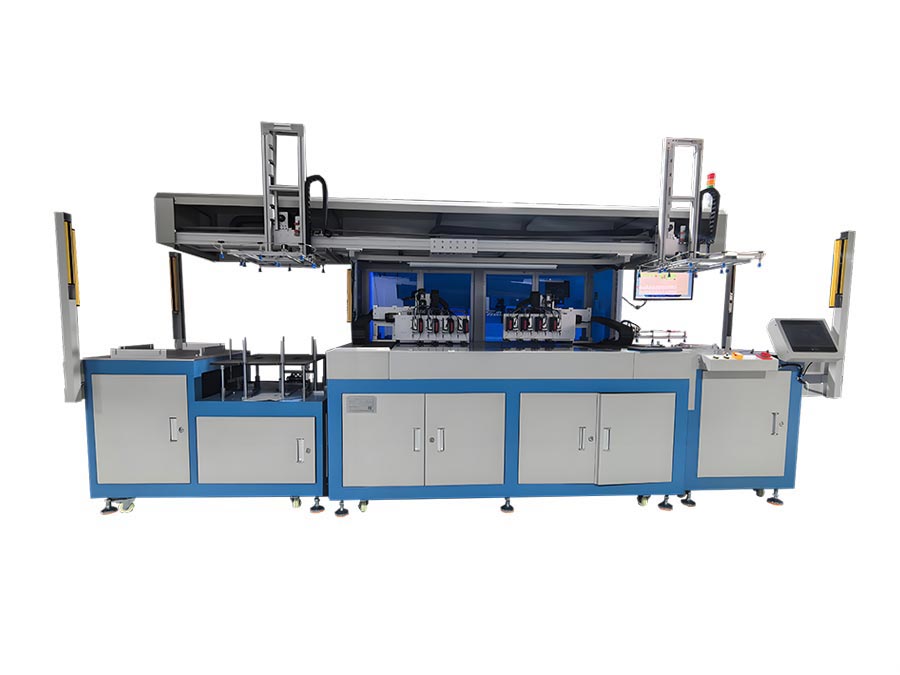
Handling matters too. The smart card module tape and reel handling system feeds modules and finished cards into test fixtures without manual handling, reducing contamination and shortening the loop between test and line. Pairing automated handling with the testers above turns quality control from a paperwork exercise into a live, line-rate process.
The station only pays off if its data is used. Connect test results to a simple log or manufacturing execution system so every lot carries a test record, and train operators to stop the line on a drift rather than averaging it out. The goal is not a perfect single card but a predictable, improving process that raises first-pass yield over time.
Common Defects and What They Reveal
When a card fails, the failure mode points to a specific process step, which makes the test bench a diagnostic tool as much as a gate:
- Delamination at an edge - usually a lamination temperature or pressure issue; verify the laminator profile before adjusting anything else.
- Module pop or corner crack - points to embedding pressure or adhesive cure; the spot-pressure and three-wheel tests catch this early.
- Weak or dead RF read - a broken antenna bond or misaligned inlay; only frequency testing at line rate finds it before encoding.
- Print loss in the field - overlay or print process problem; abrasion testing replicates years of wear in minutes.
Logging which defect appears, and on which lot, turns QC from a pass-or-fail gate into a feedback loop that steadily raises first-pass yield and shortens the time to find a process drift.
Technical Specifications
| Equipment | Standard / Scope | Key Parameters | Link |
|---|---|---|---|
| Three-Wheel Tester | ISO/IEC 10373-1 abrasion | 3 wheels, load 1.5 / 2.5 N, up to 500 cycles | P172 |
| Backside Spot Pressure Tester | ISO/IEC 10373-1 module | Spot load 0 to 500 N, adjustable dwell | P169 |
| RFID / NFC Frequency Tester | ISO/IEC 14443 / 15693 | 13.56 MHz, HF + UHF, automated | P173 |
| Module Tape & Reel Handler | In-line handling | Automated feed, ESD-safe | P175 |
Frequently Asked Questions
Which standard covers card dimensions and thickness?
ISO/IEC 7810 defines the physical characteristics of ID-1 cards, including the 85.60 x 53.98 mm size, thickness around 0.76 mm, warpage limits, and flammability. Most other tests assume the card already meets 7810.
How often should I run mechanical durability tests?
Run them on a sampled basis - typically one card per production lot or per shift - plus a full validation whenever the laminate, adhesive, or module supplier changes. Electrical and RF checks are usually performed on 100 percent of contactless cards on the line.
What does the three-wheel tester actually simulate?
It simulates the repeated flex and surface wear a card experiences in a wallet, reader, or transport system by dragging the card between three loaded wheels for a set number of cycles, then checking for print loss or overlay cracking.
Can one machine test both HF and UHF cards?
A dedicated RFID and NFC frequency test machine covers 13.56 MHz HF (ISO 14443) and can be configured for UHF (ISO 15693 / EPC) depending on the reader module. Confirm the frequency range with the equipment supplier before purchase.
Do I need separate equipment for contact and contactless cards?
Yes. Contact cards need electrical-contact and ESD testing; contactless cards need RF frequency and coupling tests. Many lines run both, so a mixed QC station combines a frequency tester with sample-based mechanical testers.
Build a QC Station That Matches Your Volume
If you are scaling smart card production and need reliable, standards-aligned testing, our engineers can specify a complete QC line around your throughput and card types. Email info@zowinda.com or message us on WhatsApp +86 186 2085 0485 for a tailored quote. Start with the smart card module tape and reel handling system to see how automated handling pairs with in-line testing.
 IC Card Data Verification Mach
 Contactless Card Product Testi
 IC Card Personalization Machin
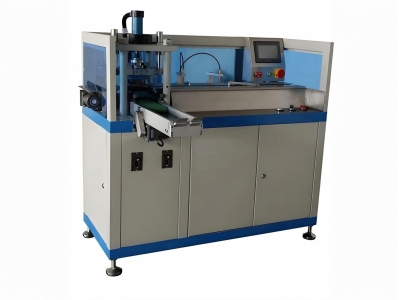 Full Auto Milling & Implan
Please contact us with your request
We are ready to answer your questions.