
Smart Card Personalization Data Security: Key Management, DUKPT and Secure EMV Encoding
Smart Card Personalization Data Security: Key Management, DUKPT and Secure EMV Encoding
Publish date: 2026-09-10
A personalized card is only as trustworthy as the data and keys used to write it. Poor key handling, weak encoding hygiene or an unaudited personalization bureau can compromise every card in a run. This guide covers the key-management and secure-encoding practices that separate a compliant card program from a liability.
Why Data Security Starts Before Encoding
Personalization writes the secrets that make a card valid: EMV application cryptograms, PIN offsets, cardholder keys and issuer certificates. If those secrets leak at the personalization stage, the attacker does not need to break the chip - they already hold the credentials. Security therefore begins with how keys enter the line, not with the encoding head.
Key Hierarchy: Master, Session and Derived Keys
Card programs use a hierarchy rather than one shared secret. An issuer master key stays inside a hardware security module and never leaves it in clear form. From it, per-card or per-batch session keys are derived for the actual write operations. Compromise of a session key exposes only that batch, not the whole program - which is the entire point of the hierarchy.
- Master key: generated and stored inside an HSM, never exported in clear text.
- Session keys: derived on demand for a job, discarded after the run.
- Per-card keys: derived from a unique serial so one leaked card cannot unlock others.
✔ HSM root of trust
All key generation and derivation happens inside tamper-resistant hardware.
✔ Clear-text isolation
Keys are never present in operator memory, disks or logs.
✔ Auditability
Every key use is logged with job ID, operator and timestamp.
DUKPT: Derived Unique Key Per Transaction
DUKPT is the standard scheme that lets a device derive a fresh key for every transaction or write without ever storing the base key in reusable form. The initial key is injected once; thereafter each operation produces a unique derived key that cannot be reversed to recover the previous one. This is why a captured personalization log cannot be replayed to forge cards.
- Initial key injection: done in a secure room, logged and dual-controlled.
- Future-key register: each use advances to a new key; old keys are unrecoverable.
- Transaction counters: detect replay and skipped-sequence attacks.
Secure Key Injection and the Personalization Bureau
Keys reach the line through injection under dual control, with split knowledge so no single operator holds a complete key. A credible bureau is certified to the relevant scheme requirements, keeps the HSM behind segmented access, and can show an auditor the chain from master key to card. Choosing an uncertified or unaudited bureau is the most common way a program loses scheme approval.

Personalization line where keys are loaded under HSM control and EMV data is encoded per card.
Encoding Hygiene on the Line
Even with good key management, sloppy encoding practice leaks data. Operators should never see clear PAN or PIN, logs must be tokenized, and the encoding station should fail closed if the HSM session drops. Physical media carrying job data must be encrypted and destroyed on a schedule, not left on a shared drive.
- Never log clear account numbers or PINs; tokenize or mask everything.
- Fail closed: an HSM disconnect must stop the line, not skip security.
- Encrypt and shred job media; treat a leftover file as a breach.
Selection Quick Reference
Data security in personalization is a chain of small disciplines: key hierarchy, DUKPT, HSM-backed injection, and disciplined encoding hygiene. A program that treats all four as audit-required - not optional - ships cards that schemes trust and attackers cannot cheaply forge.
Ready to improve your production efficiency?
Contact us for a tailored solution and quotation.
Email: info@zowinda.com
WhatsApp: +86 186 2085 0485
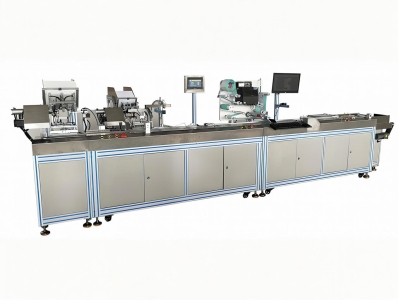 Automatic Sealing and Labeling
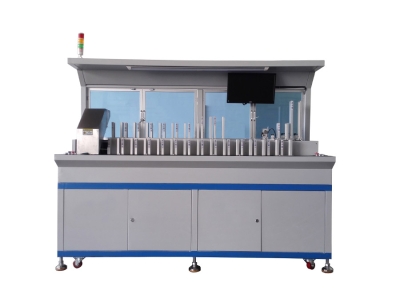 Card Sorting Machine (20/40 Ou
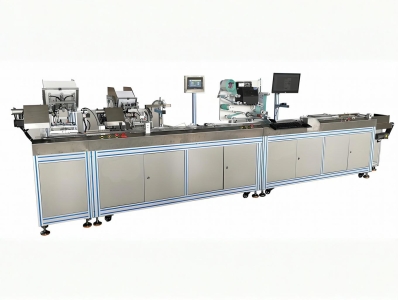 Sealing and Labeling Machine f
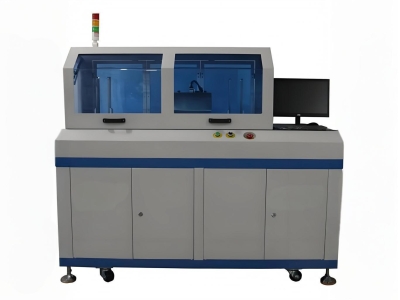 IC Card Data Verification Mach
Please contact us with your request
We are ready to answer your questions.