
Smart Card Chip Module Assembly: Flip-Chip vs Wire Bonding vs Conductive Adhesive
Smart Card Chip Module Assembly: Flip-Chip vs Wire Bonding vs Conductive Adhesive
Publish date: 2026-09-08
The chip module is the brain of every smart card. How it is attached to the card body decides yield, reliability and cost. This guide compares the three dominant module-assembly methods used on modern card production lines.
How a Smart Card Module Is Built
A contact or dual-interface smart card carries an integrated circuit inside a standardized plastic module (typically 11 x 13 mm for ID-1 cards). The module protects the die, exposes the contact pad, and transfers it into a milled cavity in the card body. The method used to fix the die inside the module frame is the central decision in module assembly.
Flip-Chip Bonding
Flip-chip places the bare die face-down onto bumped contacts on the module substrate. Gold or copper stud bumps form the electrical and mechanical connection in a single reflow or thermocompression step.
- Highest I/O density and smallest footprint - ideal for dual-interface and biometric cards.
- Fastest cycle time: no wire loop, single placement + bond step.
- Excellent mechanical robustness under repeated flexing.
✔ Throughput
Up to 4,000-6,000 modules per hour on a dual-head flip-chip bonder.
✔ Yield driver
Bump coplanarity and placement accuracy below 15 microns.
✔ Best for
High-security EMV and eID cards with tight module tolerances.
Wire Bonding
Wire bonding glues the die face-up, then connects each pad to the lead frame with a thin gold or copper wire. It is the legacy workhorse of the industry and remains common on cost-sensitive lines.
- Mature, well-understood process with low equipment cost.
- Flexible for low-volume or prototyping runs.
- Slower and more sensitive to wire sag and loop height.
Conductive Adhesive Attachment
Isotropic or anisotropic conductive adhesive (ACA) joins the die to printed contacts without solder or thermocompression. It is gaining ground for temperature-sensitive inlays and RFID laminates.
- Low process temperature protects antennae and foils.
- No lead-free solder reflow - simpler environmental compliance.
- Higher contact resistance; joint inspection is more demanding.

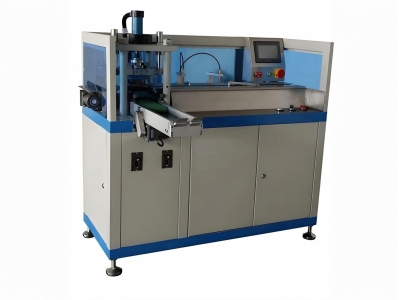
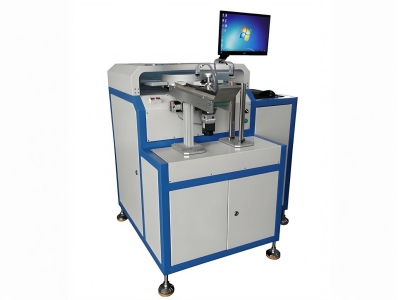
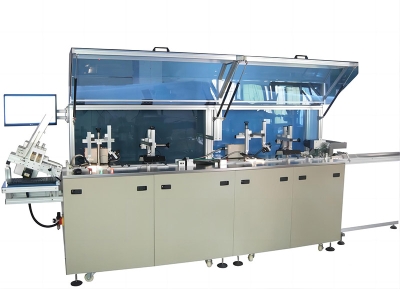
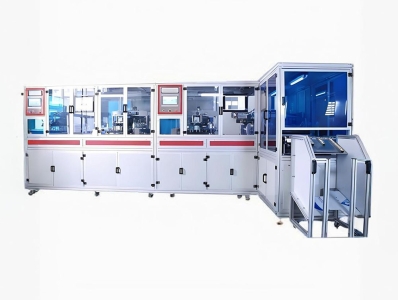
Smart card production equipment used for module placement and embedding.
Selection Quick Reference
For most new EMV and eID programs, flip-chip offers the best balance of speed and reliability. Wire bonding stays relevant for upgrades of existing lines, while conductive adhesive fits RFID laminates where thermal budget is tight.
Ready to improve your production efficiency?
Contact us for a tailored solution and quotation.
Email: info@zowinda.com
WhatsApp: +86 186 2085 0485
 Full Auto Milling & Implan
 Non-Standard Contactless Card
 Smart Card Inspection System -
 Revolutionizing Card Productio
Please contact us with your request
We are ready to answer your questions.