
HF vs UHF RFID for Smart Cards and Inlays 2026 | Zowinda
HF vs UHF RFID for Smart Cards and Inlays 2026 | Zowinda
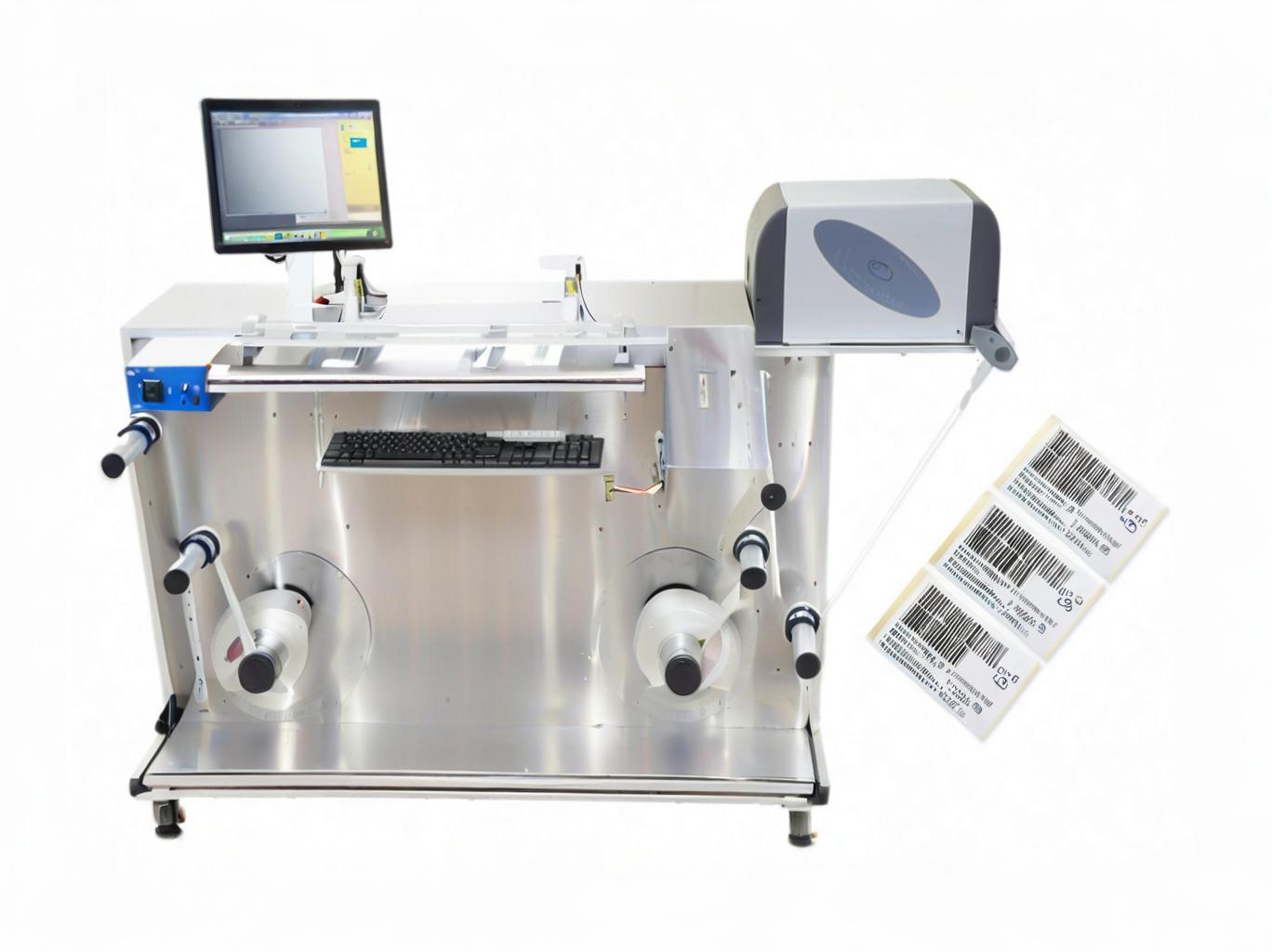
Choosing between HF and UHF RFID is one of the first decisions an engineer makes when designing a contactless smart card or an RFID inlay. Both technologies share the same goal - automatic identification without a line of sight - but they behave very differently in read range, data speed, cost, and the environments where they perform best. Getting the choice wrong is expensive, because the antenna and chip are fixed at the inlay stage and cannot be swapped after lamination. This guide compares HF vs UHF RFID for smart cards and inlays, explains where each frequency wins, and shows how ZOWINDA production equipment handles both bands on a single line.
What HF and UHF RFID Actually Mean
HF RFID operates at 13.56 MHz and is defined by the ISO/IEC 14443 (proximity, up to about 10 cm) and ISO/IEC 15693 (vicinity, up to about 1 m) standards. It is the technology inside most payment cards, access badges, e-passports, and NFC phones. UHF RFID covers the 860 to 960 MHz band, with the exact allocation varying by region: 902 to 928 MHz in the Americas and 865 to 868 MHz in Europe. UHF follows the EPC Gen2 / ISO 18000-6C standard and is the workhorse of logistics, garment tagging, and supply-chain tracking where long read ranges and fast bulk reads matter.
The difference is not just numbers on a specification sheet. HF couples through a magnetic near field, which makes it far more tolerant of metal and liquids. UHF couples through an electromagnetic far field, which gives it range and speed but also makes it sensitive to detuning when it sits near metal, water, or other densely packed items. Understanding that physical distinction is the key to picking the right band for your product.
Both bands support anti-collision, the ability to read many tags at once, but they do it differently. HF ISO 15693 handles a small group of nearby tags, while UHF EPC Gen2 can inventory hundreds of tags in a second. Regional rules also differ: UHF frequencies are allocated differently by the FCC in the United States and by ETSI in Europe, so a UHF design must be tuned to the market where it will be deployed.
Read Range and Operating Environment
HF read range is short by design - typically a few centimeters for ISO 14443 and up to roughly one meter for ISO 15693. That short range is a feature, not a bug: it prevents accidental reads across a crowded room and supports secure tap-to-pay interactions. It also makes HF predictable in fixed readers such as turnstiles and point-of-sale terminals. UHF read range reaches several meters and, with the right antenna and tag, can exceed ten meters. That range enables dock-door reads of full pallets and conveyor scanning of hundreds of items per second.
For smart cards carried in a wallet, HF is the safe choice because the card stays close to the reader. For inlays embedded in apparel or shipped on pallets, UHF delivers the throughput that HF cannot reach. When a product must be tracked from the factory floor to the retail shelf, many programs combine both: an HF secure identity on the card and a UHF logistics tag on the packaging.
Data Speed, Memory, and Total Cost
UHF moves data faster and supports larger memory banks - an EPC number plus a User memory that can reach several kilobits - which suits item-level serialization and bulk inventory. HF is slower per transaction but offers strong built-in security features such as mutual authentication and cryptographic commands defined by NFC Forum and ISO 14443-4, which is why banks and transit authorities standardize on it.
Cost follows volume. UHF inlays are inexpensive at scale, making them ideal for disposable or single-use tagging. HF inlays cost more per unit, but the surrounding ecosystem - readers, phones, and secure elements - is mature and ubiquitous. The right answer depends on whether you are protecting a high-value identity or tracking a low-cost consumable, and on how many units you plan to produce each year.
Serialization is another differentiator. UHF EPC memory is designed for unique item-level codes, which makes it the default for brand-protection and track-and-trace programs. HF can also carry unique identifiers, but the slower air interface makes very large bulk inventories impractical compared with UHF.
Which Frequency Fits Your Smart Card or Inlay
Use HF when the application needs tap interactions, payment or access security, operation near metal or liquid, or compatibility with consumer smartphones. Typical cases are payment cards, employee badges, loyalty cards, e-documents, and NFC product authentication. The short, secure read is exactly what these use cases require.
Use UHF when the application needs long range, high-speed bulk reading, or item-level tracking across a supply chain. Typical cases are apparel tags, logistic labels, pharmaceutical authentication at the case level, and returnable transport items. The ability to read a whole carton without opening it is what drives the return on investment.
For a dual-band program, design the inlay and the card body so both antennas survive lamination and personalization without mutual interference. This is where antenna placement, module cavity milling, and flip-chip bonding must be coordinated on the production line rather than treated as separate steps.
A simple rule of thumb helps most teams decide. If a person will tap the item to a reader or phone, choose HF. If a machine will scan a box or rack from a distance, choose UHF. If both interactions are required, design a dual-band product from the start rather than retrofitting one band later, because antenna geometry is hard to change after lamination.
How ZOWINDA Equipment Supports Both Bands
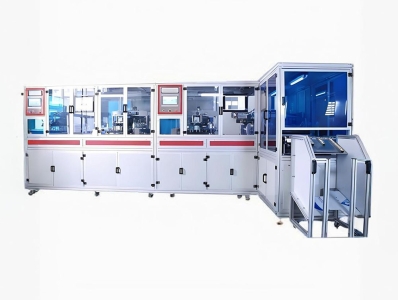
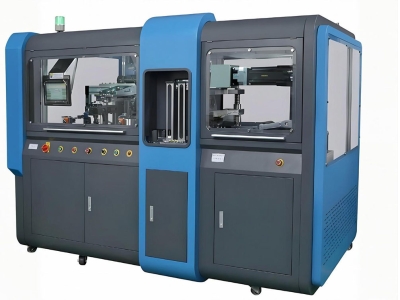
ZOWINDA builds the machines that turn raw materials into finished HF and UHF products. Our RFID Label Detecting and Encoding Machine verifies and writes both HF and UHF tags on a reel-to-reel basis, rejecting defective labels before they reach the converter. The RFID Automatic Flip Chip System places the IC onto the antenna with micron accuracy for high-frequency inlays, while our All-in-One RFID Inlay equipment integrates antenna forming, bonding, and laminating in a single compact line.
Because the same production line often runs both bands, we tune each station - antenna embedding, cavity milling, flip-chip bonding, and final lamination - to the electrical requirements of the target frequency. That engineering discipline is what keeps read rates high and yield loss low, whether you ship millions of HF transit cards or UHF garment tags.
Quality control is built into every station. Inline electrical testing confirms that each inlay meets its target frequency and read sensitivity before it leaves the line, and automatic rejection removes weak or shorted units so they never reach the converter. This closed-loop testing is what lets a factory hold a stable yield while switching between HF and UHF jobs.
| Parameter | HF (13.56 MHz) | UHF (860-960 MHz) |
|---|---|---|
| Standard | ISO 14443 / ISO 15693 / NFC | EPC Gen2 / ISO 18000-6C |
| Typical read range | Up to ~1 m (usually cm) | Several meters to 10+ m |
| Coupling | Magnetic near field | Electromagnetic far field |
| Read speed | Lower per read | Very high bulk read |
| Metal / liquid tolerance | Good | Sensitive to detuning |
| Security model | Strong (mutual auth, crypto) | Basic, EPC focused |
| Best use | Payment, access, NFC | Logistics, retail, supply chain |
| Relative tag cost | Higher per unit | Lower at scale |
Frequently Asked Questions
Can a single card use both HF and UHF?
Yes. Many programs embed an HF secure element for the cardholder identity and a separate UHF inlay in the carrier or packaging for logistics. The two must be placed so their antennas do not detune each other during lamination and personalization.
Which is better for payment cards?
HF (ISO 14443 / NFC) is the global standard for payment and transit because it supports secure tap transactions and works with every smartphone. UHF is not used for payment applications.
Does UHF work near metal or water?
UHF is sensitive to metal and liquids, which detune the antenna. Special tag constructions such as on-metal tags and spaced labels mitigate this, but HF is generally the safer choice in those environments.
What read range can I expect from HF?
ISO 14443 HF reads at a few centimeters, while ISO 15693 vicinity HF reaches up to about one meter. The short range is intentional for security and anti-collision control.
How does ZOWINDA handle both frequencies on one line?
Our equipment tunes antenna embedding, cavity milling, flip-chip bonding, and lamination to the target band, and the RFID Label Detecting and Encoding Machine verifies both HF and UHF tags so defective units are caught before conversion.
Contact ZOWINDA for RFID Production Equipment
Need help specifying HF, UHF, or dual-band RFID for your smart card or inlay program? Contact the ZOWINDA engineering team at info@zowinda.com or reach us on WhatsApp: +86 186 2085 0485. Explore our RFID Label Detecting and Encoding Machine, RFID Automatic Flip Chip System, and All-in-One RFID Inlay equipment to see how we support both frequencies on a single production line.
 Revolutionizing Card Productio
 Unlock Precision and Efficienc
 Product Webpage Promotion Copy
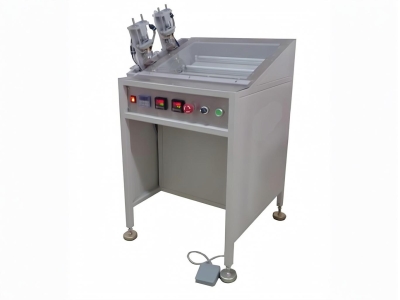
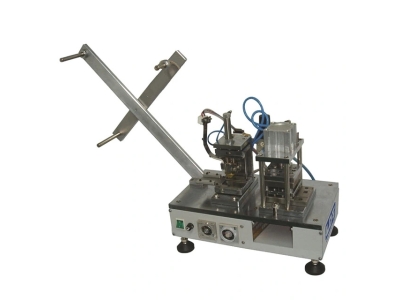 Manual IC Module Punching Mach
Please contact us with your request
We are ready to answer your questions.