
UHF RFID Antenna Geometries: Dipole, Meander & Loop Design and Tuning
UHF RFID Antenna Geometries: Dipole, Meander & Loop - Design and Tuning
Publish date: 2026-09-04
The antenna shape is the single biggest driver of an RFID tag's read performance. This guide breaks down the three common UHF antenna geometries, how each interacts with the radio field, and how to tune them for real-world applications.
The Role of the Antenna
A UHF RFID antenna is a tuned structure that captures energy from the reader field and presents the correct impedance to the chip. Its geometry determines the resonant frequency, the radiation pattern, and how forgiving the tag is when placed near metal or liquid.
Dipole Antennas
The classic half-wave dipole delivers strong, predictable read range in free space and is the workhorse of logistics labels. Its weakness is performance collapse near metal and water, which detune the resonance.
Meander (Serpentine) Antennas
Meandering folds the conductor into a compact area, shrinking the tag footprint for small labels while retaining dipole-like behavior. The tighter the meander, the more self-capacitance is introduced, which must be compensated during tuning.
Loop Antennas
Loop structures suit near-field and on-metal applications where a dipole fails. They couple magnetically rather than radiatively, giving stable reads on metal-backed assets when tuned with a ferromagnetic backing.
Tuning Principles
Tuning matches the antenna's complex impedance to the chip's conjugate at 866 - 920 MHz. Engineers adjust trace length, gap capacitance, and matching stubs, then verify with a vector network analyzer and live read-range tests on the target material.

Zowinda RFID inlay and converting equipment for tuned, high-yield production.
Key Advantages at a Glance
Dipole: Long Range
Best free-space read distance for logistics and supply-chain labels.
Meander: Compact
Folds into small labels while keeping dipole-like performance.
Loop: On-Metal
Stable reads on metal and liquid-backed assets via magnetic coupling.
Technical Reference
Ready to upgrade your production line?
Contact us for a tailored solution and quotation.
Email: info@zowinda.com
WhatsApp: +86 186 2085 0485
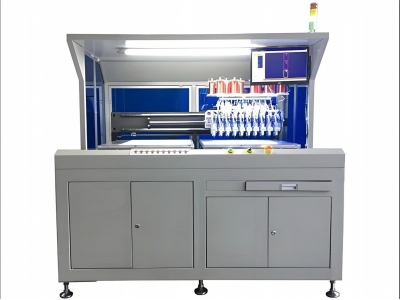 Auto Feeding Wire Embedding Ma
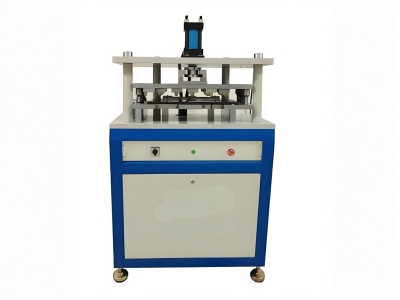 Position Hole Punching Machine
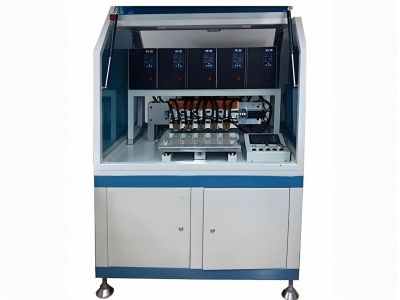 AUTO Bonding Machine – Precisi
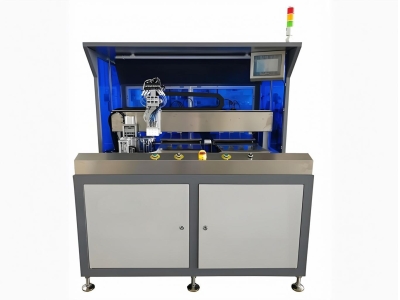 Auto COB Pick and Placer: Revo
Please contact us with your request
We are ready to answer your questions.