
LF vs HF vs UHF RFID: Frequency Band Selection Guide for Industry
LF vs HF vs UHF RFID: Frequency Band Selection Guide for Industry
Publish date: 2026-09-07
RFID is not one technology but three frequency families with very different behavior. Picking the wrong band means short read range, missed reads, or an over-budget tag. This guide compares Low Frequency, High Frequency, and Ultra-High Frequency RFID so engineering teams can match the band to the application.
Low Frequency (LF, 125-134 kHz)
LF tags use near-field magnetic coupling and are almost immune to interference from metal and water. That makes them the default for animal identification, access control, and automotive immobilizers. The trade-off is a very short read range, typically under 10 cm, and a slow data rate.
High Frequency (HF, 13.56 MHz)
HF is the band behind NFC, contactless payment, and most smart cards. It reads at 10 cm to about 1 m, handles moderate data rates, and tolerates metal and liquid far better than UHF. Its predictable behavior and strong security standards make it ideal for cards and item-level identification.
Ultra-High Frequency (UHF, 860-960 MHz)
UHF delivers the longest read range - several meters - and very high read speeds, enabling bulk reading of hundreds of tags per second. It dominates supply-chain, logistics, and retail inventory. Its weakness is sensitivity to metal and liquids, which detune the antenna and collapse range.
How to Choose
Select LF for harsh, close-contact, or animal applications; HF for cards, secure access, and metal-adjacent item tagging; UHF for long-range, high-throughput logistics where the environment is controlled. Always prototype the tag on the real target object before committing to a volume order.
Regional Tuning Note
UHF bands differ by region (e.g. 902-928 MHz in the Americas, 865-868 MHz in Europe). A globally deployed product needs region-aware reader configuration or a multi-band tag to stay compliant.

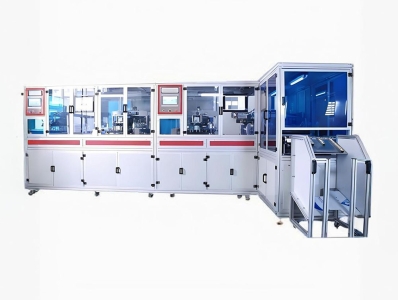
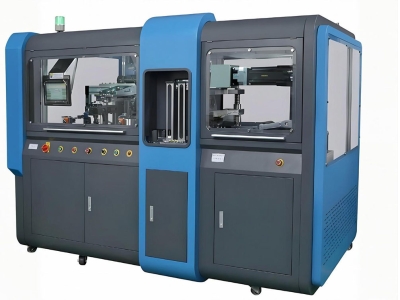
Zowinda RFID inlay and smart card equipment supports LF, HF, and UHF production lines.
Key Advantages at a Glance
LF: Harsh Reliable
Immune to metal and water; best for short-range rugged use.
HF: Secure & Stable
NFC and smart cards; tolerates metal better than UHF.
UHF: Long & Fast
Multi-meter range and bulk reads for logistics scale.
Technical Reference
Ready to upgrade your production line?
Contact us for a tailored solution and quotation.
Email: info@zowinda.com
WhatsApp: +86 186 2085 0485
 Revolutionizing Card Productio
 Unlock Precision and Efficienc
 Product Webpage Promotion Copy
 Manual IC Module Punching Mach
Please contact us with your request
We are ready to answer your questions.