
Card Lamination and Collation Presses: Building Durable Multilayer Smart Cards
Card Lamination and Collation Presses: Building Durable Multilayer Smart Cards
Published: 2026-08-19
The strength of a smart card lives in its lamination. Printed foils, embedded inlays, and protective overlays are stacked in a precise 'book' and fused under heat and pressure, then cooled under control to lock in flatness. A well-run lamination press is the difference between cards that survive years in a wallet and cards that delaminate on day one. Here is how the lay-up, cycle, and cooling phases work.
Lay-Up Precision Drives Card Life
Every card starts as a stack — or 'book' — of printed PVC/PC foils, pre-laminated inlays, and clear overlays, all registered to within a fraction of a millimeter. Misaligned inlays drift the antenna off the chip pad; uneven foil registration causes edge feathering after milling. The collation station aligns these layers under vacuum or pin registration before the book enters the press, where heated platens bring the stack above the material's fusion temperature under controlled pressure.

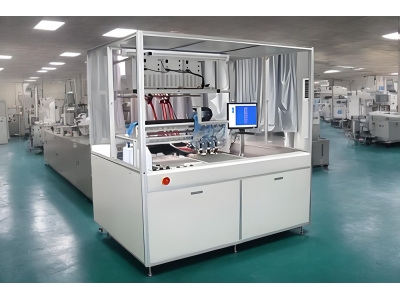
A hydraulic card lamination press with stacked books ready for the heating and cooling cycle.
Press Cycle Phases
Heating & Dwell
Platens ramp to 120–160°C and hold under 10–20 bar so the adhesive layers fully fuse without bubbling.
Controlled Cooling
Gradual cool-down under pressure prevents internal stress and keeps card flatness within tight tolerances.
Multi-Opening Stacking
High-throughput presses fuse many books per cycle, multiplying output without sacrificing uniformity.
De-byte & Trim
After de-molding, the laminated sheet is cut into individual cards and the edges are beveled for clean handling.
Representative Press Specs
Ready to upgrade your production line?
Contact us for a tailored solution and quotation
Email: [email protected]
WhatsApp: +86 186 2085 0485
 Revolutionizing the Contactles
 Auto Hole Punching Machine - T
 Partner 5
 PT087 Passport Bending Fatigue
Please contact us with your request
We are ready to answer your questions.